
ISSUE 16
Bobby Krlic on Scoring, Self-Doubt, and the Sessions That Stay With You
WORDS BY LOREN SUNDERLANDPHOTOS THE BLANK MAGThe composer behind Midsommar, Beef, and Anemone on what it takes to move across the world for a hunch, survive imposter syndrome at the highest level, and finally stop second-guessing yourself.
Bobby Krlic is, he will tell you, fundamentally a visual person, more activated by images than sound, more likely to find a melodic idea in the quality of light on a surface than something he has heard. It is an unusual admission from a musician whose work has accmulated real weight over the past decade, but it makes a kind of immediate sense when you consider the shape of his career: a British composer who followed an instinct to the other side of the world, built a practice in the pressure cooker of Hollywood, and found that the same sensibility that made his solo records feel like watching a film in slow motion turned out to be exactly what film itself needed from him. “The music I make is generally more inspired by looking at something than hearing something,” he says.

“Every time I went back to London, all I could think about was being here. I’d started to realise how much of my life had been shaped by things that were made here, or people that were from here.”
Krlic, who also releases music under the name The Haxan Cloak, grew up in Wakefield, England, in a household that treated music as a shared language rather than background noise. His mother was a Northern Soul DJ; his father played blues guitar, and between those two poles, he absorbed an extraordinary range of sound, developing the kind of omnivorous curiosity that resists easy categorisation. He studied sound art at university, spent his early twenties releasing records and touring, and built a reputation for music that was intellectually rigorous and viscerally affecting, heavy with atmosphere, shot through with a sense of interiority that felt almost cinematic. Film scoring had always seemed like a logical extension of that sensibility, but the path from experimental musician to Hollywood composer was not obvious, and he had no clear map for navigating it until the path found him instead.
"One day, my manager received an email from Atticus Ross," Krlic recalls, still sounding faintly disbelieving. "It literally just said something like: hi, I really like Bobby's music. Could he come to LA and meet me? That was it. I'd never been to America before." Ross, a longtime collaborator with Trent Reznor and member of Nine Inch Nails, whose award-winning scores include The Social Network, The Girl with the Dragon Tattoo, and Challengers, had reached out entirely unprompted. For someone who had grown up obsessed with Nine Inch Nails and regarded Ross as a foundational figure in his musical education, it was less an email than a detonation. Krlic flew out, met Ross at his studio, and understood almost immediately that something had shifted.
Ross had more work than he could handle and felt Krlic understood his way of approaching things, an instinct that music for film should feel like an extension of a singular artistic voice rather than a genre exercise. They began working together remotely, Krlic producing material from London, but something kept pulling him back. “Every time I went back to London, all I could think about was being here,” he says. “I’d started to realise how much of my life had been shaped by things that were made here, or people that were from here.” He got an agent, who delivered the unequivocal verdict: if you’re serious about making a go of this, you have to actually live here. Krlic moved at the start of September 2015, told himself he’d give it a year, and is still here a decade later.
What he found, arriving with a handful of connections and his willingness to figure the rest out, was a professional culture that felt meaningfully different from the one he had left. In the UK, the news that he was planning to move to Hollywood to score films had been met with a range of responses, few of them encouraging. “Some of my friends were like, you’re bloody going to Hollywood to try and score movies,” he says, laughing. In the rooms he started to occupy on the other side of the Atlantic, the same ambition generated introductions, enthusiasm, a reflexive assumption that, of course, it was possible and here was someone he should meet. It is not that ambition means more in one place than another, but that the social response to it differs, and for someone trying to build something new, that difference is not trivial. “There is a can-do attitude and a support system that doesn’t exist as overtly at home”, he says, and there is no bitterness in it, just the plain recognition of a thing that turned out to matter.
“I did have imposter syndrome. I knew that I liked what I do, but I didn’t understand how this fit into being here, with all these people who are consuming professionals.”
“At 28 years old, to be working on a multi-million-dollar film with an award-winning composer, I did have imposter syndrome,” he shares. “I knew that I liked what I did, but I didn’t understand how this fit into being here, with all these people who are consuming professionals.” What carried him through was not an absence of self-doubt but a patient accumulation of evidence that he belonged, experience layered on experience, project on project, until the voice Ross had heard in his music and asked him to trust became, slowly, the voice he actually used. Before he ever scored a film, Krilic had produced records for other artists, worked in studios with Björk, toured alongside experimental musicians, and developed what he describes as an instinct for how to hold yourself in a creative space: how to make the people around you feel confident, how to facilitate rather than dominate, how to turn a room full of individual talents into something that moves together.
That collaborative instinct runs through everything he says about composing. Krlic will tell you that writing the music is almost a small part of what he does, that when he thinks back over the films he has scored, what he remembers most vividly are not the solitary hours at the console but the recording sessions, the moments when everyone converges on a single idea and something larger than any individual contribution begins to take shape. “When everybody comes together, and it’s this Herculean effort just to build this thing,” he says, trailing off in a way that tells you the word he reaches for next will be inadequate. “It’s awesome.” The word sounds insufficient, but the feeling behind it is not.
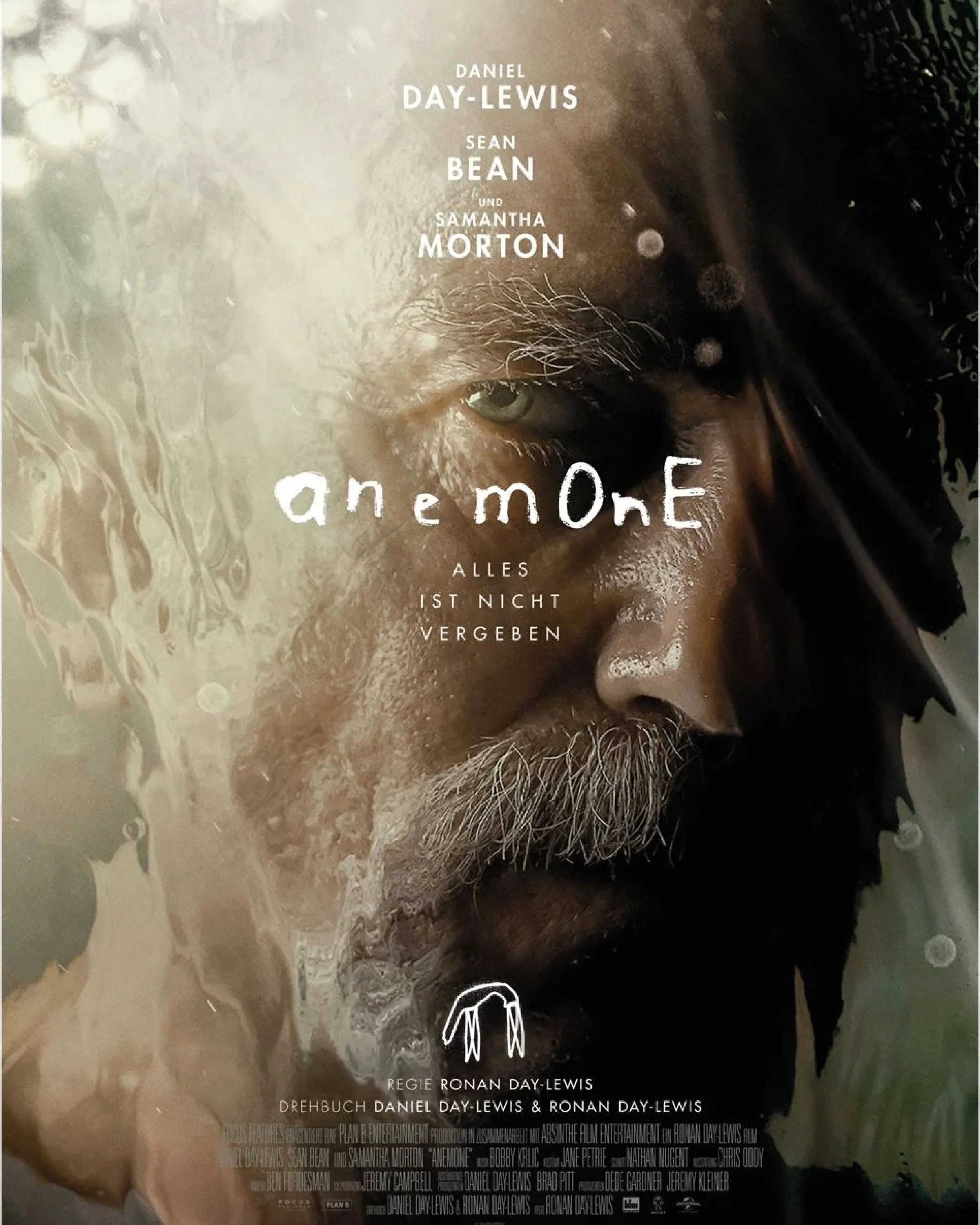
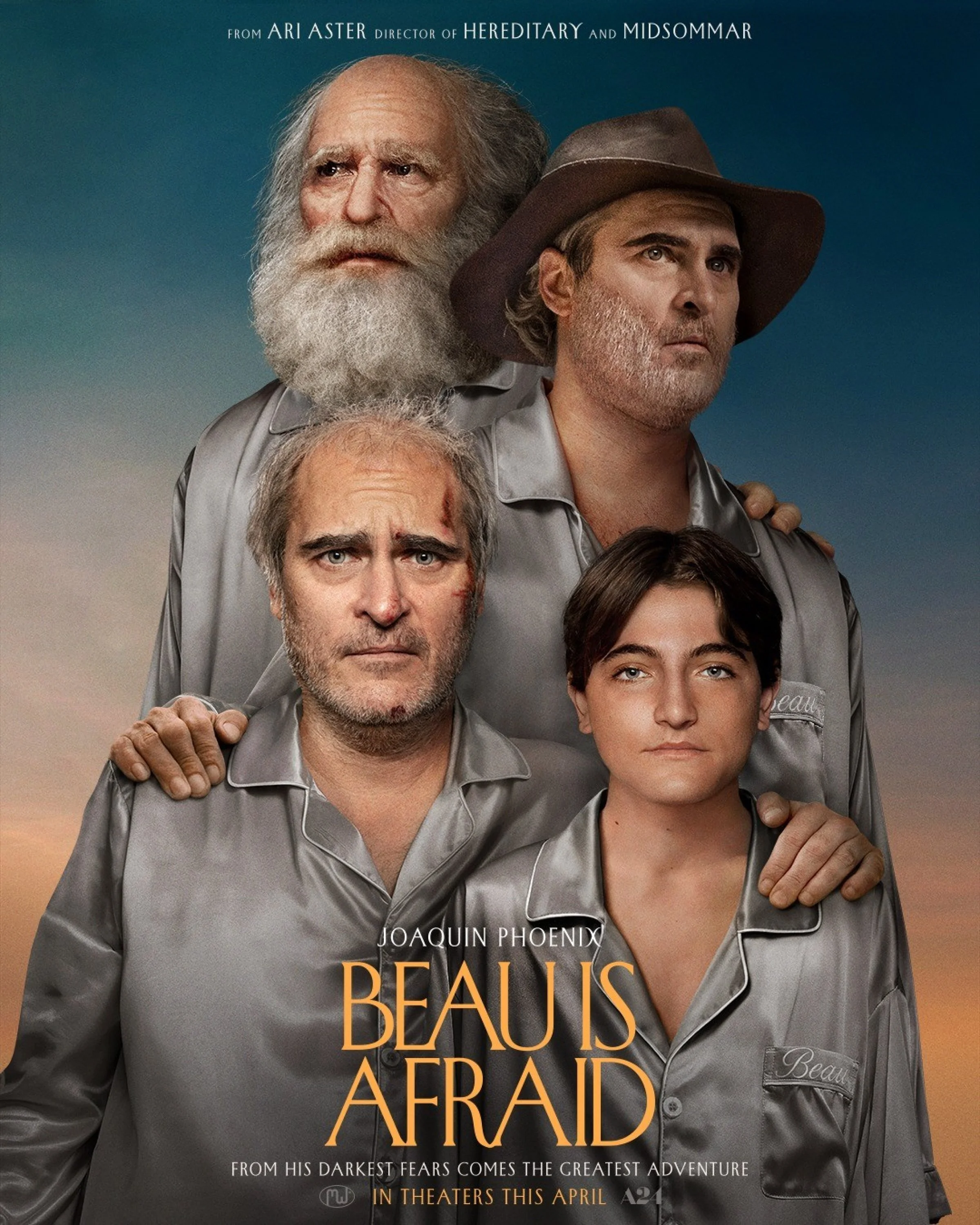
His credits over the past decade reflect both his range and his resistance to being slotted into a single register. It was Midsommar, Ari Aster’s 2019 folk horror film, that brought his name to wider attention; its score a masterclass in creeping unease, pastoral and sun-drenched on the surface, corrosive underneath, matching Aster’s images with music that felt like something lovely slowly going wrong. Returnal, the PlayStation 5 game from Housemarque, demonstrated that his instincts translated just as powerfully into interactive work, the score’s disorienting loops and textures mirroring the game’s own punishing, cyclical logic. Then came Beef, Lee Sung Jin’s extraordinary 2023 Netflix series about two strangers whose lives unspool in the aftermath of a road rage incident, a show whose tonal complexity, oscillating between comedy and genuine psychological horror, demanded an unsettling score that was neither alienating nor sentimental, and got exactly that. Most recently, Anemone, released last year, confirmed that whatever register a project demands, Krlic has both the instinct and the craft to meet it.
“I’ve worked quite hard to try and not be typecast as the sort of dark horror person,” he says, with the measured satisfaction of someone who has successfully resisted a convenient narrative. “And I feel now, through doing things like Midsommar, or Beef, or even The Wrecking Crew, that I can express in a way that is uninhibited and really exciting.” The day before our conversation, he had been on the phone with his agent and found himself saying something he had not been able to say with conviction before: that he felt ready for anything, that any project could come his way, and he would know how to meet it. His agent had been direct with him once before, years earlier, about what it would take to make a serious go of things. This time, the directness was his own. “I finally feel like anybody could throw any project at me, and I can do it,” he says, and it is not boastfulness, which Krlic is constitutionally too self-aware for, but something quieter and more durable: the feeling of having done enough of the work that you can trust the work.
“I just like to keep everything in audio if I can, it makes me more excited, I find I can be more creative.”
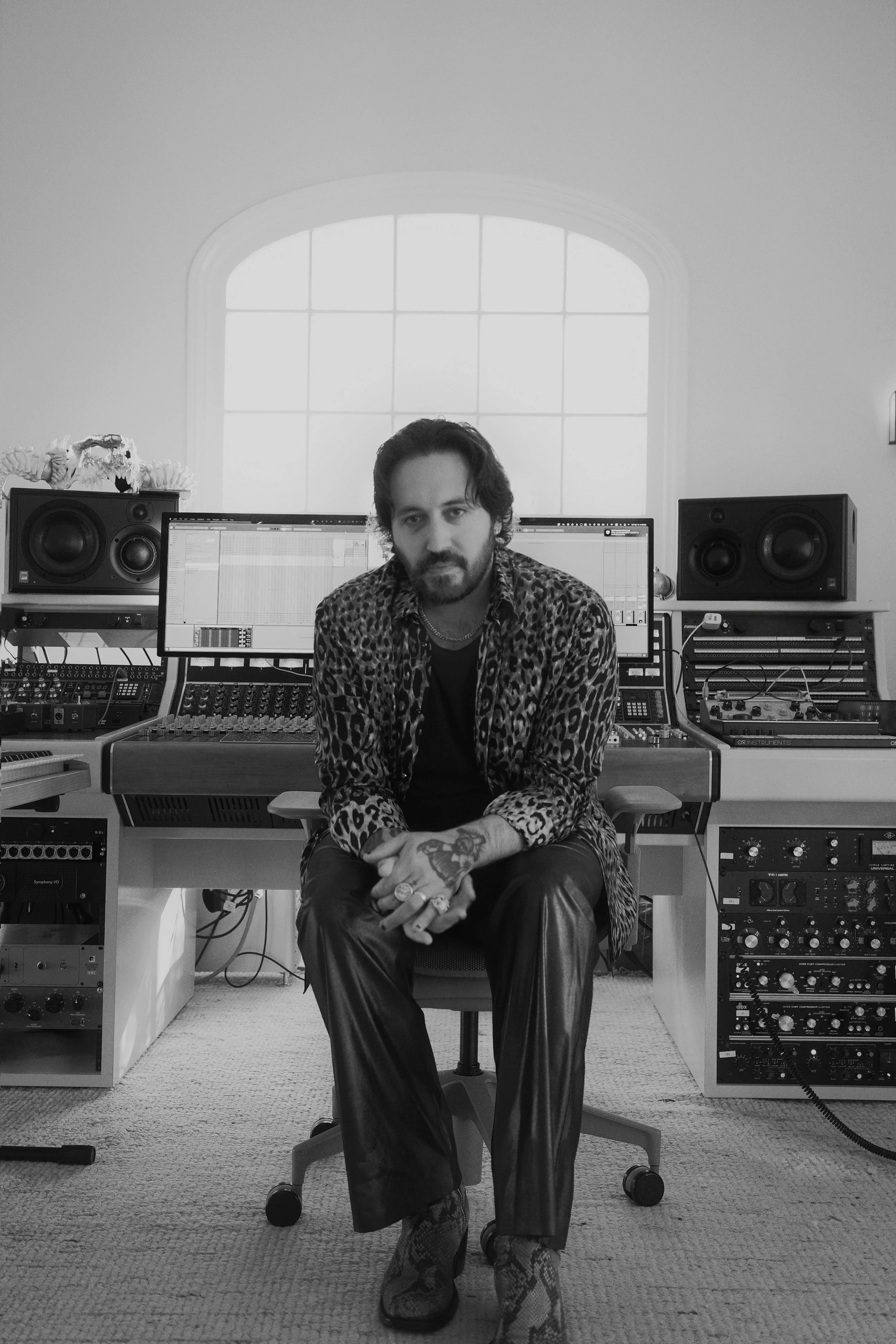
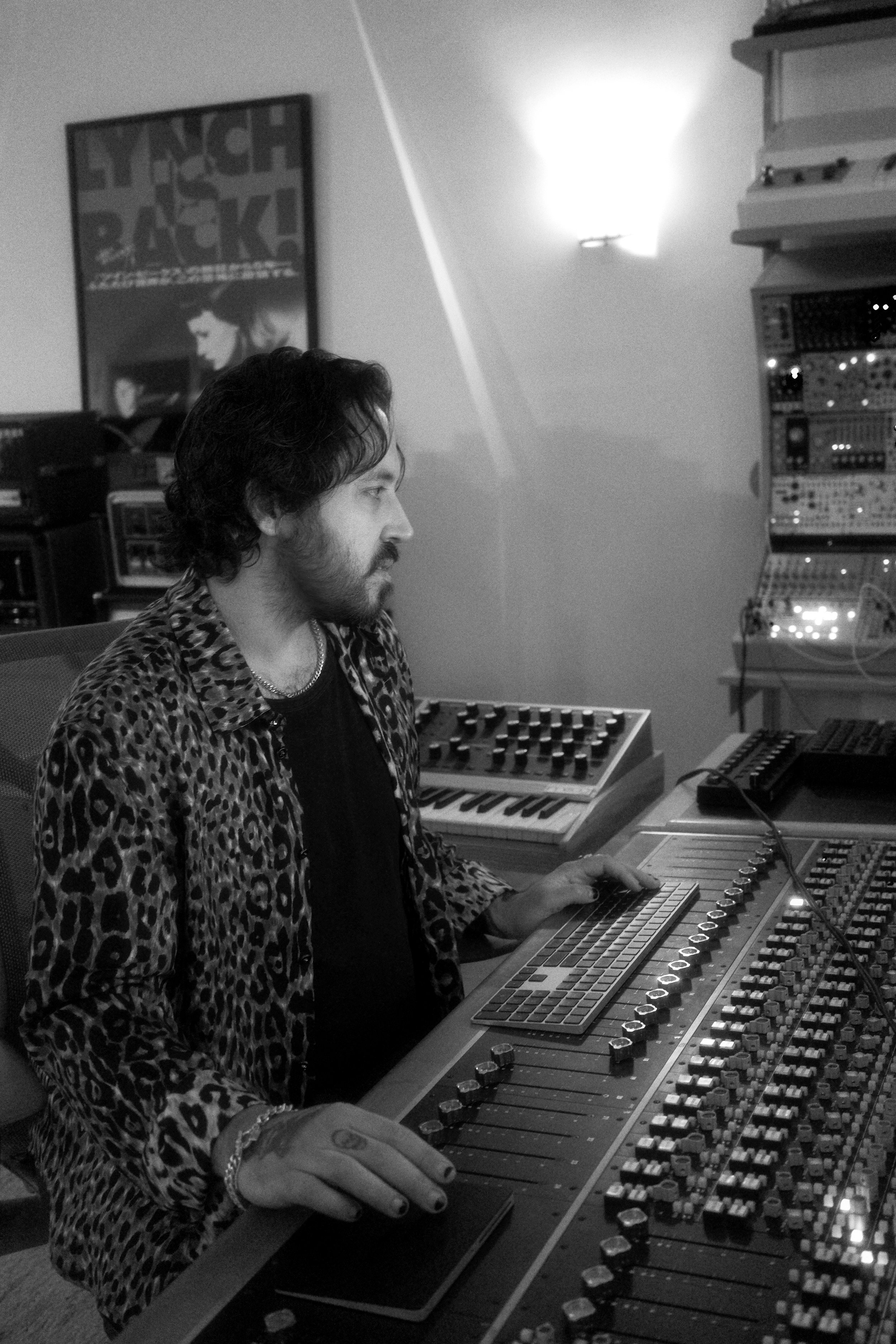
In the studio, he has placed his desk at the centre of the room, with banks of outboard gear arranged to the sides and a tape machine in the opposite corner. Behind you, there’s a sofa and an upright piano, and scattered across the space are little pieces of memorabilia and objects that reflect Krlic’s interests: records and an abundance of instruments. One thing that stands out is the light and the view from his studio: the classic palm trees you see on LA postcards, the city in the distance, and at golden hour, the room fills with that warm, comforting glow. He began making music on a four‑track as a child and moved to computer‑based production in his mid‑teens, and the studio he has assembled reflects both of those inheritances while refusing to be limited by either. Everything possible is routed out of the digital domain and into audio; MIDI is kept to an absolute minimum. “Looking at MIDI just makes me really upset,” he says, in a way that is probably about sixty percent joking. “I just like to keep everything in audio if I can; it makes me more excited; I find I can be more creative.” His orchestrators, he acknowledges with the wry affection of someone who regularly makes other people’s lives more complicated, do not always share his enthusiasm for this approach.
Ten years into a career that began with an unexpected email and has expanded into one of the more quietly impressive composing CVs working today, Bobby Krlic speaks about his work with the ease of someone who has spent a long time learning how to inhabit their own voice and has finally, gratefully, stopped finding it strange. He tells you that his best moments, still, after everything, are the recording sessions: the rooms full of musicians and intention and collective effort, the feeling of something enormous being built by many hands. And sitting across from him as the sun sets around us, the modular gear blinking in the background, you believe him entirely.