ISSUE 20
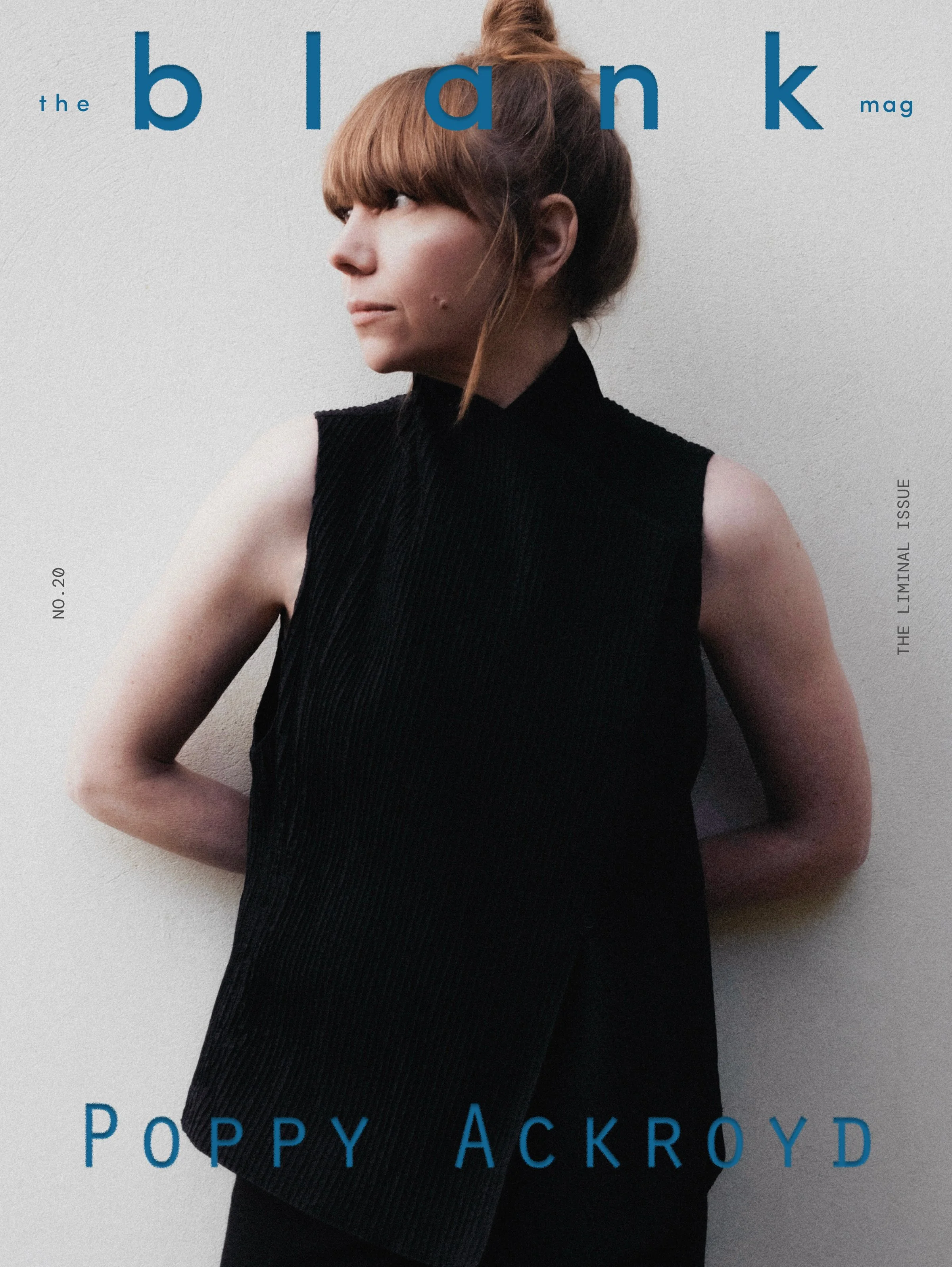
Poppy Ackroyd on starting over, staying put, & why the scariest things tend to be the most necessary ones
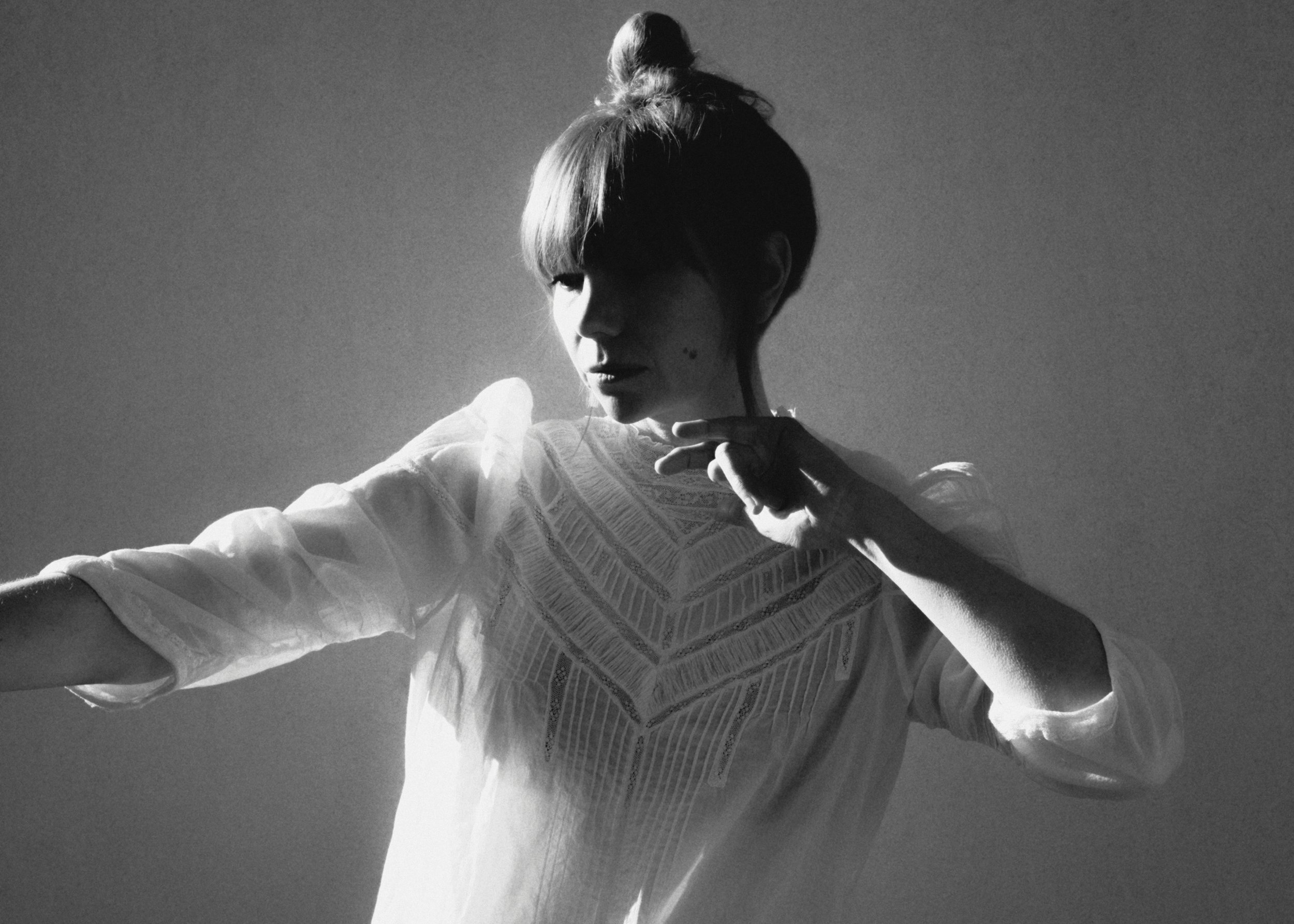
After six years away from the stage, a move to the hills, and the loss of her father, Poppy Ackroyd returns with Liminal: five albums in, and still finding out what she can do.
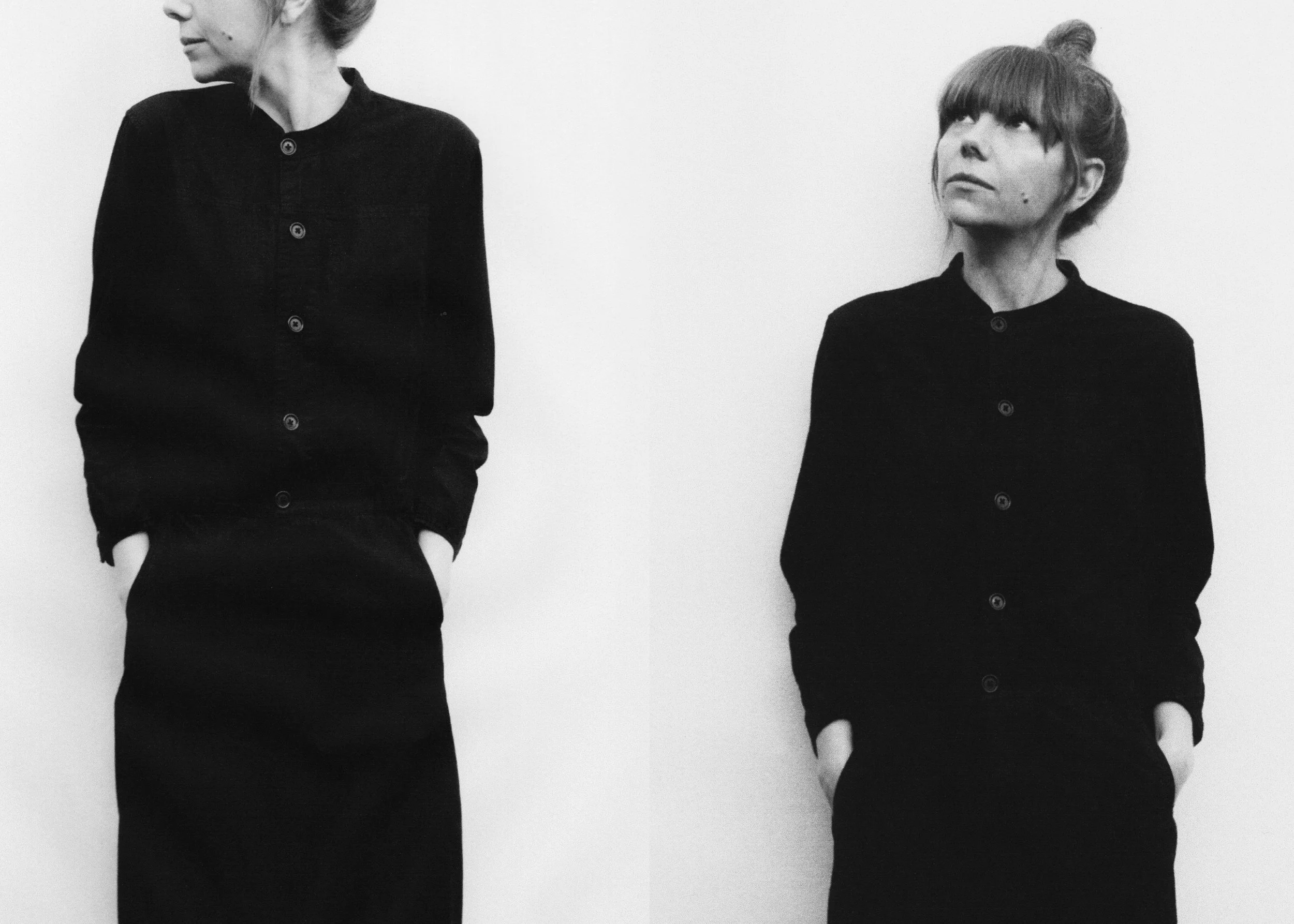
Poppy Ackroyd is looking out of a window at the hills. Behind her, taking up most of what is technically the living room, is a Blüthner grand piano she bought in 2008 from Gumtree, paid for on the back of three weeks of waitressing shifts, its keys fused together when she first found it. She has been here, in this undisclosed corner of the English countryside, for just under two years. Before this: Edinburgh, then Brighton, then here. Before all of that, central London, where she grew up, was the kind of city person who could not sleep without lorries going past.
The change, she says, has been more fundamental than she expected. "I feel like a different person. I can think in a way I've never thought before." There are owls at night. Deer in the garden. Ancient woodland behind the house. She wants to build a studio in the field eventually, one that looks out over everything. For now, she works in half the living room, the piano occupying the other half, as it has occupied every room she has ever worked in.
"I'm not going anywhere without it," she says, and means both things at once.
It is worth understanding where Ackroyd started before understanding where she is now. Her debut, Escapement, was recorded in Edinburgh using a Zoom H4 as a sound card, the microphone catching rain and traffic noise through the window of a flat on a roundabout. She was waitressing. She was figuring out how to produce. The Blüthner was already there, bought the year before, already something she would not leave behind. She was also, she reflects now, carrying a weight she did not entirely name at the time: being a woman in a world that kept directing its questions at whoever was standing next to her.
"If I always had a guy with me, everyone would always direct questions to the guy, literally just ignore me," she says. "The way people would talk, or give me advice. Are you giving the male artist that advice? I just had to be really hard on myself not to let it get me down."
Looking back at that version of herself, there is clearly affection there and respect. She describes her younger self as "really determined and focused and clear," says she has "so much love" for whoever that person was in that Edinburgh flat, wrestling with four different EQs on every stem to make it all hold together. The defiance in the work, she thinks now, came partly from having to prove things she should not have had to prove.
The industry has changed, she says, though not as cleanly as it should have. She watched a brief period of visible effort, labels actively looking for women on their rosters, and felt the particular discomfort of being ticked rather than chosen. "I don't want to be a woman on your roster. I want to be there for the same reason you'd take on any artist."
"Feel the fear and do it anyway. I didn't really ever realise how much that was true until I lived it."
Liminal was built in that space, slowly and in pieces. A difficult few years preceded it, the details of which she holds carefully. Her father, the celebrated etcher Norman Ackroyd, died in September 2024. The year before his death, she had already been working on Notes on Water, a collaborative project combining her music with his final etching, released shortly after he passed. Liminal came after. They are not the same conversation, but they are clearly adjacent ones.
She does not unpick this publicly, and there is no reason she should. What she will say is that the period around making Liminal was one in which she had to consistently put herself and her needs at the bottom, and that being a musician is one of her main needs. "It was constant frustration at not being able to make the work," she says. "But I think there's also a part of me that needs to do more than I need to for everybody. And so I kind of just surrendered to it."
Writing happened in the spring, and recording took place over two days the following November. Under high pressure because her piano had been mistuned and needed correcting before she could commit anything to tape. Editing happened across the following months, in any gaps she could find. Normally, these stages would run alongside each other; instead, each one settled before the next began. "The things that normally would happen side by side actually just gave you time to process the music in between." She finished it right up to the wire, still making changes on the deadline.
The record does not sound like it was made under pressure. It sounds like a record that knows exactly what it is. Some of that comes from experience: five albums in, she can hear the difference between a first thought that is right and one that is merely convenient. The single 'For Those Who Wait' arrived as a phone memo, one continuous improvisation. She notated it, added two bars where the phrase needed balancing, and that was essentially it. "I could instantly hear how it could expand and suddenly become this big ending." The impulse was kept, and everything else was built around it.
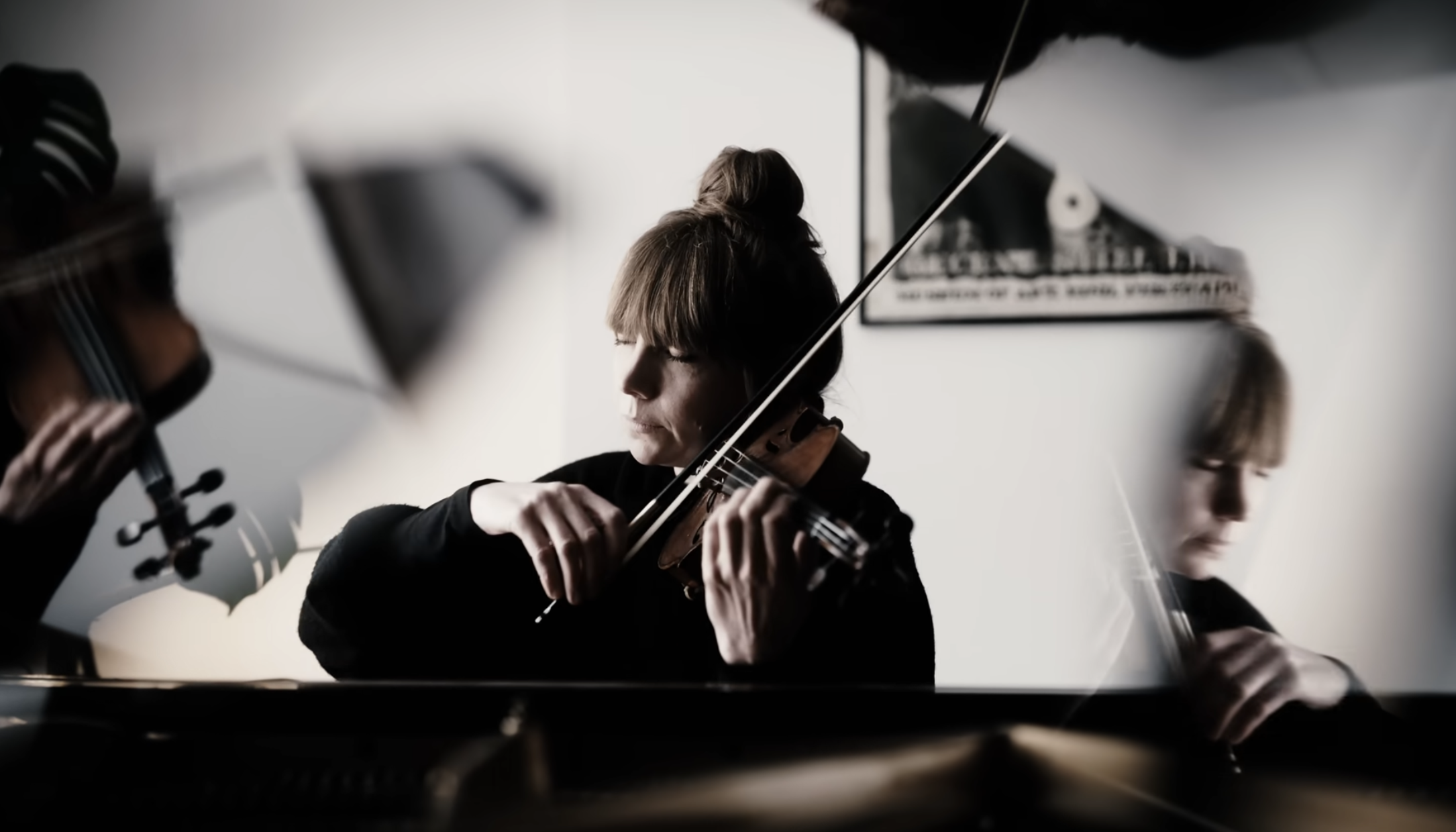
Grief record is the wrong frame for Liminal, and it would be reductive to stay there. The record is intimate, yes, but intimacy is not the same as stillness. Ackroyd describes it as "fizzing," more energetic than her previous work, full of an excitement about what she can do. The violin is back, absent from her records since Resolve in 2018, and on 'The Unknown' it moves against the piano in a way that feels less like accompaniment and more like argument. Every sound on the album comes from these two instruments alone, and the constraint is characteristically the source of its freedom.
She did not plan the strings and added them to two tracks late in post-production, and immediately thought: I've missed this so much. ” They stayed, and more tracks featured them. The album grew toward what it needed to be rather than what she had decided it would be.
The word she keeps returning to is fear. She has been thinking about it structurally, as a mechanism: the thing that expands the more you avoid it, the thing that contracts if you turn and face it. It is what the album is built around, and what happens when you stop trying not to know things. The feeling on the other side, which she describes as "this weird euphoric, I did it."
On stage, this has changed something practical. She performs solo, with visuals, live sampling, and the piano, with all audio going to front-of-house and returning to her so she can blend and sample in real time while continuously playing. She used to approach it with a careful internal accounting of how much she could hold. Now she approaches it as an open question. "It felt like ' What else can I do, rather than I'm at capacity.’ The ceiling is higher than she thought. The method for raising it was not technical. It was the willingness to find out.
"I have so much love for that version of me because it was so determined and kind of so focused and so clear about what they wanted to do."
Six years had passed since she last toured Europe. A show in Belgium recently, a familiar promoter, a good audience, felt like proof that the gap had not cost her what she feared it might. "It just properly feels like things are back to normal, how they should be." Her EU tour is confirmed for November, and UK and Dublin dates for June.
Looking back at the Edinburgh recordings now, at the rain and the roundabout noise baked into the stems, she is proud of that first version of herself in a way that does not require any qualification. She was determined. She was clear. She had no real idea what she was doing technically and did it anyway. That quality has not left her; it has just changed shape. What used to feel like having to prove something now feels more like wanting to find out what she can do next.