
ISSUE 17
Director Tom Harper & Composer Antony Genn On Scoring Peaky Blinders: The Immortal Man
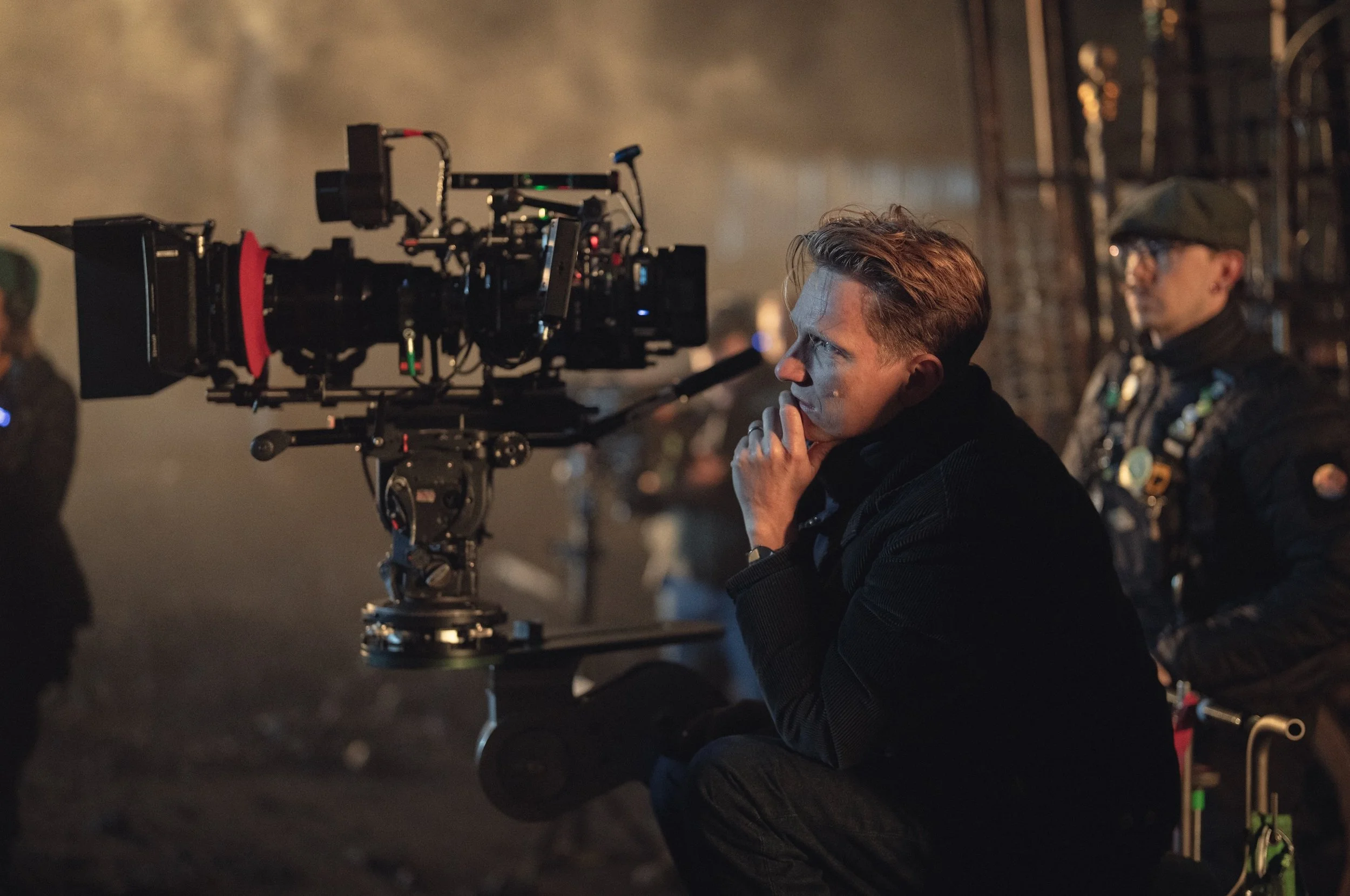
Director Tom Harper and one of two composers, Antony Genn, on the sound of Peaky Blinders: The Immortal Man, and why perfection bores them to tears…
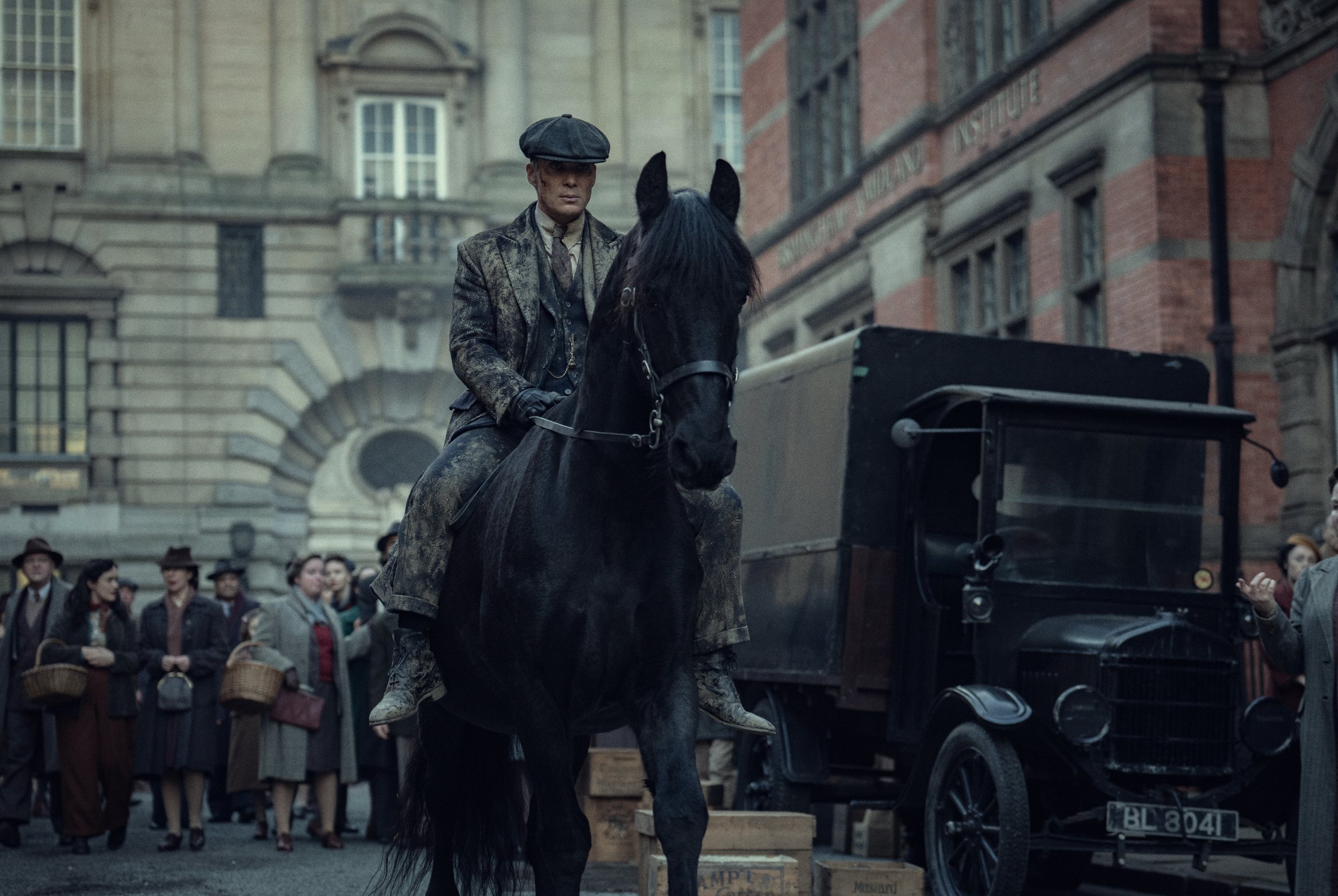
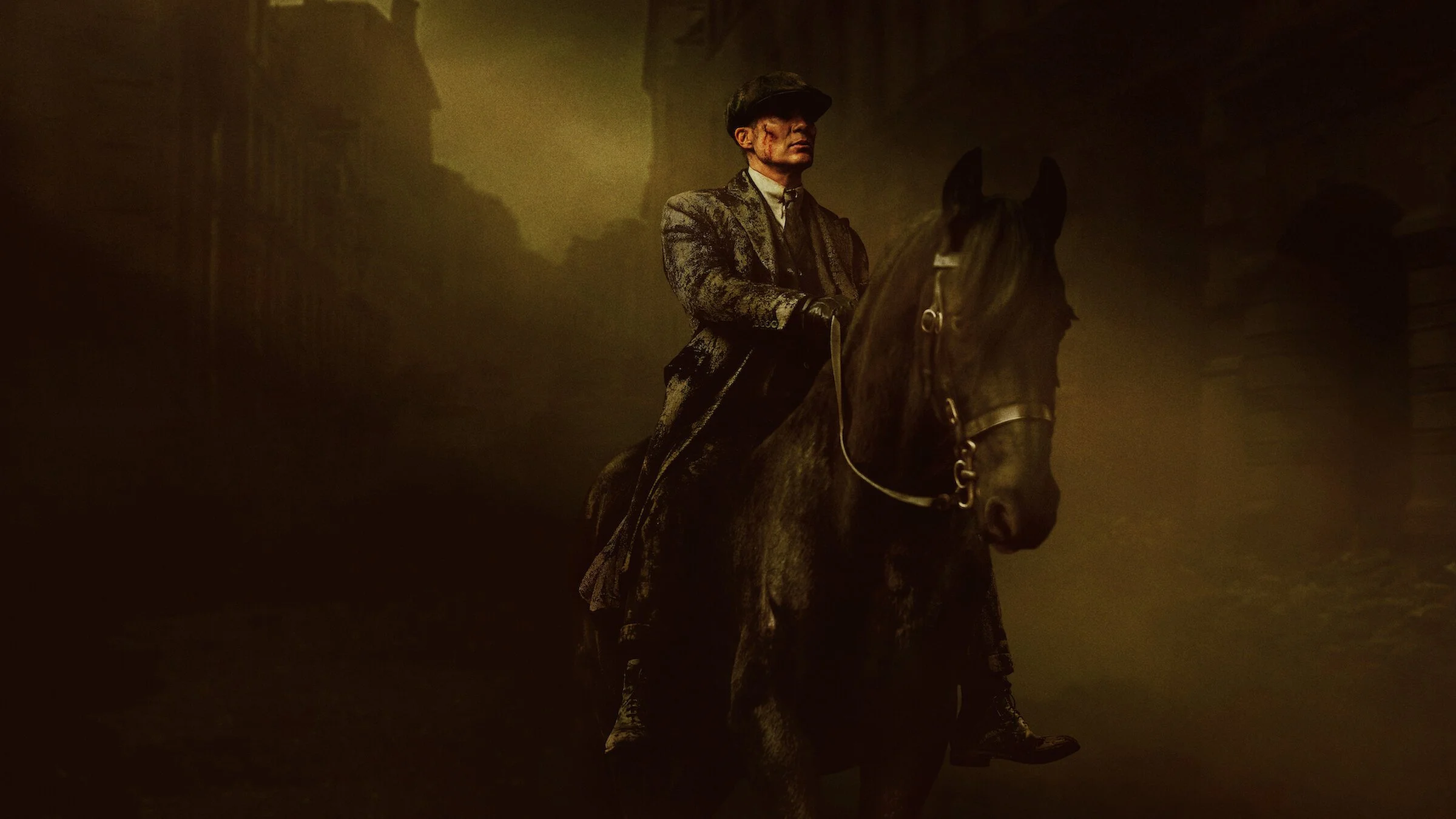
Peaky Blinders: The Immortal Man is the franchise's first feature, a different register from the series, quieter in some places and more violent in others, with Tommy Shelby stripped of the swagger that defined him and left with something rawer underneath. Tom Harper directed it, and Anthony Genn and his long-time collaborator Martin Slattery scored it. The result is a piece of work that both parties seem genuinely proud of, which in this industry is rarer than it sounds.
Both Harper and Genn came to film via music rather than the other way around. Harper went to school with Tom Skinner, now drummer for The Smile, Thom Yorke's band, and spent his formative years around jazz musicians good enough to make him quietly redirect his ambitions. Genn's education was less formal: a bedroom shared with a brother seven years older, who in 1977 was playing him the Clash, the Stranglers and the Sex Pistols. He has known Cillian Murphy for over twenty years, bonded entirely over music, and came into the Peaky Blinders world on season four when Murphy called him up and asked if he fancied it. For The Immortal Man, Genn made the call himself. The question of how that background shapes the way you work, the instincts you develop, the things you reach for first, is where the conversation starts.
We talk on one morning whilst both of them are in New York; it's 20 degrees and sunny, and Genn can't quite believe it…
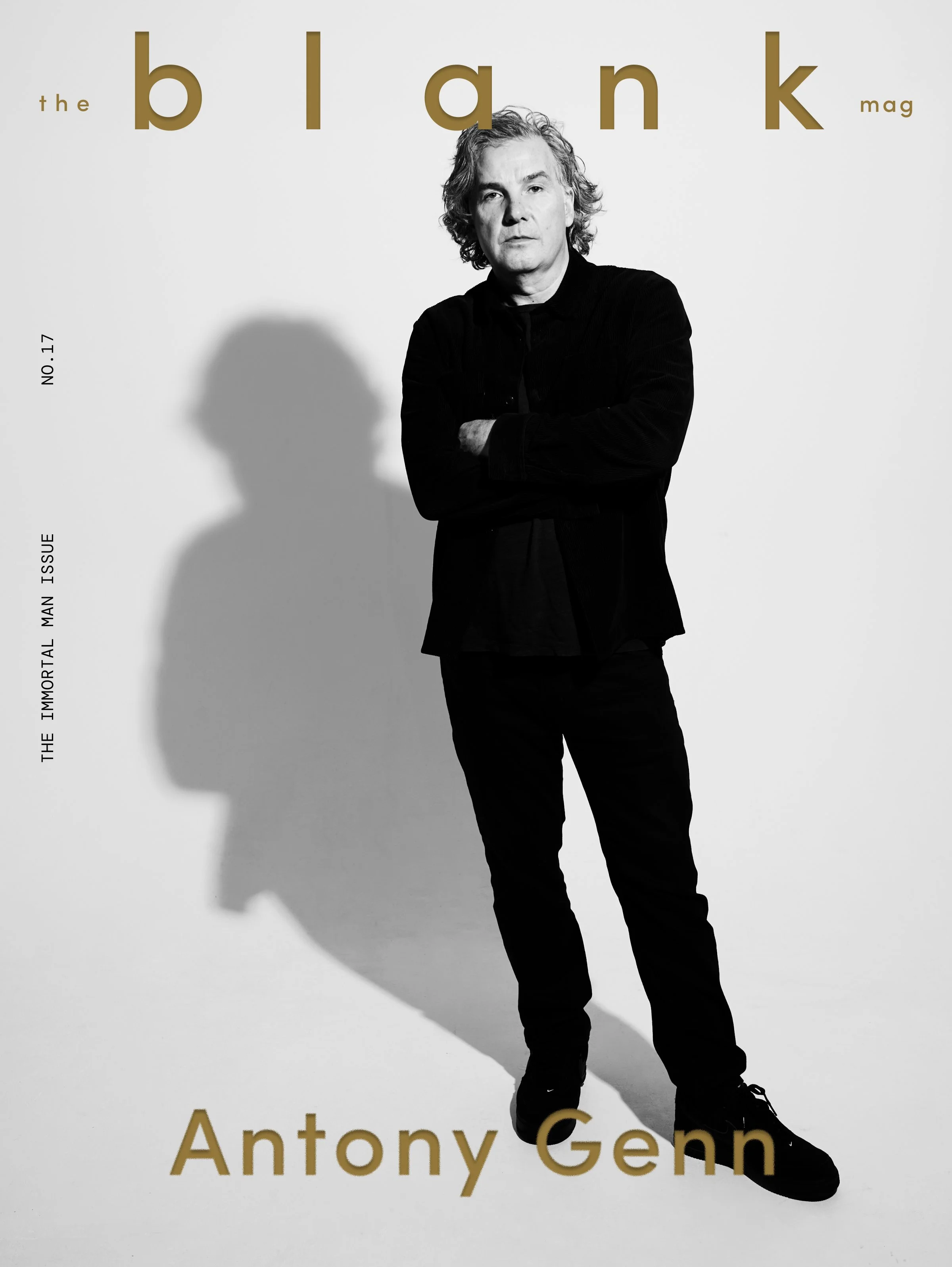
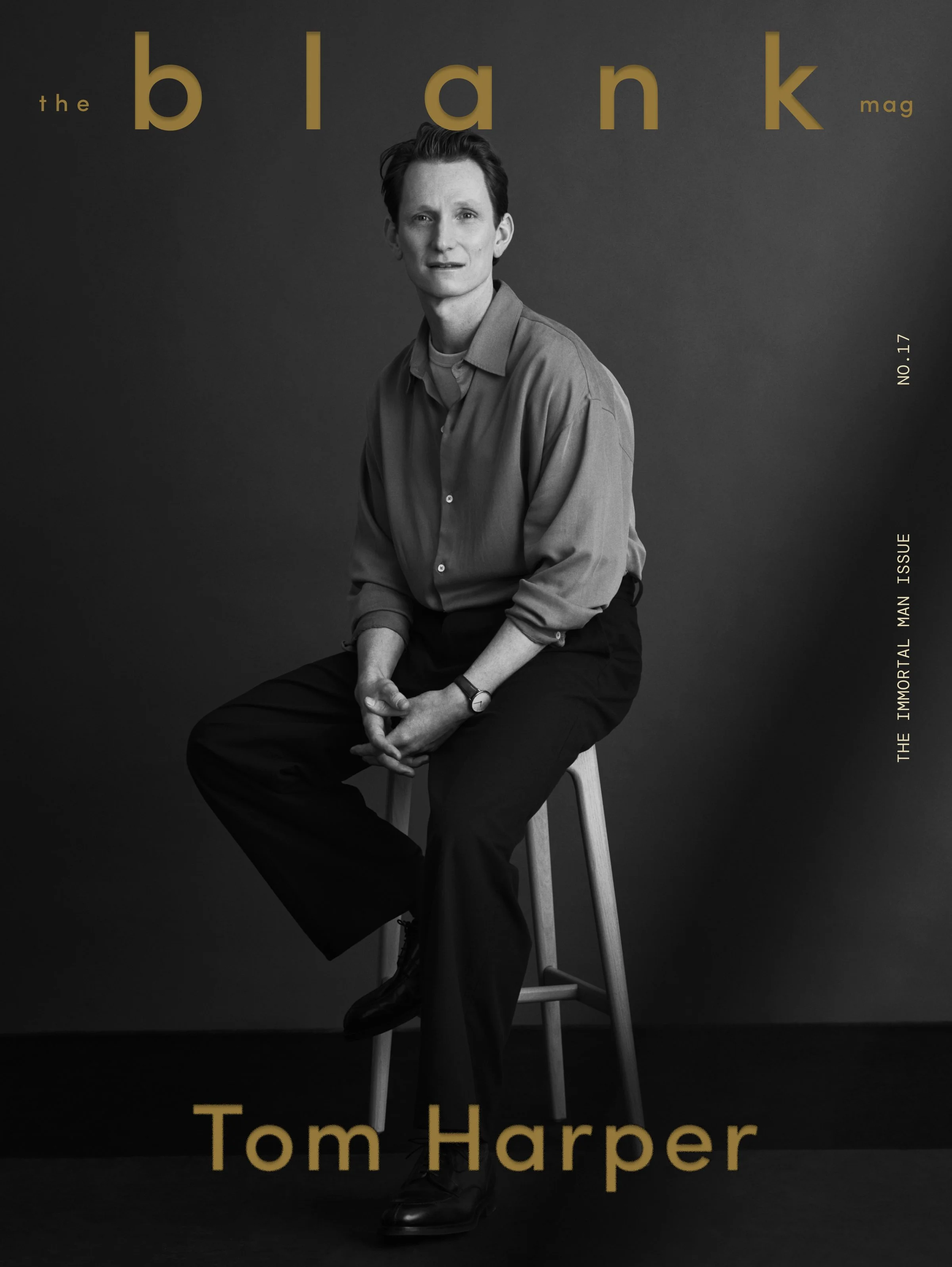
Photographs Eva Pentel & Boo GeorgeHow did your time growing up in and around bands shape your approach to music in film and TV?
ANTONY GENN: Coming from that approach definitely gives you different skill sets than the normal route that goes into film, which is often an orchestral background. But having said that, I grew up listening to James Bond music. I've got a brother who's seven years older than me. So, from being three or four years old, he was obsessed with James Bond. The first song I ever loved was We Have All The Time In The World, John Barry, Hal David, Louis Armstrong. On Her Majesty's Secret Service. I loved it so much it's tattooed on my arm.
TOM HARPER: The first creative thing I got into was music. I was fortunate to play with a group of people who were really inspiring and unbelievably good musicians. My best mate at school was Tom Skinner, drummer for The Smile now. And we were all into jazz back then. But I definitely realised I didn't have the same level of ability as the people I was playing with. I just wanted to find some other creative outlet where I wasn't always the worst, I think. And the first person I started working with was actually a musician, a guy called Jack Arnold, who wrote the very first short film I did. He's a composer himself, a saxophonist. So that sensibility was always there. There is a rhythm to drama. Beckett said all drama is about rhythm. I think that's not always true, but just in the blocking, the way a scene moves, you can drive something forward without a single note of music.
ANTONY GENN: I think there are these things, Walter Murch, the great editor, has this framework where he talks about six points, and the first is emotion, the second is rhythm. That's what he cuts for. He was an editor on The Godfather, worked with Coppola, and he's also a revolutionary sound designer. I met him in a lift once. I was totally starstruck. Because I'm a nerd.
TOM HARPER: Super tall guy, wasn't he? I think I met him once as well.
ANTONY GENN: Legendary. But yeah, music is rhythm. And the idea that you can't read it... Look, I wasn't educated into it. I didn't come from a family that gave a damn about teaching us anything. I had to learn in other ways. But you absorb music. You absorb sound, emotion, all of that. By the time I was six, in 1977, I was sharing a bedroom with someone seven years older than me, playing me the Clash, Buzzcocks, the Stranglers, the Jam, the Sex Pistols. Can Ray Charles read music? Could Stevie Wonder? These geezers are blind! It's about emotion.
"We are humans telling a story to other humans. The closer you can get to that human exchange, the closer you are to the heart of what you're trying to do."
– Tom Harper
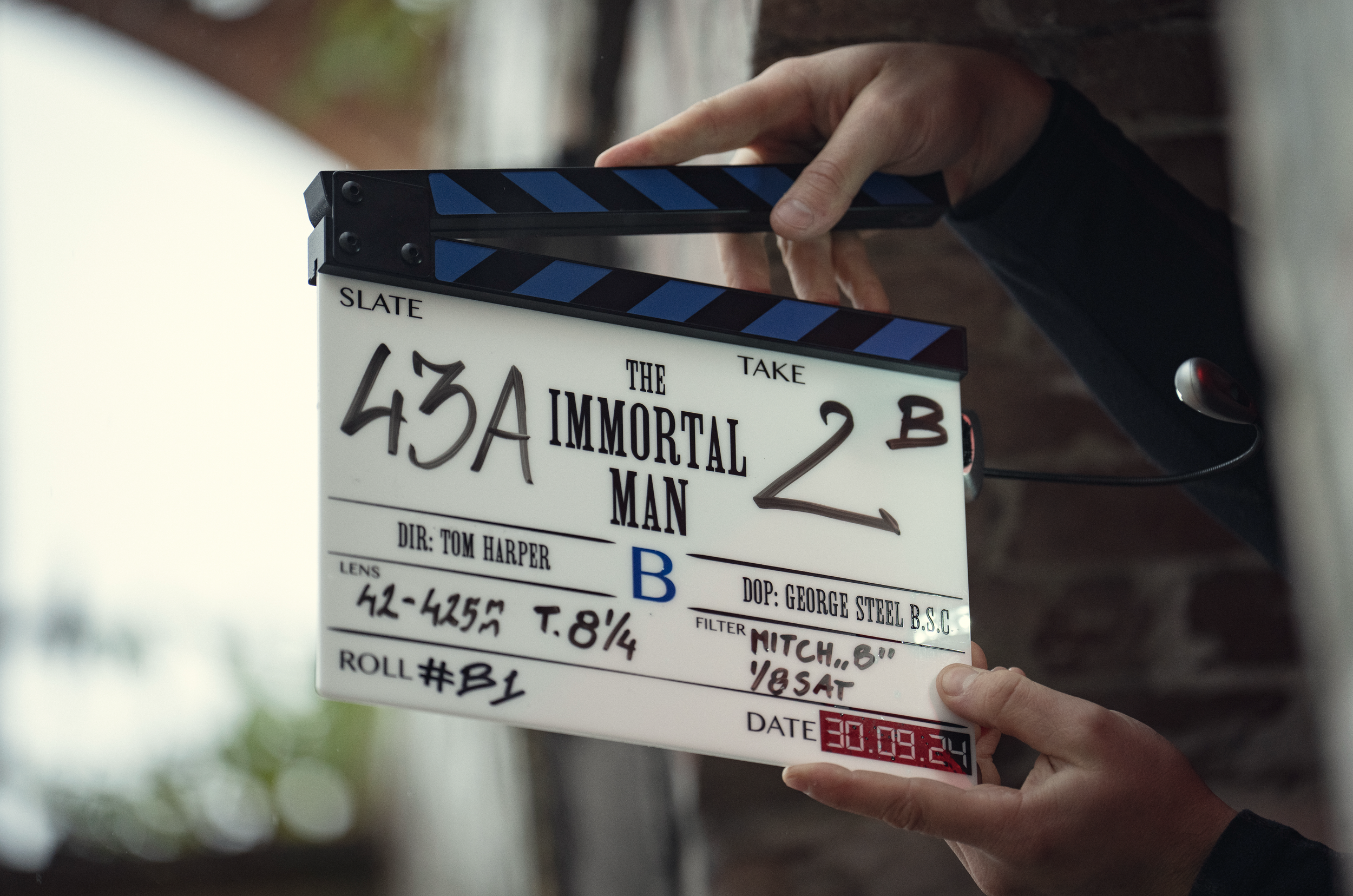
How did you want The Immortal Man's sound to differ from earlier Peaky seasons, and how did you communicate that between you?
TH: I don't think we spent much time talking about how to make it different from earlier seasons, in truth. We knew we wanted to continue the anachronistic approach to the score and the soundtrack. But every story has its own demands and requirements, and if you follow the story, that's the most important thing.
Red Right Hand was always in the script for us to put in the film. And when I was going through the rough assembly and that track came on, it immediately became apparent that it didn't work. And I was like, that's interesting. Because Tommy has evolved as a character. That bravado, that swagger, it felt appropriate to the Tommy of thirteen years ago. It didn't feel appropriate to the broken, pained, cracked Tommy of now.
AG: I get really annoyed, to be honest with you, at some things where there's clumsy ins and outs, where I just know it doesn't have to be. Sometimes it's a great idea to have a recognisable track, but it's also got to twist and bend and come under dialogue and all that. So there's only really one track in this whole film where it just plays as itself. Everything else has been touched.
TH: Even Romance, we didn't leave that alone.
AG: I took the stems and waited for the ding to come in. After that, I kind of reworked and edited it a little.
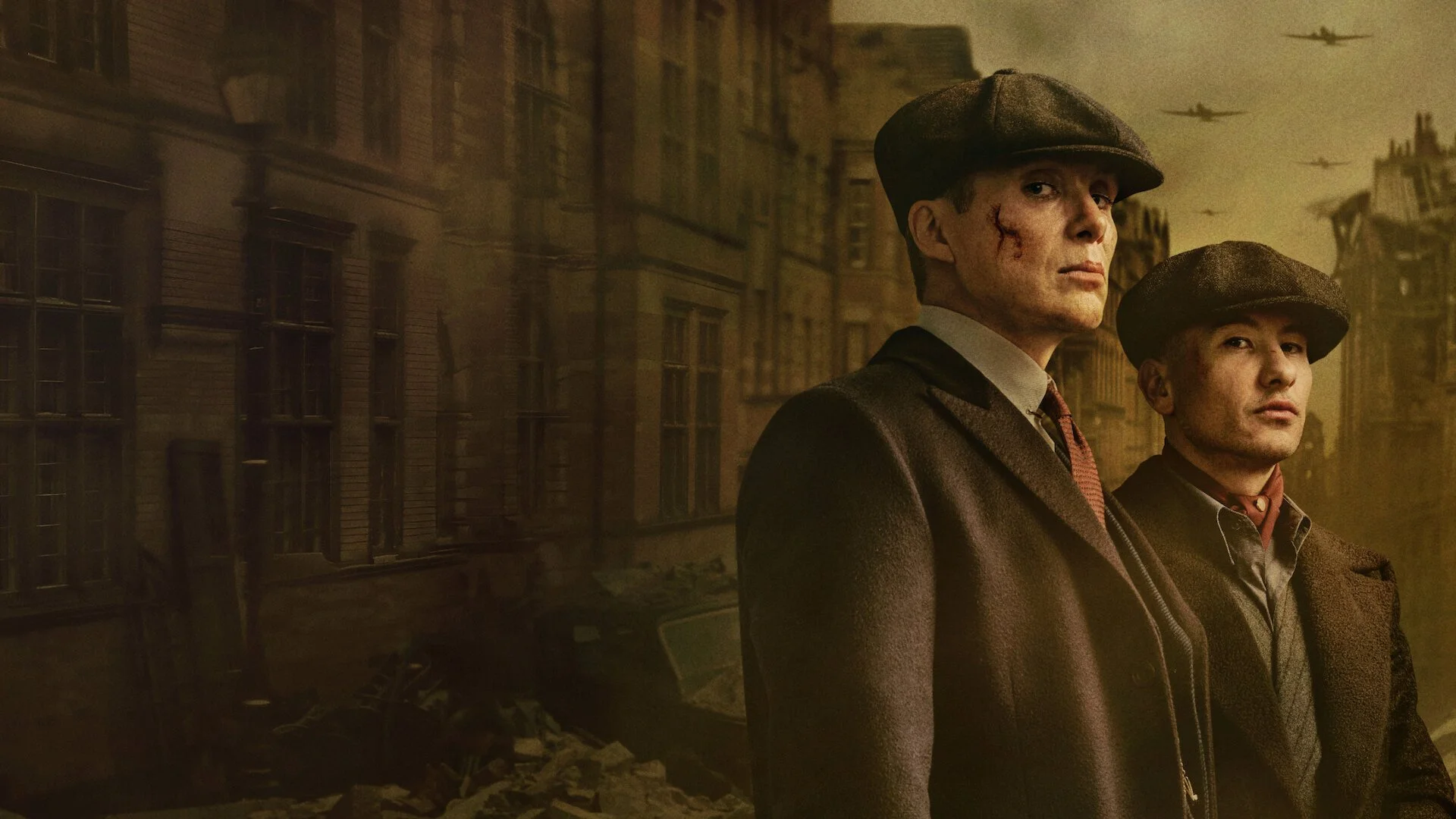
What did you need most from each other while working on the film?
AG: We started working on this in October 2024. And from the moment we started, we just make music because we hit things. We have a pretty big studio. We have lots of instruments. That's how we make music, and we love doing it. Sometimes Tom would say, " We're doing this scene, any chance you can get us something?” And it's like, yeah, mate. And then we'd just do something and send it over.
TH: I love that. You hear about Morricone and Sergio Leone: Morricone writing the music first, and Leone shooting scenes to it, playing it for the cast and crew on set. Once Upon a Time in the West, you can feel it. And for something like the Garrison Pub entrance, we didn't play McCluskey then; there was another track Ant sent through, but it just had that danger and energy. And how, in a cold studio in Birmingham at an ungodly time in the morning with a bunch of people who've been up for hours already, do you create the feeling of everyone being pissed up and having a good time? You whack the music on at full volume. You get there pretty quickly.
AG: Also, we never once sat down and spotted the film, which is something most composers do. We never did that. Tom just started putting stuff in, and when he got excited, he'd say, “You've got to come in and see this.” One of the greatest moments of the whole process was when we'd done the song with Grian, it didn't have lyrics yet, but the music was very formed. I went in, and Tom went, I've got to show you something. And when he showed me where he'd placed it in the film, I was like, what? Because I'd thought maybe it goes at the end, I knew it was a big piece. But I didn't know the sequence he was putting together. And then when he showed me... that's killer. From that moment, we just kept crafting it with an inch of its life.
Then Grian sang and wrote the lyrics. And there's the bit where he goes. How does it feel to be a freak? Come on. Martin and I looked at each other like, " What did he just say?” But that's the thing about Grian, he's clearly a brilliant storyteller, and we had a screen up in the live room, so he was singing, and he could see the film. He was connected to the emotion of what it needed.
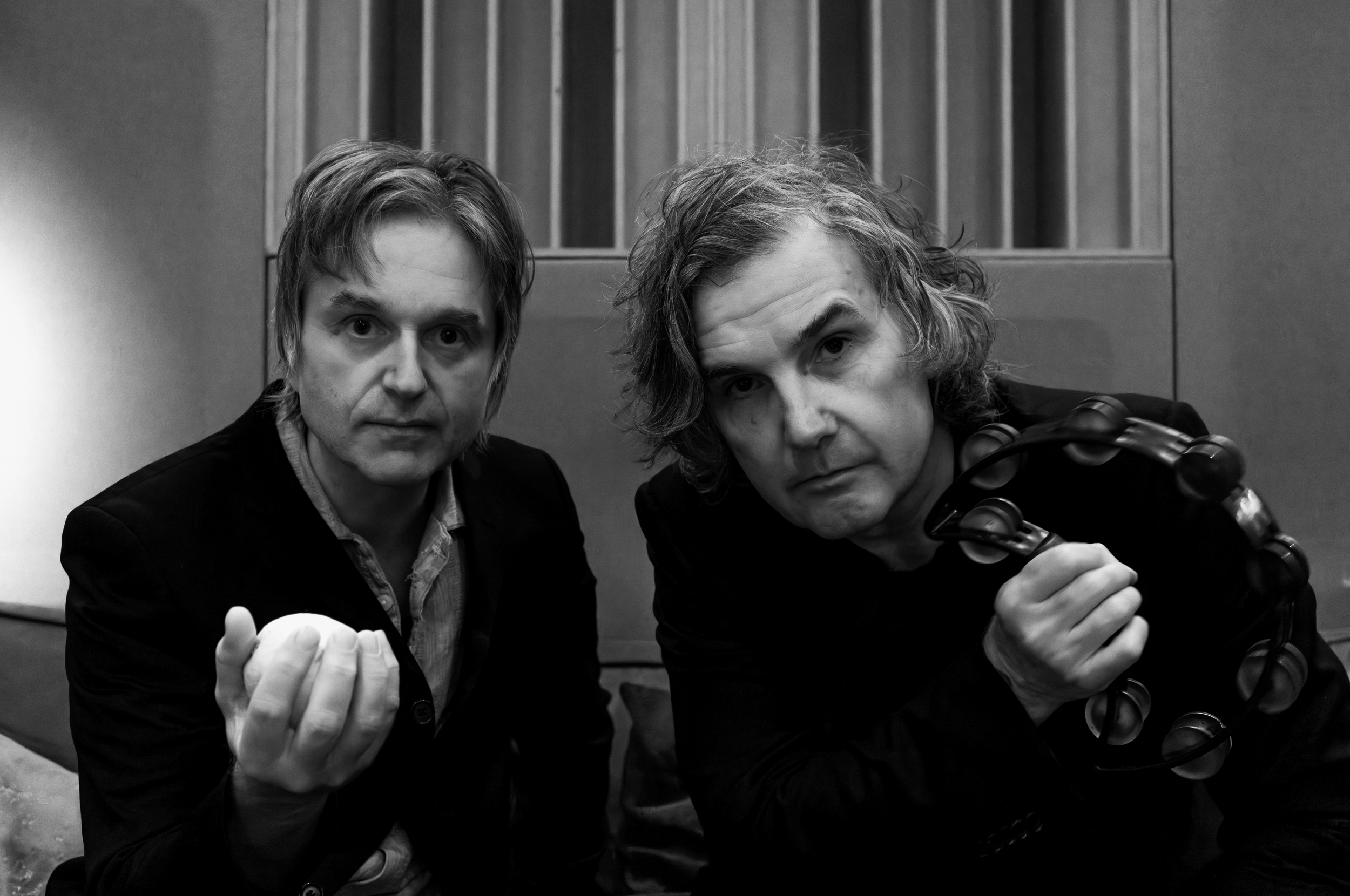
Martin Slattery & Antony Genn
Could you share more about your recording sessions for the score?
AG: We worked a lot with a viola player called Emma Smith. She's totally brilliant. She says, I'm not really a viola player. Yes, you are. I always wanted to use viola because it's a bit darker. Cello is a bit too emotional. The violin's a bit fragile, maybe too beautiful. Emma just had a beautiful tone. And I like to record real stuff from the beginning. It's financial ruin. But I just want to keep doing it.
So we did a session with twenty players in my studio, and you get a more direct sound. And then we went into Abbey Road, which is a very big, grand sound. Three different layers. You've got the direct coarseness, gnarly. Tom kept saying more gnarl, let's have more gnarl!
TH: Love a bit of gnarl.
AG: When you go into a big studio, it softens the sound, and that's good for the bigness, the grandeur. But I also like the dirty, filthy gnarliness, which is a symbolic relationship with the characters and the story of this film. Filthy gnarly stuff.
TH: What we're saying is: we like filth and gnarl. That is the overriding takeaway!
AG: I love physicality in music. There's a lot of music now made in a certain way. I just don't want to make it in that way. If you're doing something yourself, in your own studio, it's only ever going to end up sounding like you.
TH: That's very true of the music. But it's also true of films in general, in this age of technological advancements, where AI is used in various ways and will only increasingly be used. I think the heart of cinema and storytelling lies in what makes us human. Just because you can do all these amazing things doesn't mean it's going to connect on a human level. We are humans telling a story to other humans. The closer you can get to that human exchange of ideas and emotions, the closer you are to the heart of what you're trying to do.
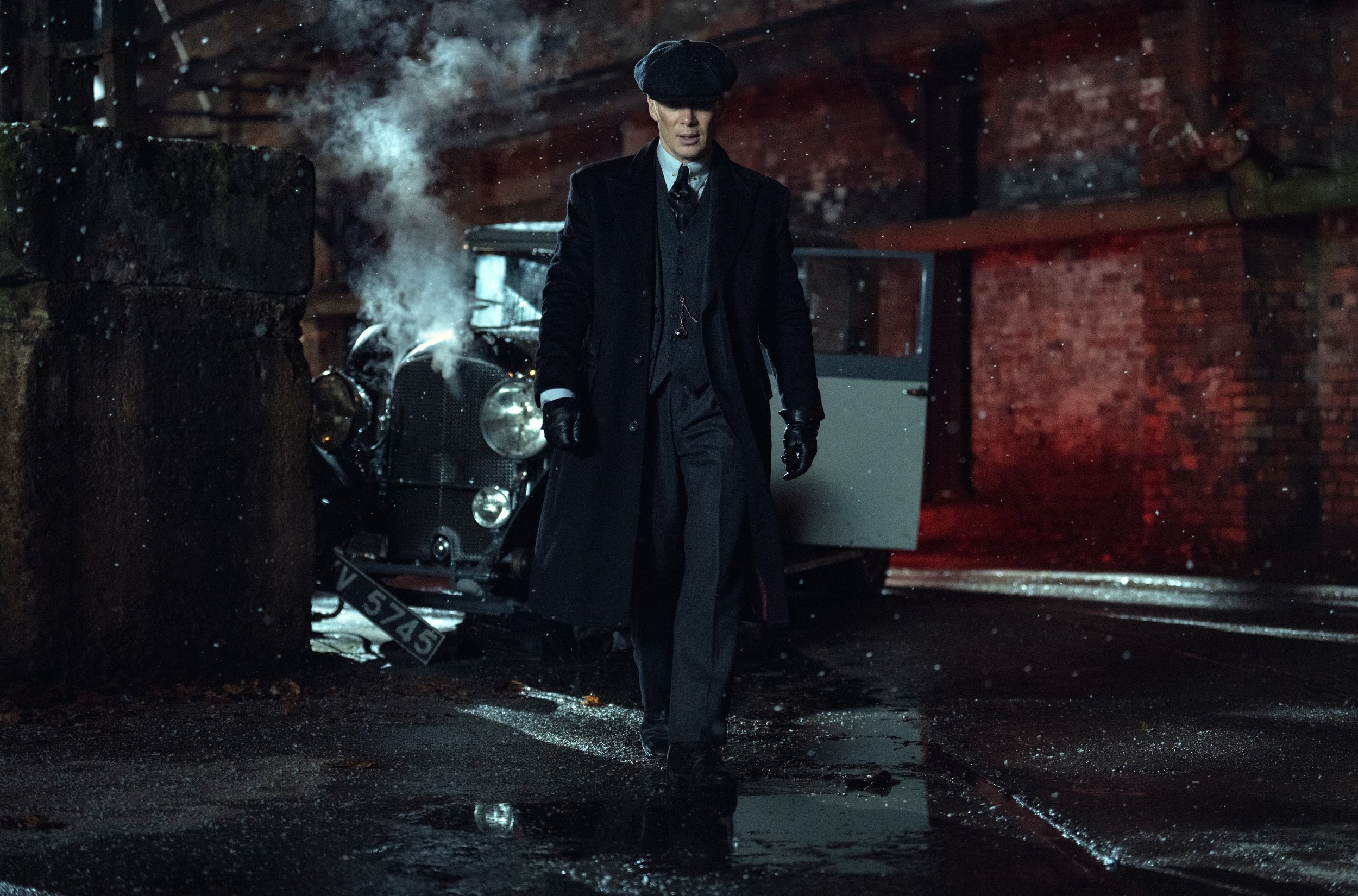
What do you want audiences to take away from the film?
TH: For me, the main theme of the film is about inheritance and legacy. What you pass on. All of Peaky has really been about how a community's life was taken off course by the First World War, the violence, the trauma, and this is the part of that where a kingdom is perhaps passed on, but also the trauma from one generation to the next.
AG: I think there's a lot of trauma in the music and what we did. A lot of layers of fracture.
TH: It's not just about trauma. It's also about taking something back. It's a story of a man who has been overlooked and underestimated, taking back control. That's present in the music as well. There's an energy, a strength to it. As well as the cracks and the broken bits and the fragility.
AG: You could work for a thousand years and never get an opportunity to work on another film where you can do such a breadth of music. One minute, we're doing something with a tiny old piano, fractured. Next minute, dirty, filthy bits. Next minute, big orchestral strings and brass sections. But it all glues together. It all feels like it's coming from one place. And ultimately, music is there to help tell the story, he story's in charge. Our job is to serve it. And this story has such an arc. It starts so small and so gentle. And then it goes so big.
I'm into the Stranglers. I'm into Debussy in equal amounts. I'm into the Beastie Boys, and I'm into Hawthorn Park. So to me, if someone can listen to this music and go, yeah, that goes on a journey, just like the film goes on a journey, then that's it.
“I'm just sick of perfection. It bores my fucking tits off.”
– Antony Genn
What do you want to see more of in the future of filmmaking, and from a composing perspective, what do you hope not to lose?
TH: The human stories are the most interesting. There's been a slight move away from the big superhero movies, from where you get away from the reality of human emotion. More coming back to ordinary people in extraordinary circumstances rather than extraordinary people in extraordinary circumstances. What are the things that make us most human? That can be big or small, it can be Kes on one level, but it can also be Back to the Future or Birdman. They tend to come back to our shared humanity. That's the most interesting thing. I would like to see us focus more on it.
AG: Fewer samples. More sound travelling into microphones. More personality. More human beings interacting together at the same time to create happy accidents. To create air, sound and physicality. The late 1960s and the 1970s were the greatest period in cinema, but in music, you can just feel it. Morricone, Jerry Goldsmith on Chinatown, Bernard Herrmann on Taxi Driver, Michael Small doing Klute and Marathon Man, and David Shire on The Conversation. It's all physical. There's so much emotion. There's so much of this sound that puts you in an environment, puts you in a room. And it's imperfect. And it's just like Tom's talking about, the human stories. I'm just sick of perfection. It bores my fucking tits off.
Peaky Blinders: The Immortal Man is out now on Netflix.