Do We Have A Crediting Problem?
Words by Harry Levin
When pop stars score films, the conversation follows them. The composers who actually wrote the music are rarely part of it. Harry Levin on an industry habit, the culture has stopped questioning.
There’s a pattern emerging in how cinema is being sold to audiences, and it has nothing to do with directors. It starts with a pop star, a press tour, and a playlist, and somewhere in the middle of all of that, the person who actually scored the film gets left out of the conversation.
Take Wuthering Heights. Emerald Fennell's adaptation of Emily Brontë's novel arrived with Charli xcx attached as its soundtrack curator, original songs, and the full machinery of a pop rollout running parallel to the film's release. It worked. The film has earned over $226 million at the global box office, and Charli's presence on the press tour kept it in cultural conversation in ways a traditional score campaign simply wouldn't have.
But Anthony Willis wrote the music for the film. The instrumental compositions, the ones that actually hold Heathcliff and Cathy together across the film's most heated exchanges, are his. And in the buzz around the Wuthering Heights release, that contribution has been almost entirely invisible.
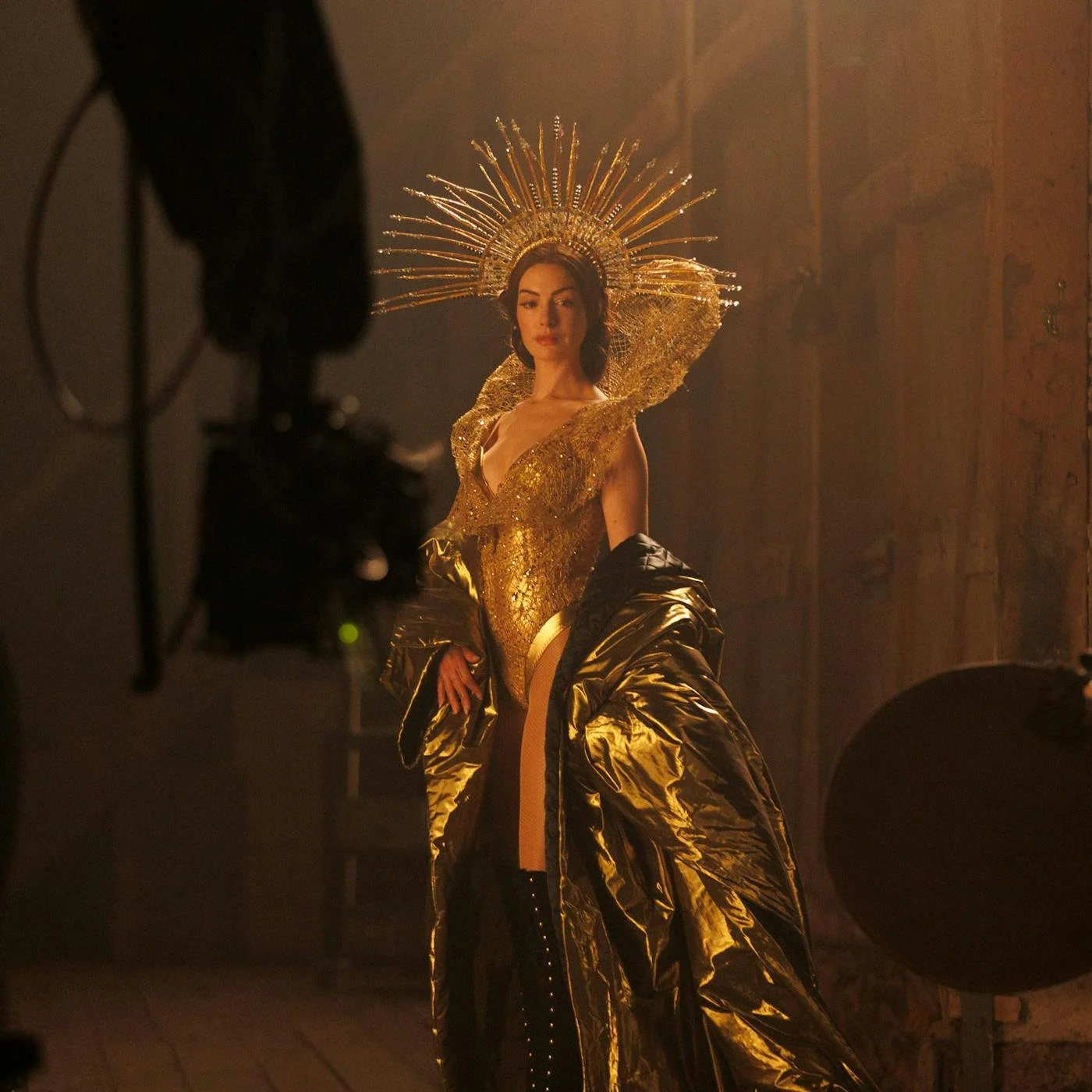
Then there's Mother Mary, David Lowery's new film, where Charli xcx, Jack Antonoff, and FKA twigs wrote and produced the soundtrack, performed entirely by Anne Hathaway, the same pop-forward architecture, a different film. Hart's original score has been released separately, after the pop record, meaning the music that holds the film together arrives later, and quieter, than the music built to generate headlines. The film’s score was written by Daniel Hart, Lowery’s frequent collaborator and the composer behind A Ghost Story and The Green Knight. Hart has spent years building one of the most distinctive bodies of work in American cinema, yet he remains largely unknown outside the industry. The conversation around the film begins and ends with the names that come with pre-built audiences.
This isn’t an argument against pop artists in film; Charli xcx making music for a Gothic romance is genuinely interesting. Antonoff’s instincts in a cinematic context are worth taking seriously. The question isn’t whether they belong in these projects; it’s why their involvement so consistently absorbs all the available attention. Part of it is structural; when a pop artist attaches to a film, they bring their audience with them. That's the transaction, and the studios understand this.
The Thomas Newman problem is also instructive here, when Newman scored both Spectre and Skyfall, two of the most sonically sophisticated Bond films in the franchise's history. Adele won an Academy Award for "Skyfall", and Sam Smith won one for "Writing's on the Wall." Newman was nominated for Skyfall but didn't win. The memory of those films' music belongs almost entirely to the songs. The scores, which do the actual work of sustaining tension across two-hour espionage narratives, are effectively anonymous.
This is the invisibility problem in its clearest form: not that composers aren't valued within the industry, but that the culture has developed no framework for caring about them publicly. The Academy perpetuates it; Best Original Score is presented like any other award. Best Original Song gets a live performance, choreography, and the full theatrical apparatus. The ceremony itself tells you which one it considers entertainment.
It runs deeper than press coverage, and earlier this year, Marco Beltrami took to Instagram to apologise to fans after the release of one of his scores was delayed. He didn't go into specifics, but the frustration was plain on both sides: a composer unable to share his finished work and an audience left waiting for music they wanted to hear. Credit is one thing, and control is another. And yet the picture isn't entirely bleak…
The counterargument, and it's a real one, is that the pop crossover is also creating new audiences for film music. Howard Shore has gained over a million Spotify monthly listeners in the last six months, driven in part by the cultural moment around the Lord of the Rings 25th anniversary. Fans who came to film music through a pop soundtrack have a tendency to go further.
The solution isn't to police which artists get to make film music, it’s to develop the critical language to hold multiple contributions in view at once.
And some artists have built careers that refuse the distinction entirely. Daft Punk's score for TRON: Legacy didn't require audiences to choose between electronic music and film composition; it was both. Trent Reznor and Atticus Ross have won Academy Awards under their own names while maintaining one of rock's most significant catalogues as Nine Inch Nails. Hildur Guðnadóttir came out of Icelandic folk music before her score for Joker won the Oscar. These aren't crossovers; they're composers who made the boundary irrelevant.
The solution isn't to police which artists get to make film music, it’s to develop the critical language to hold multiple contributions in view at once. The score and the soundtrack album are not competing. But right now, the culture is only highlighting one of them. The composers aren't invisible because audiences don't care. They're invisible because nobody built the language to make them visible.