
5 Questions With Nathan Johnson

Nathan Johnson has carved out a distinctive voice in film composition, building a career that celebrates imperfection and human texture in sound. Best known for his collaborations with director Rian Johnson on films like Looper and the first in the whodunnit series, Knives Out, Nathan's approach combines technical innovation with a songwriter's sensibility; even his orchestral scores often begin with lyrics as he searches for singable melodies.
His latest work, Wake Up Dead Man: A Knives Out Mystery, sees him returning to the beloved detective franchise with an entirely fresh sonic palette. Working primarily at Abbey Road Studios and recording in an old stone church in London, Nathan embraced spatial audio technology and textural experimentation to create what he describes as the franchise's most emotionally generous instalment. The score features unconventional choices like a six-bass-clarinet rhythm machine that sounds like "skittering spiders and falling dominoes," while maintaining the emotional weight needed for a film that made him cry on first viewing…
Throughout this whole year, what's been your one studio bit of gear that you haven't been able to live without?
The Thunder Tree, Pete Cobbin and Kirsty Whalley's invention. It's an 11-microphone matched array on a giant cube, their very clever approach to capturing spatial audio. We used that on every single recording session for Wake Up Dead Man. Although it's not my piece of studio gear, I got to benefit from it all year long. Back in January last year, I came over to London, and we went into this old stone church. Pete and Kirsty came out and set it up based on early talks I had with them about how this movie was going to be more textural. Getting to be a part of their new genius invention was something this movie definitely couldn't live without.
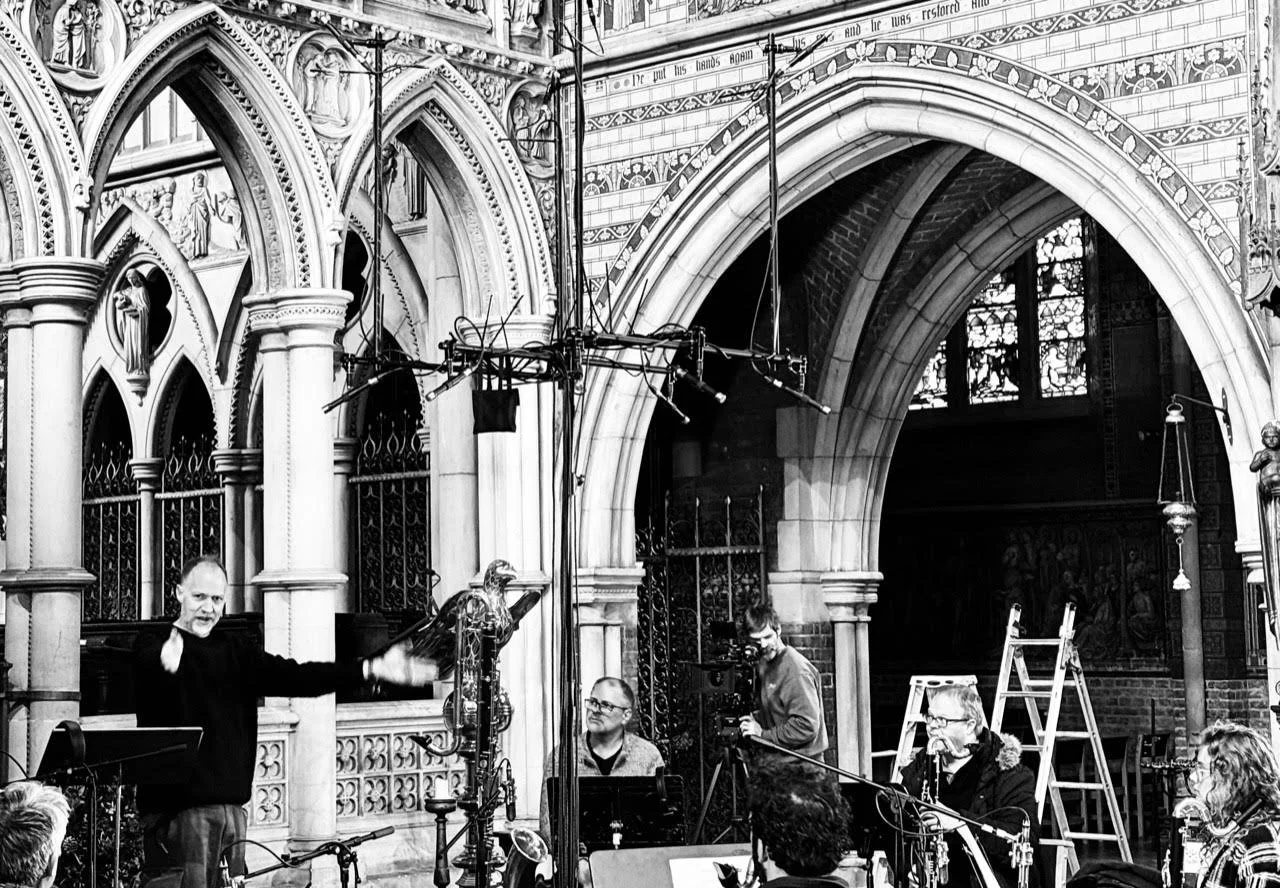
“I'm intrigued by this idea that all sound can be music.”
Photo: Pete Cobbin
What was the first sound or instrument that you used to crack the tone of Wake Up Dead Man?
I had this idea of creating a rhythm machine with six bass clarinets. I hadn't really heard it done before, but I could hear it in my head. I love the way key clacks sound, and I was imagining, in conjunction with the Thunder Tree and its spatial way of capturing sound, what if I brought in six bass clarinets, set them up in a semicircle, and led them through these gestural recordings where they would key clack but cascade out around the semicircle.
I was imagining this as sort of a replacement for a snare drum sound, but the flammiest, laggiest, wrongest snare drum you could imagine. That was the first thing we recorded for the score. It almost sounds like a mix between skittering spiders and falling dominoes. To me, that felt really in line with this unsettling nature of the movie. There's something unpredictable and very human when you have six bass clarinettists who are not used to using their instrument purely as a rhythmic instrument; creating a six-headed human rhythm machine was really the thing that unlocked the score for me.
What makes broken or imperfect instruments so interesting to you, and is there a danger of overusing them?
At a core level, it feels human to me, someone's voice feels like a combination of what they're good at and what they're bad at. I can work with my voice and develop it, but when I try to mimic somebody else, that's not a great thing. Part of it is being comfortable and intrigued by imperfections. Some of my favourite voices, Tom Waits or Bob Dylan, would not be considered perfect voices. The imperfections are part of what I love about those voices.
It also comes from my history; when we did Brick, we basically had no budget. I recorded that whole score with one microphone on my laptop in my apartment. Instead of a string section, we used tuned wine glasses because I thought, "What's a way we can evoke those ethereal pads in a way that's doable?" I had a kind of out-of-tune piano in my hallway, so we tacked it up, tied light bulbs and nails and bolts on it, and leaned into that imperfection.
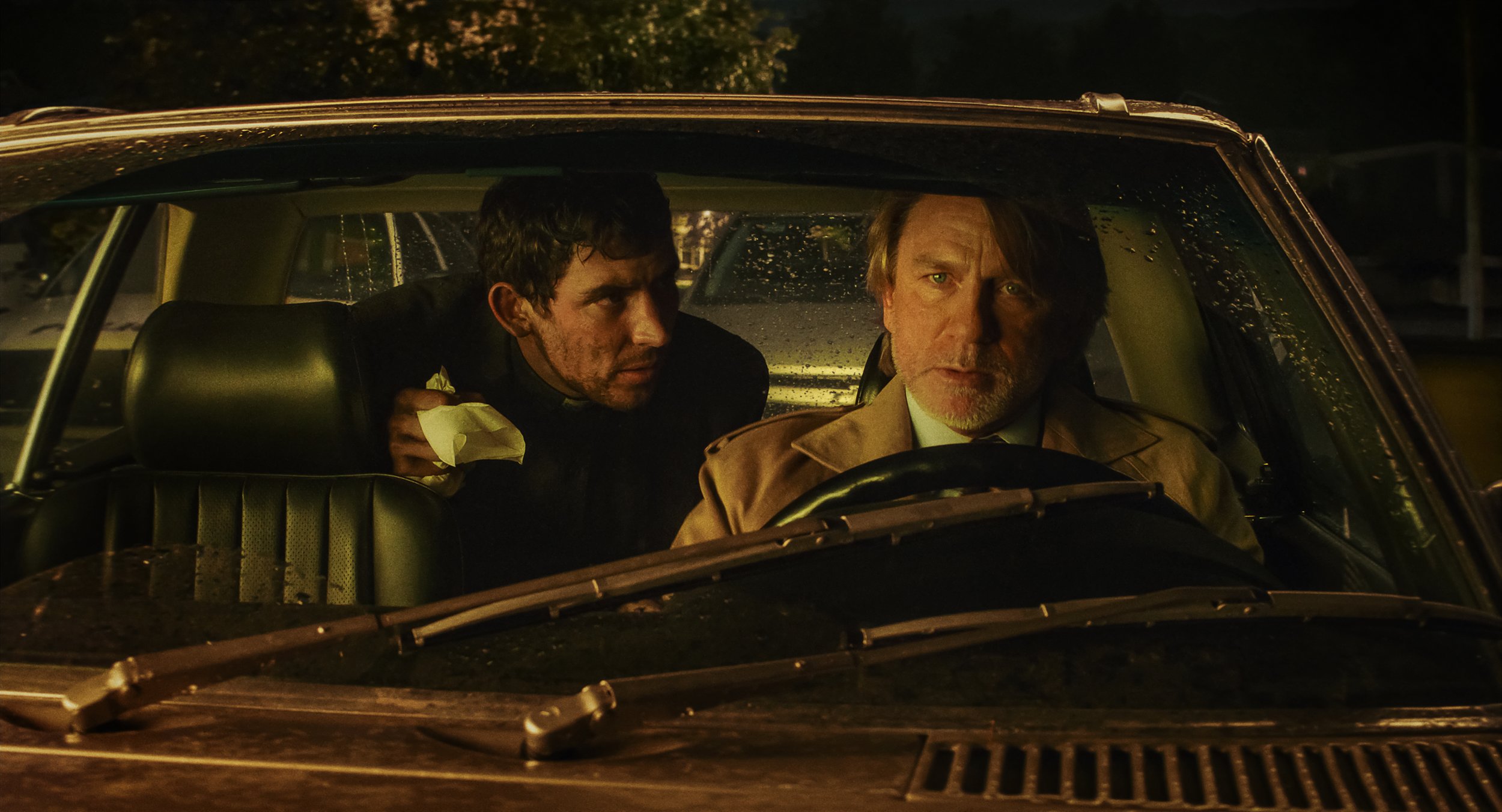
“When I read a script the first time, as a fan of movies, I really love that moment to just take in the script as someone who's thinking as a human who loves storytelling.”
In dialogue-heavy films, when do you decide to let the music take centre stage?
That's kind of a challenge in these movies because they're very dialogue-heavy. We always know there's going to be a giant 10-minute scene at the end where everything is laid out and we recontextualise things, always driven by dialogue. If you want your music playing over dialogue or louder than the dialogue, you're in the wrong business!
But with this idea of contrast and tension, there are moments where we tip into maybe a bit of a dream world or an impressionistic place and the dialogue goes away. There are a couple of really big moments in this movie like that, a scene around the tomb, and a scene with this viscous green liquid that reveals something. In those moments, nothing else is happening in the soundtrack except for the music and the audio effects. My challenge was just to lead into those in a way that really felt like they had a sonic imprint that would underscore what we needed to be feeling at that moment.
What does composition need to do for you now personally, and what do you want to explore that you perhaps haven't had the chance to yet?
I never go into a movie choosing it because of what I think it will allow me to do. I always choose a movie based on whether the story resonates with me. When I read a script the first time, I'm not thinking about the music at all. I really love that moment to just take in the script as someone who loves storytelling, not as a craftsperson. Then I know there's going to be plenty of time for us to find, and when I say us, I mean us, what could be the musical voice for their story.
That being said, I would love to do a musical. It's so inherent in how I write anyway. It's part of my background, and I love musicals and songwriting. A musical starts in a way where the story and the music are very much together from the beginning.
