
Laurel Halo's descent into the Midnight Zone
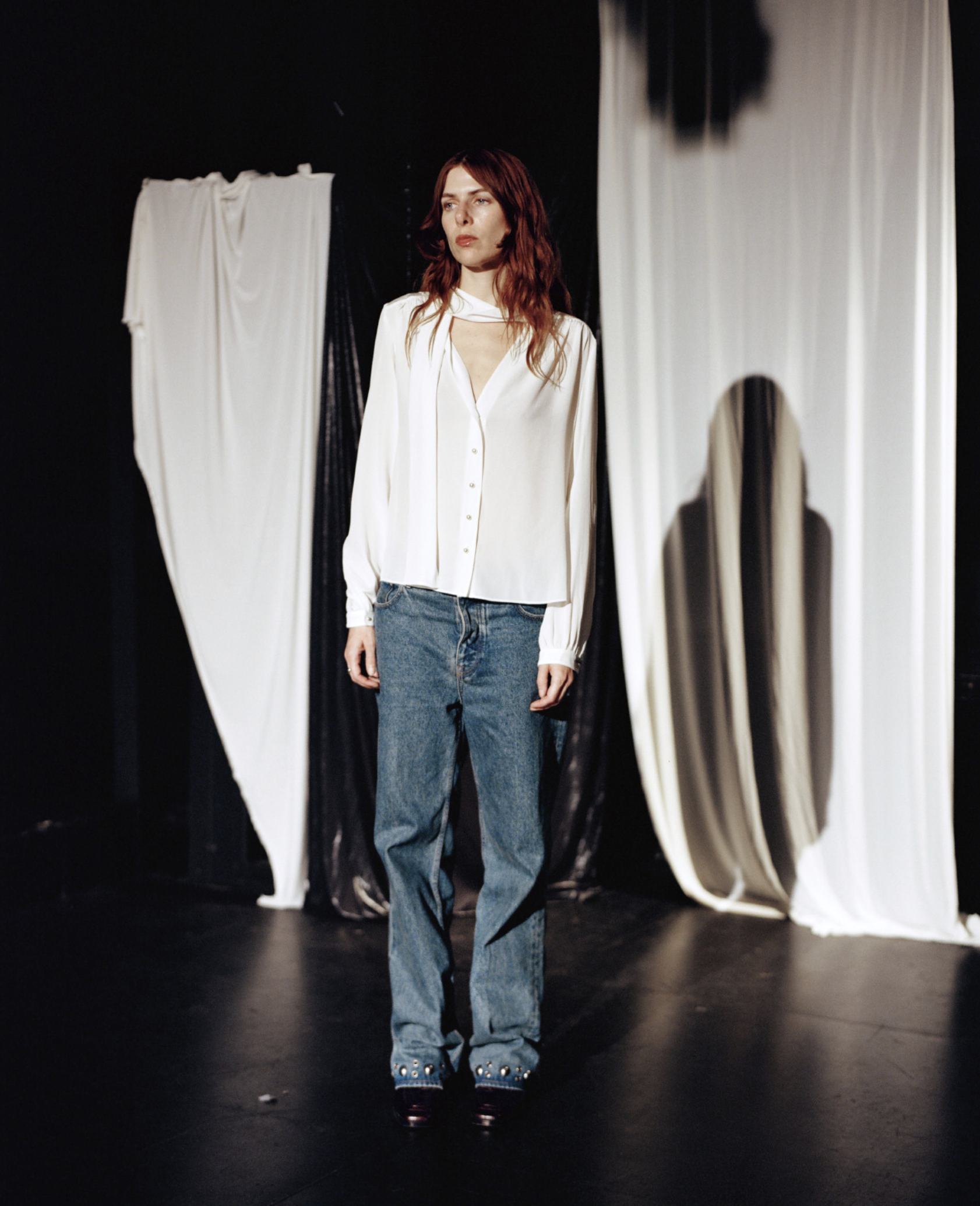
Laurel Halo has spent her career escaping structure. For 'Midnight Zone', she put that freedom in service of someone else's vision.
Words by Jim Ottewill
The most remote layer of the ocean features freezing temperatures and almost total darkness, a threatening, yet tranquil environment lovingly rendered in the new film, ‘Midnight Zone’, by artist Julian Charrière.
“The film follows the descent of a Fresnel lens into the ocean and is quite hypnotic and wordless,” says composer Laurel Halo of the visuals she needed to soundtrack. “It was an interesting challenge to make a score that still managed to create punctuation and development in the absence of dialogue or sharp edits or turns in the visual.”
If any creative can tune into the sonics of unknown underwater worlds, then Laurel is perhaps best placed to do it with her accompanying score rippling with mesmerising drones and hallucinatory aural textures.
Dreaming up music in the hinterlands between classical, ambient and electronica, this latest release is the follow-up to the acclaimed atmospheres and monolithic sounds of the album, ‘Atlas’. Having previously released music on Hyperdub and Honest Jon’s, Laurel’s musical personality was born out of a tussle between her classical upbringing and her own voice. It’s a tightrope that she’s invited other collaborators to tread with her via projects with artists and designers, including Moritz von Oswald, Metahaven, Kevin Beasley, Julia Holter, John Cale, the London Contemporary Orchestra and now this ‘Midnight Zone’ soundtrack. No one else sounds quite like her, even within the world of scoring for visual media.
“For this project, we had fairly specific parameters,” says Laurel on her process. “It made sense to attempt a sound that was simultaneously both dense and weightless at the same time.”
For more than ten years, Laurel has been pursuing personal musical ambitions, constructing otherworldly moods and atmosphere. The immersive world of 2023’s much-loved ‘Atlas’ offers a signpost to the free-falling tumble into the ‘Midnight Zone’.
“I feel so grateful that people have enjoyed and gotten something out of ‘Atlas’ as it was a real labour of love,” she says. “But I am very happy with that release, it marked a specific time in my life, and I’m able to look back on it with some perspective.”
"Generally, the best ideas are ones that are improvised quickly in a few minutes, and it's a lot of waiting around and a lot of bad ideas in between those occasional good ideas."
Many contrasting shades are wrapped up within Laurel’s musical personality. As a composer, DJ and producer, her music mines a vast ocean of sounds and effects, veering between electronic pulses and classical orchestration. Across her numerous releases to date - from the intricate rhythms of her DJ Kicks mix to Hyperdub released ‘Dust’ and its future-facing jazz meltdown - Laurel’s music expands in its own space with genres freely flowing around her.
“My musical journey started with classical piano,” she says. “I was pretty miserable at sports as a kid, and piano was the one activity I could immerse myself in easily. There was something satisfying about the immediacy of the instrument and the sound. It was an olive green upright piano in a house in Royal Oak, Michigan, and I’m fortunate enough that my parents were cool enough to be into exposing me to Pee-Wee’s Playhouse and going to art exhibits at the DIA as a kid.”
The language of classical music, the piano and the violin appealed to Laurel, who fell for the magic of Chopin, Ravel and Debussy. Later on, she was also exposed to dance music and the beats of Detroit techno by attending the Detroit Electronic Music Festival and exploring the early days of internet radio.
“In college, I got into doing freeform radio (let’s do a shoutout for WCBN!), which was pretty foundational for learning about and being exposed to both a variety of music genres and also local musicians and producers at the time,” she says. “
Having previously worked on the music for 2018’s sci-fi film, ‘Possessed’, soundtracks run through Laurel as much as her own artist material. She cites Angelo Badalamenti’s work on ‘Twin Peaks’, Joe Hisaishi’s work for Miyazaki’s films, Eduard Artemyev for ‘Solaris’, and Bernard Hermann’s iconic score for Martin Scorsese’s ‘Taxi Driver’ as touchstones. Her approach towards composing and her own artist material sit somewhat apart, yet are still indelibly linked.
“It’s a bit more of a problem-solving, solution-oriented process of discovering what works for the format and how the music works in the context,” Laurel says on her way into the soundtrack. “In this way, the music plays a supportive role, which I find beautiful as it is part of a whole, and shouldn’t be too much the ‘thing in and of itself’.”
“Of course, it’s beautiful when scores stand on their own as art, but that shouldn’t be the primary focus,” she continues. “The focus should be to make work that best supports the overall context. Artist material is more embodied or a statement on its own, living within its own narrative.”
The compositional process for ‘Midnight Zone’ began when filmmaker and artist Julian Charrière reached out to Laurel around the time she was on tour and performing the ‘Atlas’ live show at the Volksbühne in Berlin.
“We met a few days after the gig to discuss my involvement, and he showed me some initial footage, as well as describing the background story of the film and the story he wanted to tell,” she explains. “During that initial meeting, we had a conversation about what the atmosphere, mood or tone of the music should be - maybe the music should be dissociated from a specific human perspective, maybe more a perspective from the Fresnel lens or from the swirl of the schools of fish investigating it.”
‘Midnight Zone’ charts the path of a drifting Fresnel lighthouse lens as it descends through the Clarion-Clipperton Fracture Zone - a remote abyssal plain in the Pacific Ocean, rich in rare metals and increasingly targeted for deep-sea mining. Laurel’s soundtrack somehow manages to capture this alien part of the earth, constructed largely on a Montage 8 synthesiser and Yamaha TransAcoustic piano at the Yamaha studios in New York City.
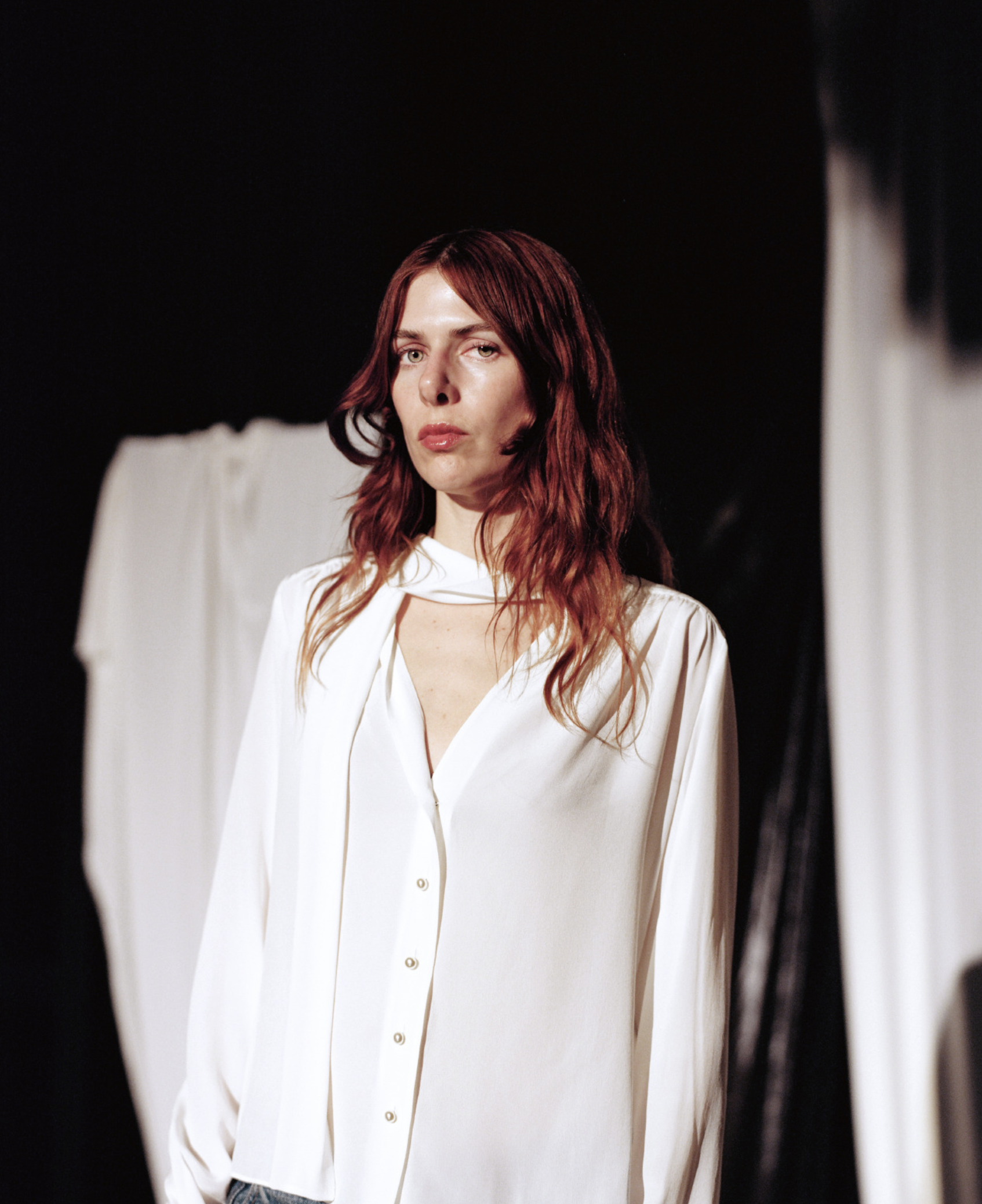
Laurel’s process involved short creative bursts, finding the chance to pursue two or three energetic musical stints over the course of a day. In between, she goes for a walk or practises the piano.
“Generally, the best ideas are ones that are improvised quickly in a few minutes, and it’s a lot of waiting around and a lot of bad ideas in between those occasional good ideas,” Laurel says. “It’s mostly diligence and being patient. I record a lot of layers of violin or piano and then sound design them to the point of making them sound like something else.”
Despite the differences, there are connections with Laurel’s work on ‘Atlas’. There’s something transcendent yet monumental about the soundworld her ‘Midnight Zone’ music invites you to inhabit. It was only after the film was premièred at the Tinguely Museum in Basel in June 2025 that the potential for music to become an album score and live performance began flickering. Now due for release, it's the music’s aural appearance that is a highlight for Laurel.
“My favourite moments are probably on tracks 1, 3 or 4 (‘Sunlight Zone’/‘Twilight Zone’/‘Oreison’),” she says. “It’s all about how they incorporate string textures.”
For aspiring composers and producers looking for advice on how to bolster their creativity and musical journeys, Laurel suggests always prioritising growth and adapting a mindset focusing on perpetual learning. “For me it’s just constantly listening, absorbing, practising, journaling, trying to be self-aware about your ambitions and limitations,” she says.
“I don’t really want to align my art with whatever is increasingly being used for technofascism and cultural homogeneity.”
While the palette of instrumentation was limited yet powerful, Laurel is always researching new pieces of equipment and music technology to inform her workflow. The Highland Dynamics Delta 4-7 preamp is a favourite for how it can enhance what she captures.
“I am generally researching new equipment, whether acoustic or electronic instruments, outboard equipment, VSTs, microphones… always trying to strengthen and become more fluent,” Laurel says. “I love tools that assist with EQ like Soothe, Gulfoss or Trackspacer - those are quite liberating and save a lot of time. I guess I tend not to use creative tools that I find limiting unless it’s specifically for the purpose of having limitations, such as recording something to tape or a bounce through an old compressor.”
Artificial Intelligence might be a hot topic for some producers, but it is of less interest to Laurel, particularly when it comes to the formation of creative ideas or sounds. “I’d be curious to discover applications for its use for more tedious tasks like fine-tuning string recordings or vocal editing,” Laurel says. “Or how it could be used to facilitate long-distance collaborations.” “But, as of right now, I don’t really want to align my art with whatever is increasingly being used for technofascism and cultural homogeneity.” It’s indicative of the tensions reverberating through her creative influences and the landscape she has to navigate.
“I kind of broke my brain with classical music; the world of music was too big and exciting, plus I had zero ambition to become a concert violinist or pianist,” she says. “I had to deprogram a lot of the structure and formality of classical education in order to get into a mindset of making my own music.” Which is why Laurel’s compositions and her sound are so important. In a world of ever-increasing velocity, she’s managed to smash through any semblance of convention and emerge from the wreckage with a sound universe wholly hers.
Get the latest record & tickets for Laurel’s upcoming shows here.