Everyone Starts from Somewhere: Pino Donaggio
From a chance sighting on a Venice water taxi to a horror opera made at eighty-four, Pino Donaggio has spent five decades saying yes to the career nobody expected him to start next.
Words by The Blank Mag
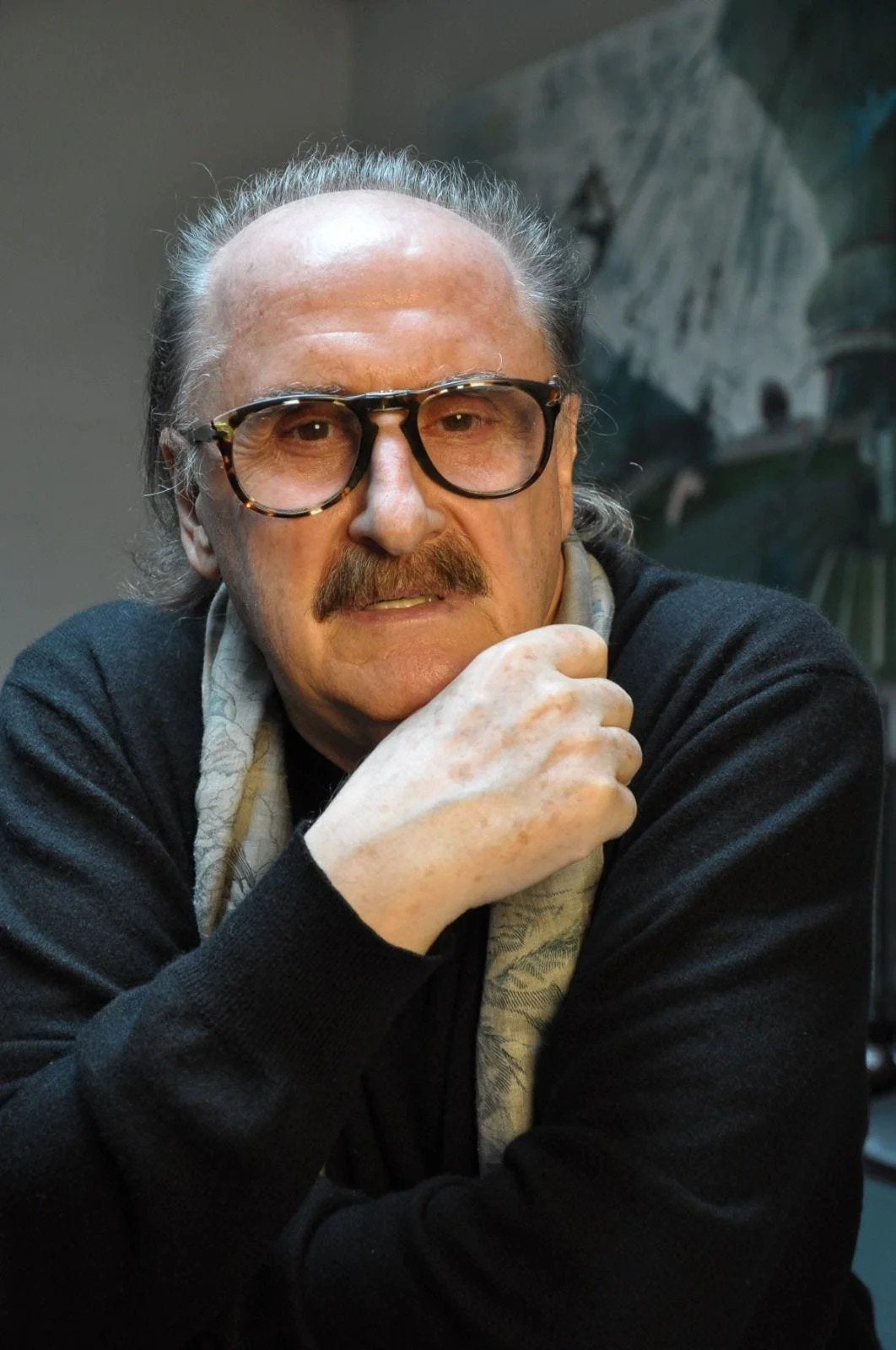
In the winter of 1972, a producer named Ugo Mariotti was crossing the Grand Canal on a vaporetto when he recognised a fellow passenger: a thirty-year-old pop singer named Pino Donaggio, already famous across Italy for a song most people didn't know was his. Mariotti was casting Nicolas Roeg's new film, a supernatural thriller shooting in Venice that winter, and he later described the meeting as serendipitous. He arranged for Donaggio to meet Roeg soon after. Donaggio had never scored a film in his life, and later recalled that he couldn't work out why anyone would want him to start with this one. Roeg asked him to write something for the opening anyway, and told him not to worry about doing it the way a trained film composer would have.
Donaggio had been playing music since he was a child, raised among musicians on Burano, the small, brightly painted lagoon island a short boat ride from Venice proper, better known for its lace and its rows of coloured fishermen's houses than for producing composers. He started violin at ten, trained at the Benedetto Marcello conservatory in Venice and then the Giuseppe Verdi conservatory in Milan, and made his solo debut at fourteen, playing Vivaldi on Italian radio. By his late teens, he was performing with I Solisti Veneti and I Solisti di Milano, on a trajectory that pointed cleanly toward a career in classical music, the kind of formation that takes years to build and is not supposed to be abandoned. Then, during a summer holiday in 1959, he heard rock and roll for the first time and walked away from that trajectory completely. He opened for Paul Anka on an Italian tour within a year, placed third at the Sanremo Festival in 1963 with "Giovane giovane" and fourth in 1966 with "Una casa in cima al mondo," and somewhere in between wrote "Io che non vivo (senza te)," a song that would go on to sell more than sixty million copies worldwide once Dusty Springfield recorded it in English as "You Don't Have to Say You Love Me" and Elvis Presley recorded it again after her.
That was the career Donaggio had when Mariotti spotted him on the water taxi: not an aspiring composer chasing a break, but a bona fide pop star with nothing obvious to gain from scoring an English-language art film on an uncertain budget. He wrote the piece Roeg had asked for anyway. Roeg used it, then asked for more. The finished score for Don't Look Now, released in 1973, ran on lyrical, faintly wrong melodies that gave the film's violence and grief somewhere to live without announcing themselves, and the score has since become regarded as one of the landmarks of 1970s film music. A pop singer with no experience writing for film had, on the strength of one chance meeting, made one of the defining scores of seventies British cinema. This job marked the beginning of a gradual shift away from his career as a recording artist.
What that chance meeting proved, Donaggio spent the following decades confirming: that walking away from a finished career to start an unfamiliar one was not a mistake he had made once, but an instinct he trusted completely. Brian De Palma discovered as much in 1976. De Palma had wanted Bernard Herrmann, Alfred Hitchcock's own composer, to score Carrie, and turned to Donaggio only after Herrmann died that December. The replacement became one of the defining director-composer pairings in American genre cinema. Dressed to Kill, Blow Out, Body Double, Raising Cain, and, decades later, Domino: a run of features across four decades in which Donaggio wrote music that did for De Palma what Herrmann's had done for Hitchcock, holding a tone of glamour and dread in the same phrase, distinctly enough that the comparison eventually stopped sounding like an apprenticeship and became a lineage of its own.
He never let the De Palma pairing become the whole story, though. Joe Dante brought him onto Piranha and The Howling. Dario Argento produced Michele Soavi's The Sect and put Donaggio's name on his own Two Evil Eyes. Liliana Cavani cast him against type in her arthouse dramas, and in 2008 the Dutch director Martin Koolhoven brought him onto Winter in Wartime, a war film with none of the horror-genre trappings that had defined his American reputation. Across well over a hundred scores and five decades, Donaggio kept being hired by directors who wanted something specific that only he seemed able to write, whichever genre it happened to arrive in, and whichever decade they happened to be working in. Even his retirement never looked especially permanent: he reunited with De Palma in 2019 for Domino, then scored Jeff Baena's Spin Me Round in 2022, well into an age when most composers have long since stopped taking calls.
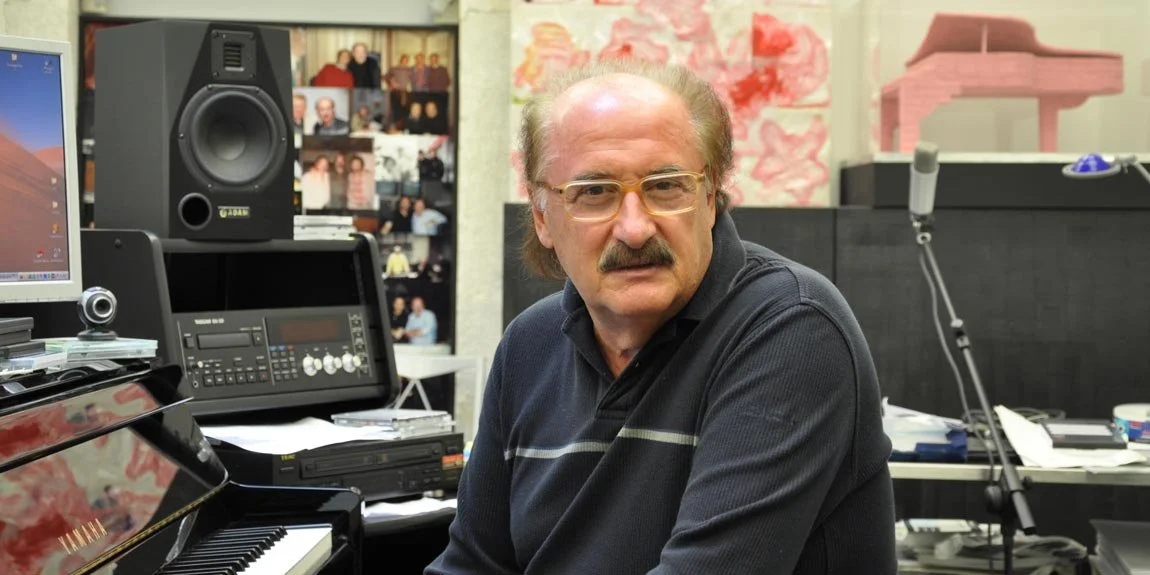
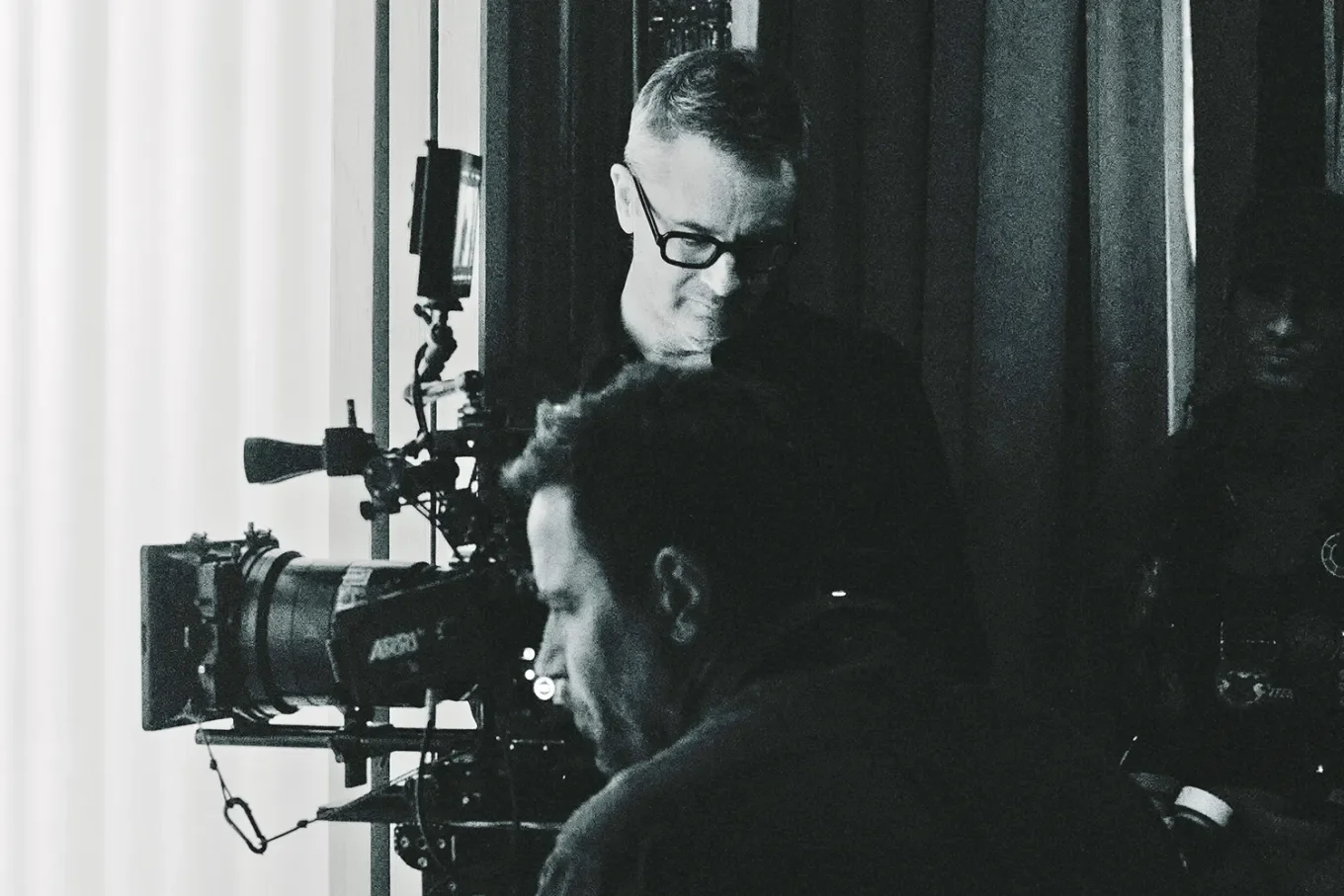
Which brings us to Nicolas Winding Refn, and to 2026. Refn had used Donaggio's old scores as source and mood music on his own sets for thirty years before he decided, midway through shooting his new film, that what he was actually making was an opera, and that an opera needed a composer who understood both opera and film music. All the Italians of film music he would talk about, Refn has said, were dead. Except Pino. Donaggio was eighty-four by then and, in his own words, semi-retired. Refn told him he was going to die soon anyway, so he might as well treat the job as his requiem. Donaggio, whose first film director had also been named Nicolas, found the joke funny enough to say yes, and the two men worked through a language barrier neither of them fully spoke around, meeting in Rome to finish mixing a thirty-track score built around a mysterious fog, a serial killer called the Leatherman, and a soldier searching for his daughter.
Her Private Hell premiered at Cannes out of competition in May and opened in cinemas recently, with Sophie Thatcher and Charles Melton leading a cast caught inside Refn's fogbound, neon-lit hotel. The score, most of it Donaggio's, with five additional tracks from the musician Julian Winding, is already being singled out by critics as the film's most coherent element: the operatic bloodline, in Refn's own phrase, that keeps the whole thing from collapsing like a house of cards. Deadline called it the film's "secret sauce." It argued that the score carries Her Private Hell the way music carried cinema before synchronised dialogue existed, doing the narrative work on its own.
Fifty-three years after a chance meeting on a Venice water taxi put a pop star with no experience writing for film onto a film set for the first time, Donaggio said yes again: eighty-four years old, semi-retired, to a director who told him he'd probably be writing his own requiem. The joke may or may not turn out to be true, but either way, Pino Donaggio said yes.