Sweeps on Architecture, Going Independent and Staying out of Frame
ISSUE 21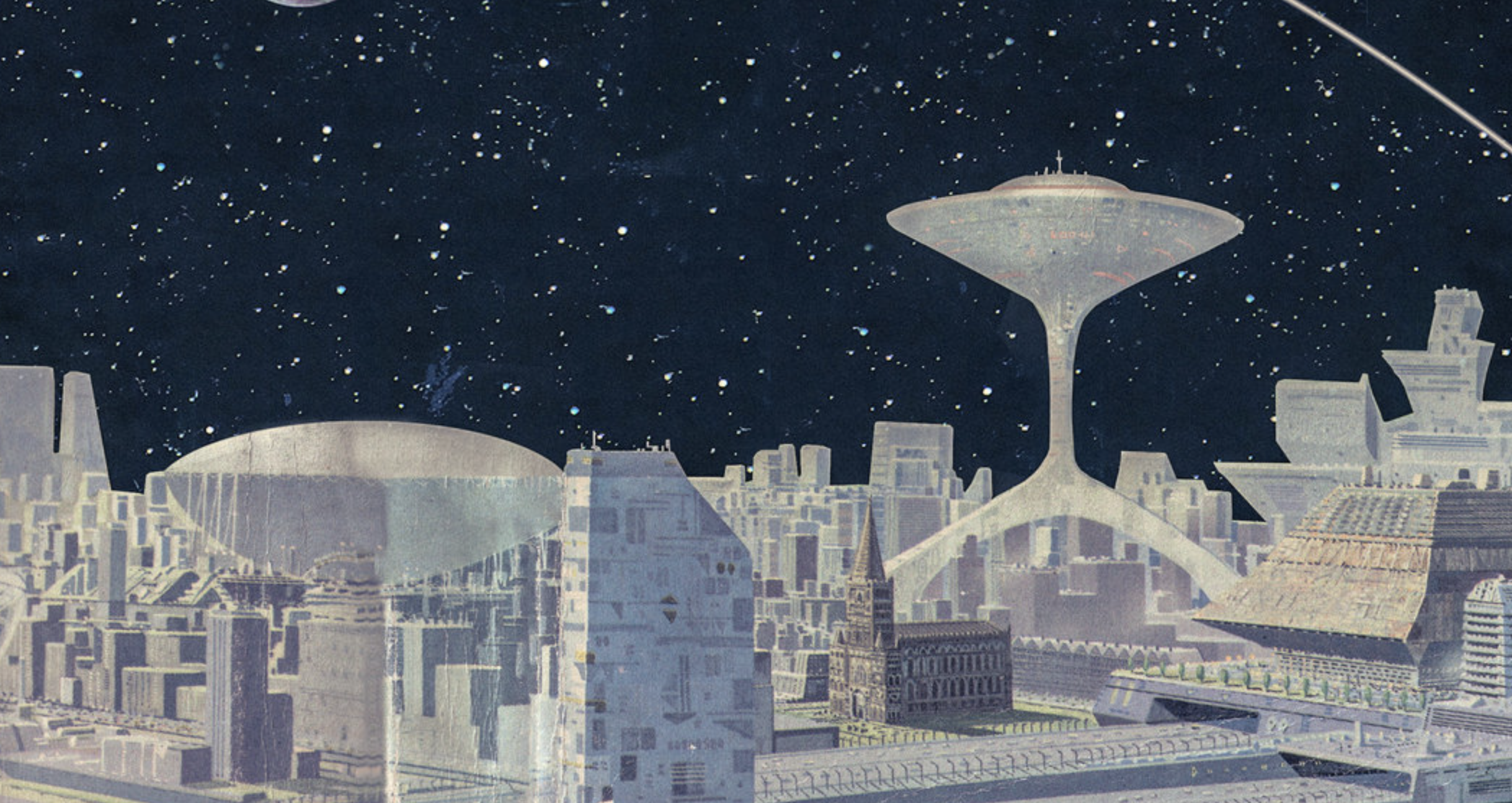
Lo-fi hip hop, jazz house, whatever else fits, genre has never been the point. The feeling is, and he'd rather you couldn't place either one.
Sweeps has never shown his face, and it hasn’t slowed him down either. Over 200,000 people listen to him every month on Spotify alone. “Sunday Blunts” has passed six and a half million streams, and ‘Don’t Let It Stress’ has done over four and a half million. Nobody who plays them at the end of a long day could pick him out of a crowd, and that is exactly how he wants it.
He describes his own catalogue simply as music from the past, present and future, and the phrase is not a slogan so much as an instruction for how to listen. Since his first EP in 2017, he has built out a discography, civilisation, Space Blues Vol. 2, Life and Light, RetroFuture, Placemaker, culminating this year in ‘Mirage’ and ‘Oregon Coast’, that refuses to sit still in time. Warm tape hiss braids into digital low end. A sample that could be forty years old sits next to a synth line that could not have existed five years ago. The whole point, as he puts it, is that you should not be able to tell when any of it was made.
He grew up outside Boston and started making music almost by accident during his freshman year of college, chill house beats and stray ideas he never expected to go anywhere. He stuck with it through a bachelor's and a master's degree in architecture, then spent four years working in the field while music kept building quietly in the background. At first, he released it under his own name, a little money trickling in, nothing steady. Then, wanting something looser than his real name, he started a new project and called it Sweeps. A YouTube channel picked up the first release. Reddit did the rest. A record deal followed, editorial placements, then a decision he still describes carefully. He ran the numbers on what the music was already making him part-time, picked the second anniversary of starting his architecture job, told his parents he was taking the summer off, and never went back. He moved to Los Angeles in 2022, specifically for the music, and has been there since.
You've said before that you want it to be hard to tell when your music was made. Where does that instinct start?
Sweeps: It’s always been interesting to me. If I’m using old equipment mixed with something new, that complements what I’m trying to do with the music, and aesthetically with the visuals, too. I’ve found this little pocket that works for me, and I keep building it out piece by piece, a new piece of gear worked in slowly. The tape machine does a lot of that work. Everything a computer processes is processed through ones and zeros; there’s a digital-ness to it that maybe you can’t even hear, but it’s there. Put that same sound on a physical medium, and it picks up something else, something more physical. I can’t quite pinpoint what that is, but it gives the sound a kind of life.
You said you built the rig out piece by piece. How do you critically decide what earns a place in it?
I’m actually very frugal, almost to a fault! That comes from when I quit my job to do music and wasn’t making much money; I developed a habit of not spending, and even though I’m more comfortable now, the habit stuck. I do a lot of research before I buy anything. I'll watch every YouTube review, go through Reddit and read every comment, and then eventually pull the trigger. I like buying used, especially with the older gear; you kind of have to. Reverb.com is always great; I’m constantly scrolling through it. And if I want to bring something new in, I’ll usually sell something I’m not using anymore to keep things moving. I don’t like stuff sitting in a closet collecting dust. Somebody else can use it and have fun with it.
“Everything in a computer is ones and zeros. Put that same sound on tape, and it picks up something more physical. I don't know exactly what that is, but it gives it a kind of life."
That instinct for blurring eras runs through the visual world too, the retrofuturism, the Syd Mead references. What draws you to that specific vision of the future?
Sci-fi movies are always a big inspiration. There’s a certain generation of visual artists; Syd Mead is kind of the forerunner of that movement, mostly working through the 60s and 70s, doing science fiction visuals depicting the future. Retrofuturism is the keyword for it online. Basically, depictions of the future from the past, but really, they were imagining a specific year, what the world was going to look like in 2000 or 2010. That time has already passed, and we don’t have the flying cars and robots they envisioned. So the visuals are depicting a future that never came, which means it’s already sitting in another timeline, a different world entirely. I try to take that same idea, blurring past, future and present, as far as I can in the music, to the point where you genuinely can’t tell when it was made.
Does staying anonymous serve that same purpose, keeping the work outside of time by keeping yourself out of the picture?
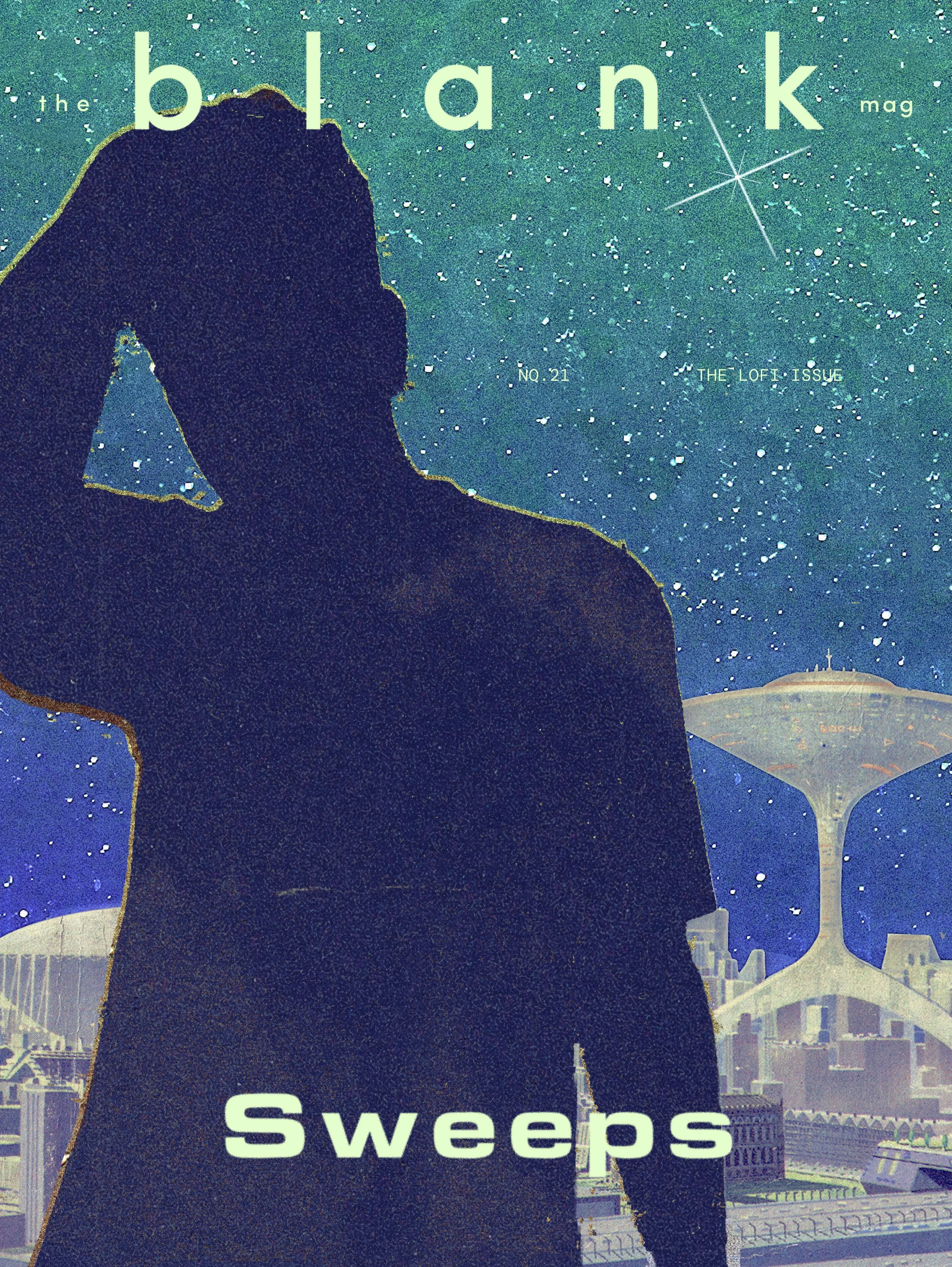
I think it’s a freedom thing. At first, it was more that I didn’t really care about the attention, but the more I did it, the more I realised there is a freedom to it. If I put something out and it flops, I don’t carry that the way I think someone might if their face was attached to everything- that hesitance, almost a shame, if something doesn’t do well. I don’t have that, and I think it keeps my focus on the world-building, on the music, rather than on me. I’m interested in doing something like a live set online at some point, too, figuring out how to stay anonymous inside that as well. The profile picture actually came out of testing for exactly that: a green-screen study of me, cropped out and glitched over a video. It has so much more movement and character than a still image ever could. I’m not the first artist to work this way, of course. It just works for me.
You gave architecture four years and a master's degree before you gave it up. What made you sure enough to leave?
I had a project bubbling online, not making much money off it, and I worked in architecture for four years while that was happening in the background. Eventually, I did the math: if I'm making this much part-time, with the savings I had, I thought I could make it work, just barely. I picked a date, the second anniversary of starting that job, and I quit. I told my parents I was taking the summer off to work on music, knowing full well I wasn't planning on going back. Then I just tried, fourteen, fifteen-hour days, reaching out to anyone who'd listen, releasing vinyl, doing whatever I could. There was a safety net in the degree; I knew I could always go back to it. But I knew I'd regret it forever if I didn't give it everything I had.
When you’re making your records, how do you know when a track is actually finished?
That's the question every artist struggles with, right? It always comes down to a feeling; you ask yourself if there's more you could do to make it better, or sometimes if there's something you could take away to make it better. You try a couple of things, and at some point, you can't think of anything more to add, and you can't think of anything more to take away, and it feels good. So I think it's done. Then I'll sit on it for a while. I make a lot of things, and I just wait and let time do its thing, because music changes with time, even when the music itself hasn't changed. If I export a file, it sounds different to me the day I export it than it does two weeks later.
“Staying anonymous keeps the focus on the world-building and on the music, not on me."
Tell me about a track that almost didn't happen.
The title track off the new album, ‘Mirage’. A guy I've never met in person, Keylime, out in Milwaukee, sent me a pack of sounds maybe two years ago. I sat on them a while, then went back through and built a song around one of them. It sat on my hard drive for another year, a year and a half, before I sent it back to him and said, " This is too good; we have to put it out.” It was called Oasis originally. There's a vocal clip in it that says enjoy the oasis, but I already had a track called that. So I landed on Mirage instead, an oasis in the desert. It ended up becoming the title track, and the whole album built itself around it.
Where would you like to take that world-building next?
I did a short film soundtrack a couple of years back, and that was a lot of fun. I'd love to do more of that. Lately, I keep thinking about video games, which is strange because I'm not even that big of a gamer anymore. We mostly play on a PlayStation 2 and an old PSP my girlfriend dug out of her parents' house. But there's a level of world-building in games that feels like the right fit if it's the right project. It could help build out the world my music already lives in, as much as it contributes to whatever game it's part of. That idea is a lot of fun to sit with.
When people are listening to your music, what do you actually want them to feel when they hear it?
There's a certain emotion I try to tap into that's nostalgic, in a way, but paired with something new at the same time. That's part of what blurs the line between past and future for me. I don't know exactly how I do it; I couldn't fully explain the mechanics of it, but I always appreciate when someone says a track reminds them of something, or feels like something they've heard before, while also feeling new. It's mostly instrumental, so a title is about all I have to point someone toward a feeling. Hopefully, that's enough to give people a starting point, and then they take it wherever it needs to go for them.
Where does that pull toward nostalgia come from for you personally?
I had a CD player really young and just bought whatever pop CDs were popular, nothing that really connects to what inspires me now. It wasn't until high school that a friend left Daft Punk's Alive 2007 at my house. I burned it to my iPod and listened to it religiously. I was like, how are they doing this? This sounds so crazy. I didn't even know they were sampling at the time; I found that out later. I knew hip hop sampled, but the way Daft Punk was doing it felt completely different; they were picking different kinds of samples. I started listening to a lot more electronic music after that, and it wasn't until college that I actually tried to figure out how they were making those sounds. That's when I got Ableton.
Like much of Uematsu’s previous work, Merregnon finds an intuitive middle ground between the Western orchestral tradition and his Japanese heritage. “I would say my music is simply a Japanese person wearing Western-style clothes,” he elaborates. “My mentality is totally Japanese. It is evident in the way I develop my melodies, not in terms of the notes, but in the unfolding of emotions.” No longer confined by technological limitations or defined by pre-existing images, Merregnon is a dreamlike opus, a study in melodic simplicity and luscious harmony, designed to speak to the mind’s ear as well as its eye.
When he was interviewed by RBMA in 2014, Nobuo Uematsu was asked to reflect on the ways in which his approach had developed over the 27 years since the release of the first Final Fantasy game. “What I was conscious of [then],” he said, “hasn’t changed.” He said the connecting thread was harmony. This generosity of spirit in Uematsu’s sound continues to shine through in 2026 - a sense of play and possibility and a belief in the power of music to transport us to new realms of imagination and feeling. What is he most proud of having achieved in those forty years? “I’m proud that I’ve never given up,” he replies simply. One stepping stone after another. The journey continues.