The Last House: deconstructing the orchestra behind Netflix's newest thriller
From Berlin to 7 days at AIR Studios, Netflix's apocalyptic thriller was built by engineers, mixers, conductors and editors working in step with composer Yair Elazar Glotman, each creating a score that only works because no one worked alone.
We’re used to seeing the credit ‘music/score composed by…’ at the start or end of a movie. It implies a single person marshalling all the resources at their disposal to transform intangible emotions into bold soundtrack choices.
However, the dynamic score for the Netflix original movie The Last House demonstrates one thing absolute: film composing is among the most collaborative mediums in the world. Rising composer Yair Elazar Glotman wrote the score, having recently enjoyed a wave of critical acclaim for his work on Netflix’s Benicio Del Toro thriller Reptile. Yet the reality of composing a score such as The Last House is a fascinating and multifaceted one, revealing that Glotman sits at the top of a network of conductors, orchestrators, engineers, editors and mixers, each of whom bears their own share of responsibility in honouring the director’s vision.
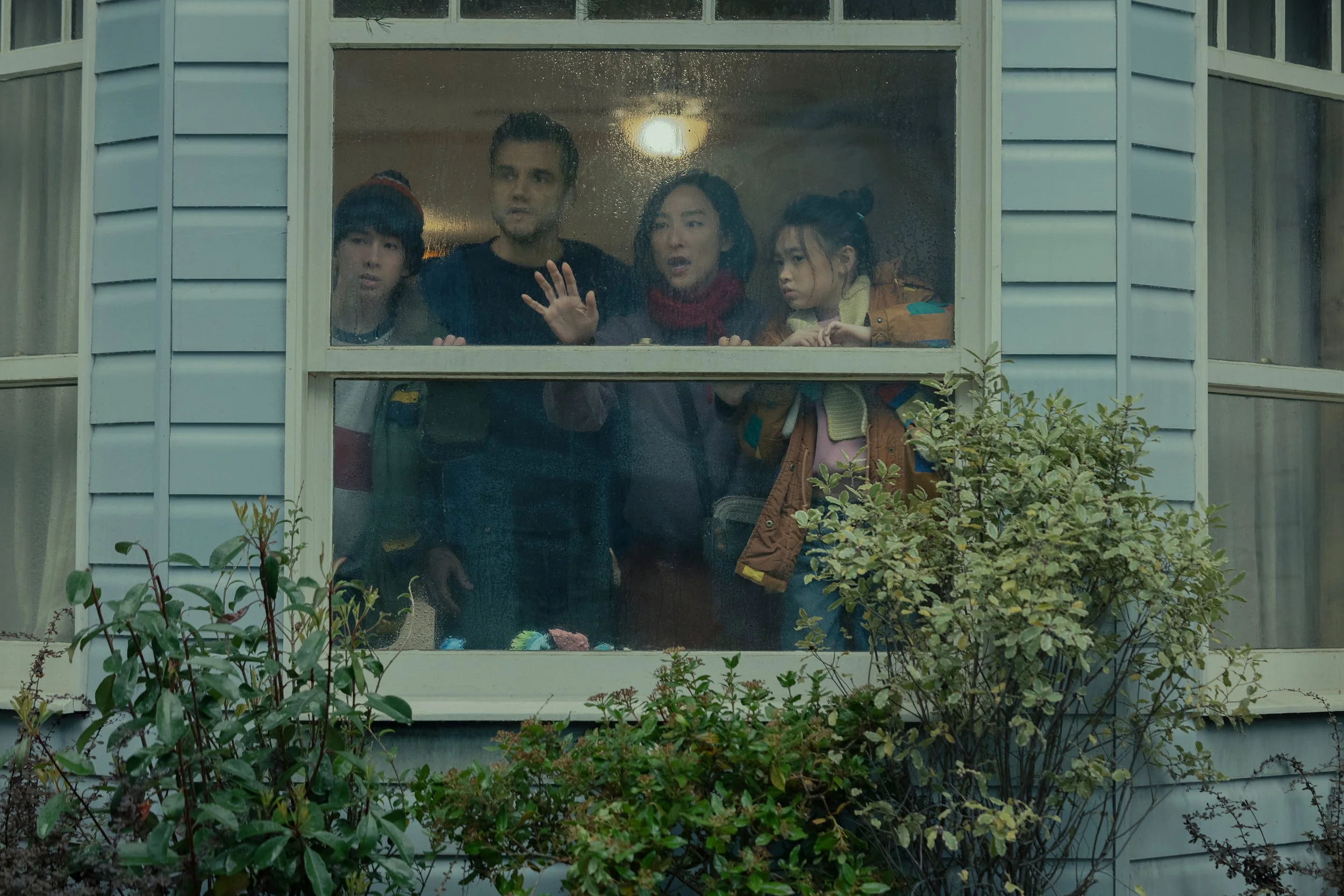
Said director is Louis Leterrier, who pivots from his usual action blockbusters (The Transporter; Fast X) to something more sinister. The Last House is scripted by Guillermo Del Toro regular Matthew Robbins (Crimson Peak; Pinocchio), spinning the story of one family physically trapped in their suburban home as the outside world succumbs to a watery apocalypse, with the added threat of Lovecraftian entities rising from the pits of the world’s oceans. Wagner Moura (The Secret Agent) and Greta Lee (Past Lives) lead the cast as the afflicted parents of two young kids, with Glotman’s score alluding to both the emotional fabric of the family and the supernatural menace.
Glotman is well-attuned to the nuances of musical collaboration and describes film scoring as a “team effort”. While based in Berlin, where he continues to work, he participated in a musical collective that encompassed, among others, the late Jóhann Jóhannsson (Prisoners; Arrival) and the Oscar-winning composer of Joker, Hildur Guðnadóttir. Having worked on the Joker score himself, Glotman fondly recalls this fruitful period in which talented musicians would overlap and share experimental ideas.
“[Jóhann] Jóhannsson was a curator of collaborators,” Glotman recalls. “I realised how important it was to find the right people to work with. It was a really unique moment in time. So many exciting projects were happening within a 200-square-metre factory floor in Kreuzberg next to this legendary punk venue. Hildur was there, and also [God’s Own Country composer] Dustin O’Halloran, who was often working with [Conclave composer] Volker Bertelmann. It was a community in that a lot of people were cross-pollinating on each other’s projects.”
"Johansson Jóhannsson was a curator of collaborators. I realised how important it was to find the right people to work with. It was a really unique moment in time." – Yair Elazar Glotman
As for The Last House score itself, Goldman was keen to push the boundaries of the mix, incorporating singular performance styles, ensembles and recording techniques to give voice to the unpredictable nature of the storyline.
“From early on, I was getting a lot of musicians involved to create different materials,” the composer explains. “I was developing a toolkit of materials. I wanted to keep the score completely acoustic and analogue. All of the sounds are happening in a physical way. For those early sessions, we took a brass trio into the cellar of an old brewery in Berlin, which has a 15-second reverb.
“I also brought in some amazing string players who specialise in extended techniques and improvisations. We made a quintet and recorded at the Funkhaus Studios, the old East German broadcasting station. It has some of the best acoustics in the country and maybe in Europe. We were building an orchestra of different speakers and resonators by using transducers, speakers without cones. You can attach it to different surfaces, and it then transforms the surface into a speaker, creating unique sounds and frequencies. We were developing a unique sonic language. When we later recorded with the full orchestra, I referred back to these earlier materials and infused them into the score as well.”
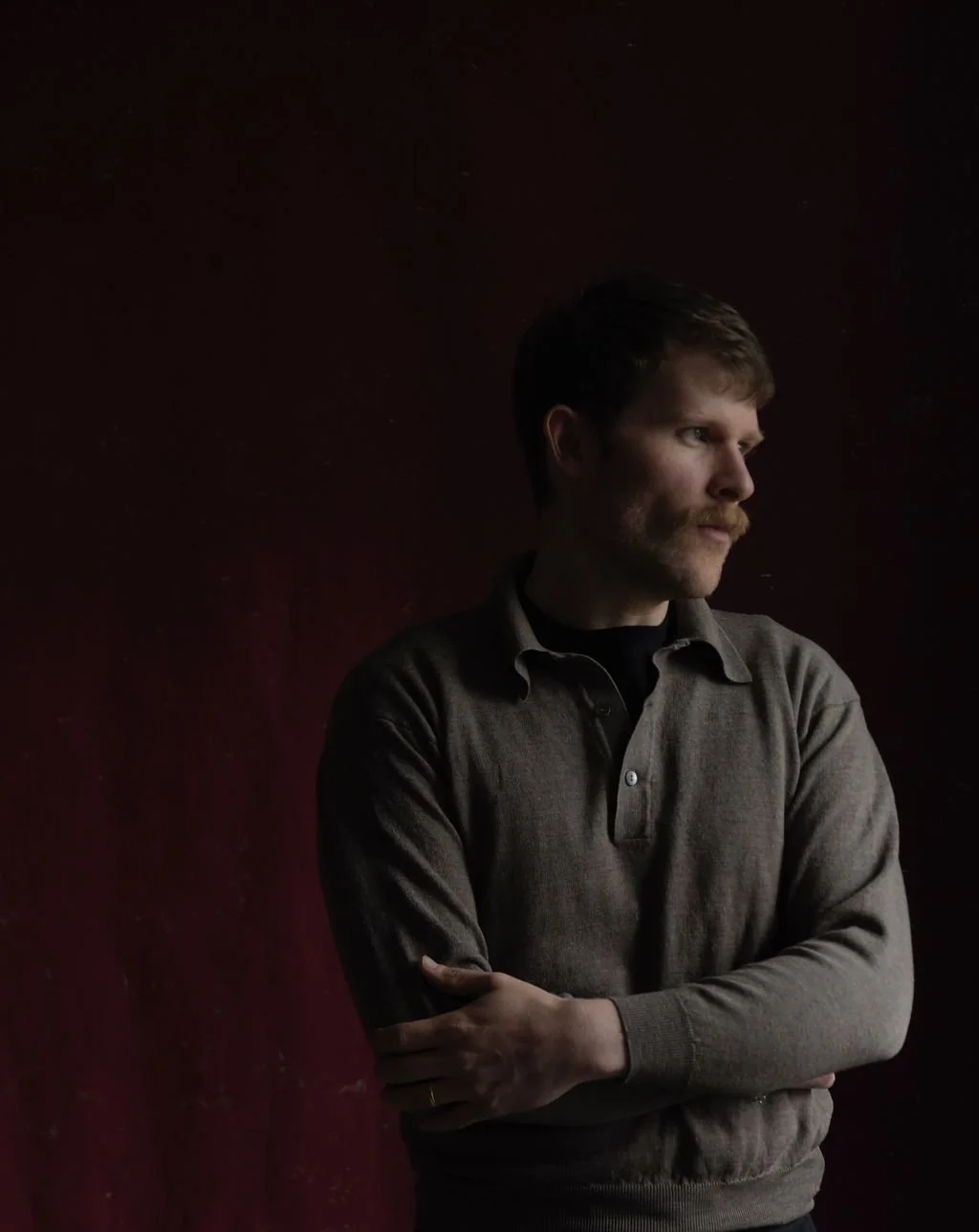
Yair Elazar Glotman
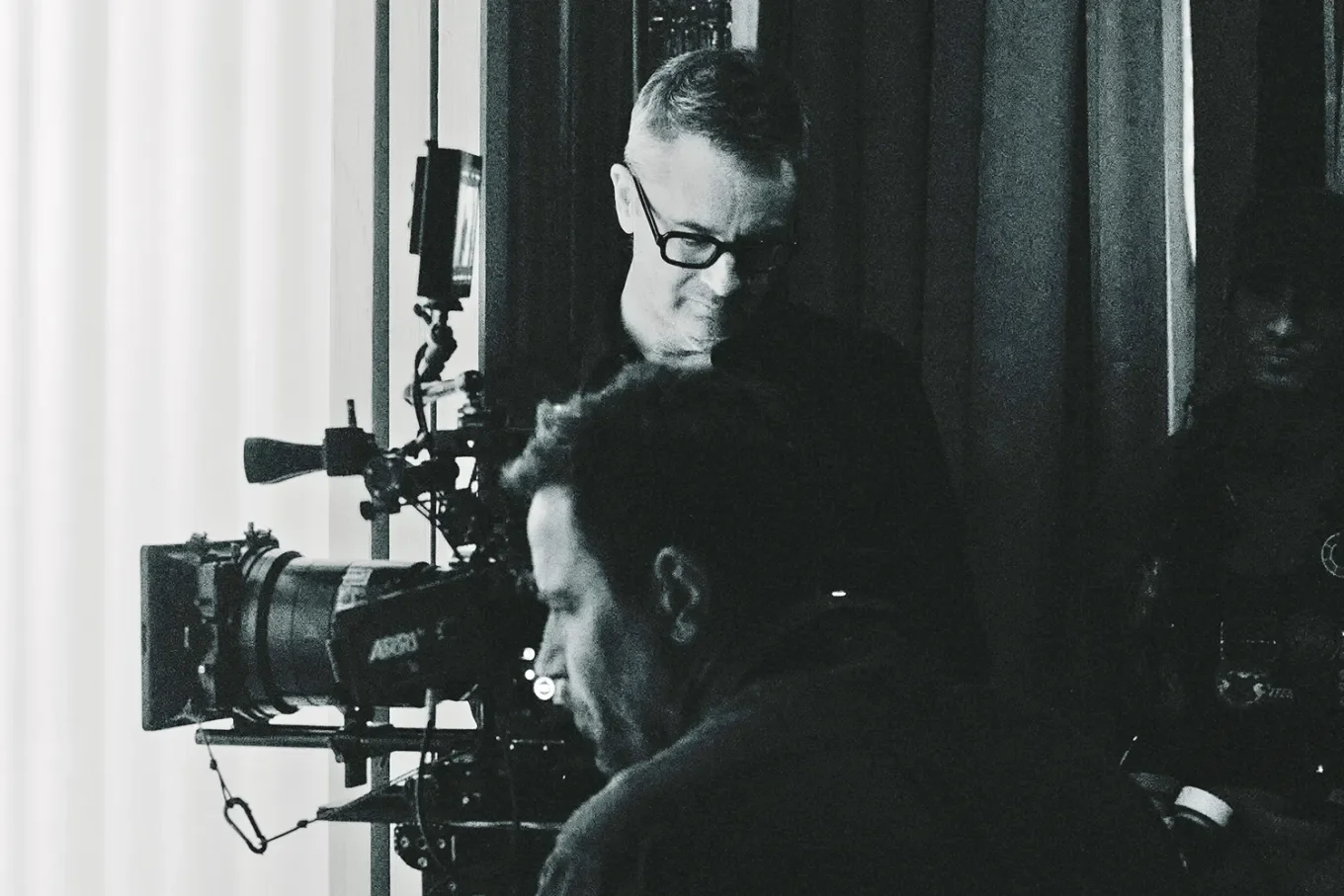
Nick Wollage (Atonement, Wuthering Heights and Phantom Thread) acts as the score’s recording and mixing engineer and outlines the fascinating process of its construction. Working closely with Glotman and the rest of the team, Wollage, who has collaborated with the likes of David Arnold, Bear McCreary and John Powell, describes the score as a “mouthwatering proposition” that allowed him to play with aural perspective in a variety of different ways. This primarily involved placing mics at different distances away from the orchestra, which involves what Wollage calls “layers of perspectives” that convey a singular audio aesthetic in the finished score. Glotman praises Wollage’s ability as a “key collaborator” who can “push the boundaries” of what a live dynamic range can achieve.
“If you want to get really broad and expansive, then you put [microphones] very far away and then various sort of in-between layers,” Wollage explains. “And for me, that largely translates normally to sort of four perspectives, really: in-between very close, and there's a sort of middle room to dry up the main room perspective, and then the conductor's perspective, and then a very distant one.
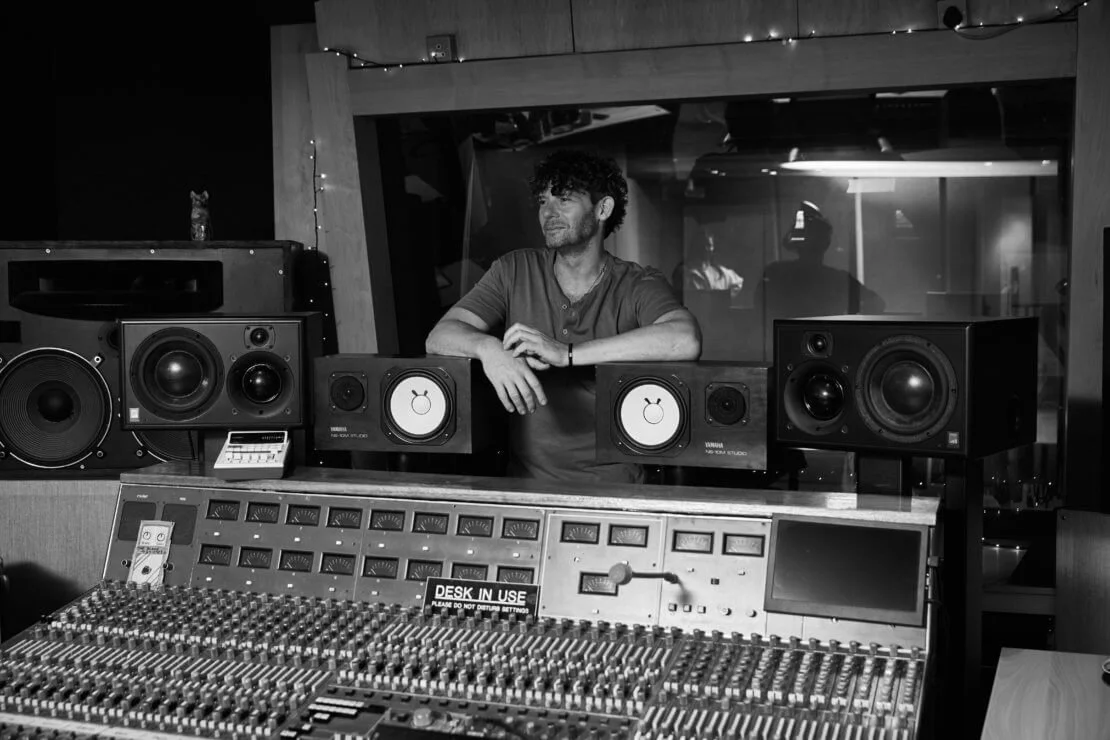
Nick Wollage: AIR Studios
“[Yair] had this vision and concept for how we were going to make all this work, and baked into the recording schedule was this idea of multiple layers of perspectives. So, we got quite enthusiastic about it and implemented that in more ways than just close mid-room and far perspectives, but that was actually the core of it really. I mean there are typically sort of six dynamics in music and surprisingly you don't really need ultra fine resolutions of things. And it's a little bit the same with recording really.”
With more than 30 years' experience to his name, noted AIR Studios mixer Jake Jackson (Under the Skin; The Green Knight; Loki) is another key member of The Last House team. To unlock the score’s unique sonic palette in line with the composer and director’s requirements, Jackson had to push his chosen software, Pro Tools, to the limit.
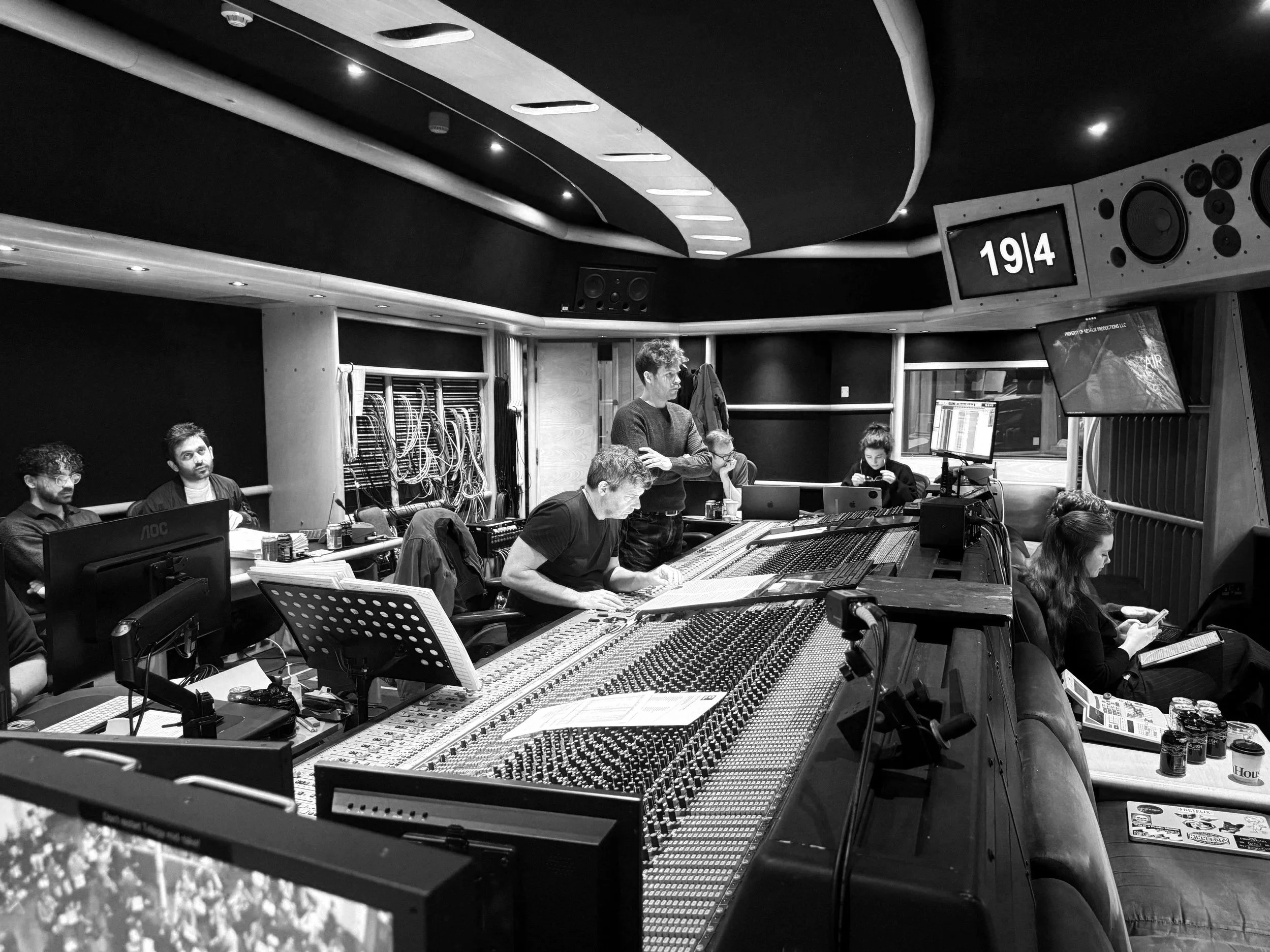
Yair Elazar Glotman & Nick Wollage
“I spent like a whole day, over two days, building a template that was massive, huge,” Jackson recalls. “I’d never built anything like it before. It was massive. But it was cool. Pushing the Pro Tools, almost to the boundaries of what it could do. It was something like you can have like 2,000 buses in Pro Tools. I was using something like 1,900 or something like that.”
“It took me that long to do it and to have that many stems, because, of course, [the movie] wasn't locked either,” he adds, referring to the notion of a locked (in other words, fixed) film edit or a fluid one that continually changes in post-production. “During the mix, there were like five or six different versions of it coming through. It was supposed to be locked, and then it was like, ‘Oh, it's not locked anymore’. So I was like, I’ve got to keep it flexible. So I did that, and then I started, and I was like, okay, well I just have like three days, just me going at it, doing some mixes.”
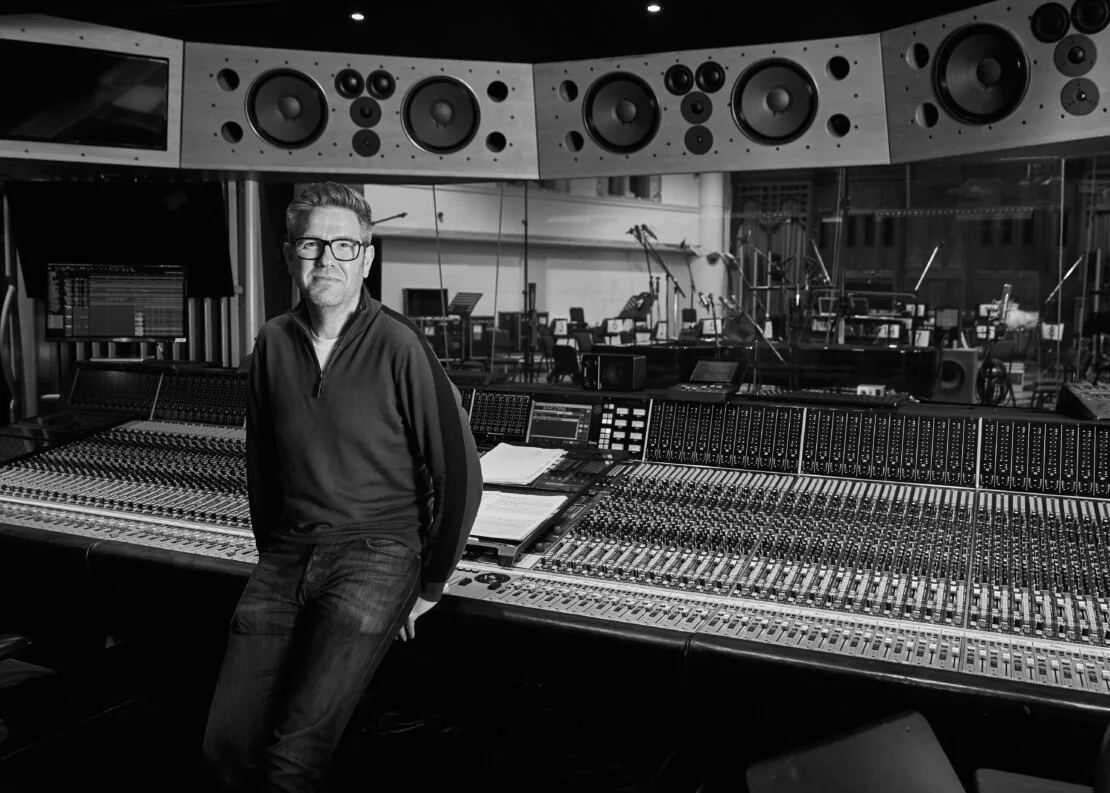
Jake Jackson: AIR Studios
Glotman reflects on the malleability of film soundtracks, saying: “Unlike a concert piece, a score is not bound by the restrictions of being entirely performed live. You can deconstruct sounds in different ways. That came from conversations with Louis Leterrier. He wanted an ASMR approach to the orchestra, a lot of details, a lot of contrasting perspectives and dynamics.
“You have things that are very close and very far, very loud and very quiet all at the same time. The score itself is very dense with a lot of harmonic information and melodies and big instrumentation. A big goal of the production was to carve out space for everything. This is why having different spaces and perspectives for microphones, and also different players, allowed us to expand the ‘sound image.’
“Unlike a concert piece, a score is not bound by the restrictions of being performed entirely live. You can deconstruct sounds in different ways. That came from conversations with Louis Leterrier. He wanted an ASMR approach to the orchestra.” – Yair Elazar Glotman
“We would often have 87 microphone setups for one take. Of course, with so many overdubs from different perspectives and players, we ended up with thousands of tracks. Mixing was a humongous task. Jake Jackson was extraordinary for throwing himself into that. He told me that such a production wouldn’t have been possible five or six years ago from a purely technical standpoint. It’s one thing to come up with speculative ideas. It’s something else to make it all happen.”
Jackson recalls both the intensity and intense creativity that came out of the initial scoring process. “[Yair and I] spent three days together, so I'd had five days by myself where I managed to get through a pass of everything without any notes, and he made some notes, and we had spent three days together and got, I don't know, about 30% of the film done together.
“It was cool, but some of these cues had, maybe, 20 passes of the orchestra: brass, three to four woodwinds, two vibes and harp passes. You know, a huge number of maybe 20 different takes. And we'd literally go, and he'd be like, ‘Okay, play me that one. No, play that one. Okay, go back to the previous one.’
“I think everything was mixed pretty much like four or five times, but each time it got so much better because we both understood what was there. It was hard work, but it was so rewarding to get it done that way.”
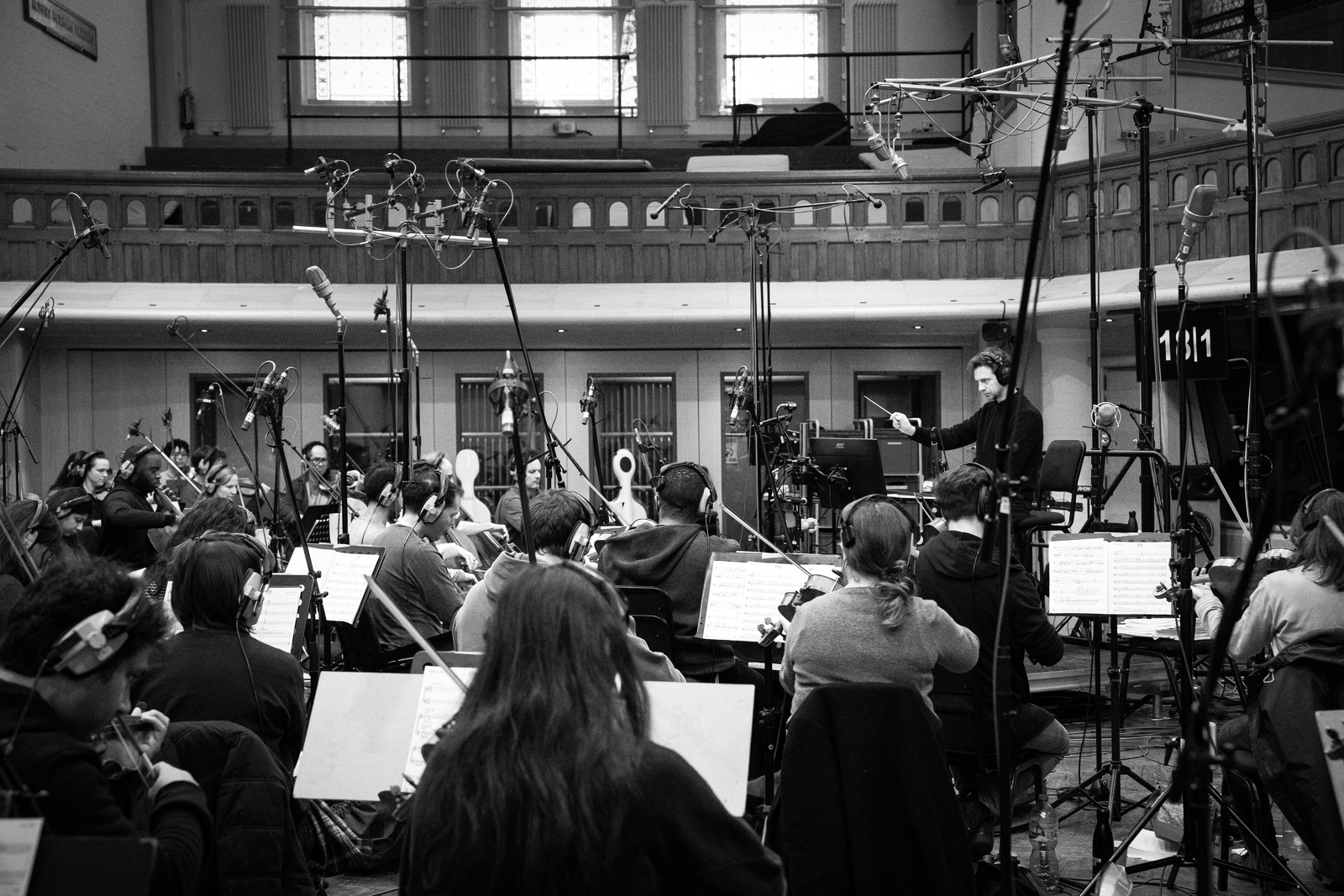
Hugh Tieppo-Brunt Conducting inside AIR Studios
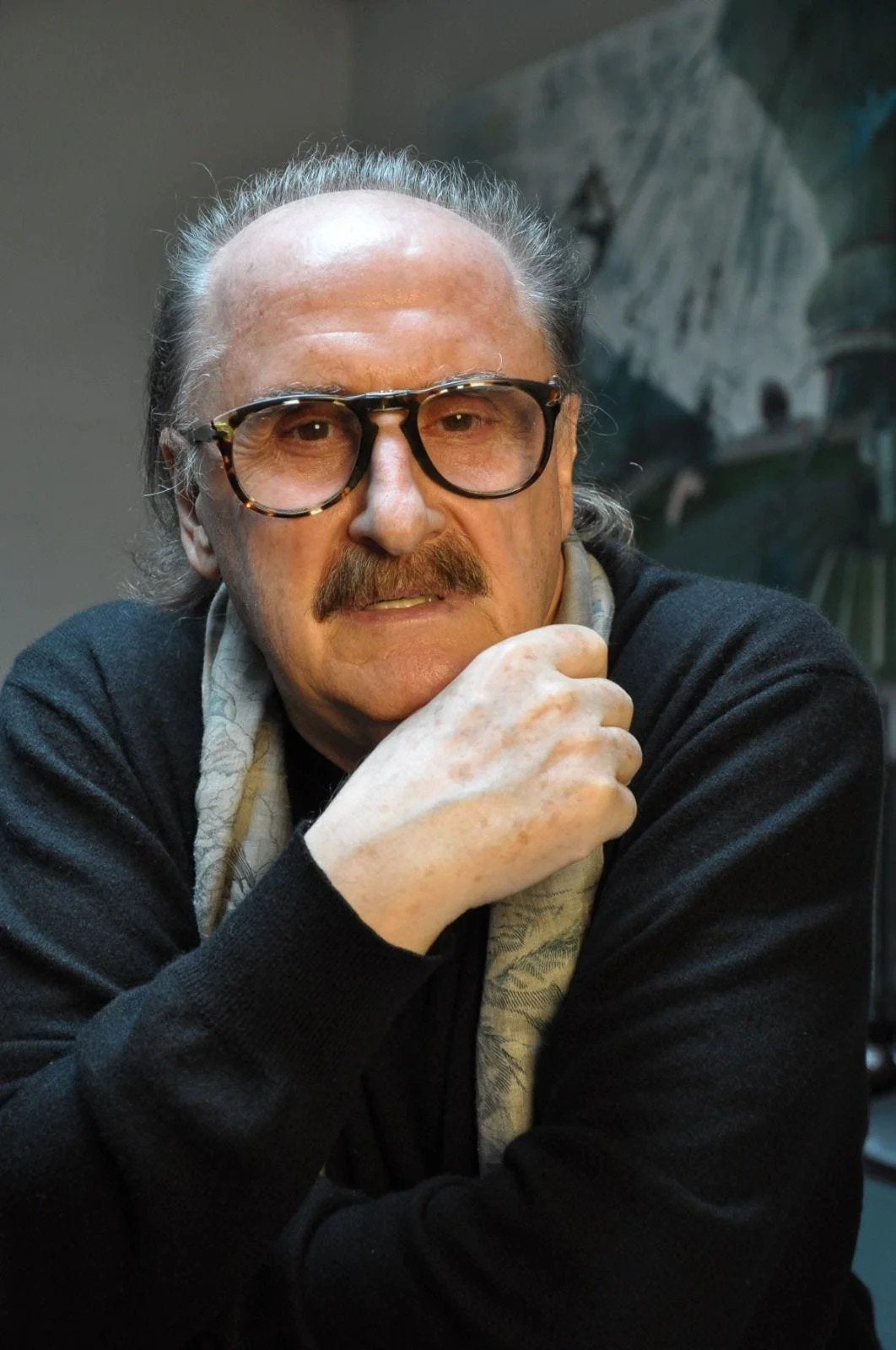
One must also consider the all-important go-between unifying the needs of the composer and those of the orchestra. This is where the conductor steps in: standing between the players and the composer and mixers in the recording booth, the conductor on a film score must be attentive to live nuance, sonic dynamics, sharps, flats and everything in between. Said conductor on The Last House is the renowned Hugh Tieppo-Brunt (Hamnet; One Battle After Another), co-Artistic Director and the co-Principal Conductor of the London Contemporary Orchestra, who performed on the score.
In Tieppo-Brunt’s words, the conductor exists, “In short, to help bring the composer’s ideas to life and create an environment whereby everyone in the room feels able to deliver their best possible work.”
“An important thing to say about this project,” he continues, “is that the material on the page was extremely detailed, owing to a very thorough composer-orchestrator process leading up to the sessions, so the musicians and I were immediately able to understand the musical intent behind each cue and find the right quality of sound.
“For much of the sessions, Yair was with us in the live room, demonstrating particular techniques on his double bass, so that made for an even smoother, more immediate way of working.” – Hugh Tieppo-Brunt
“For much of the sessions, Yair was with us in the live room, demonstrating particular techniques on his double bass, so that made for an even smoother, more immediate way of working. Then together with Yair, it was a case of finessing the performances, working on aspects such as balance, blend and phrasing, and, for some cues, subtly shifting the level of expression to have a range of options to work with in the mix.”
The cumulative result is a score that consistently shifts dynamics and our emotional expectations as the film proceeds. Of course, the technical construction of the music itself is just one element in the jigsaw. Often overlooked in a film score is the role of the music editor. This individual tends to sit within the visual editorial team, acting as the bridge between the director, picture editors and composer.
Veteran Graeme Stewart is the music editor on The Last House, and has recently racked up credits on the Oscar-winning One Battle After Another, composed by Jonny Greenwood, and the Oscar-nominated Bugonia, composed by Jerskin Fendrix. Stewart, whom Glotman describes as another “key collaborator with whom I have a strong working relationship”, says that a basis in people management and, above all, a cool head is vital as post-production deadlines weigh heavily on a given score’s completion.
“A lot of it is keeping everything on track and chasing the stage. You’re the go-between between the composer and the director,” Stewart explains. “You’re trying to keep everybody happy, and there are often different ideas as to how things should be.” Glotman concurs with this: “Working on a film is a lot like changing the tyres on a car that is moving.”
“You’re officially part of editorial, not the music department, and therefore bound by the editorial budget,” Stewart adds. “The director’s looking at the big picture, as am I, and we’re considering how the music works to create that big picture. Often, you’re overlapping with the final dub because it’s so much easier to edit the picture nowadays than it used to be. I can’t remember the last dub I went to where there weren’t picture changes going on while we were mixing. It’s up to me to ensure that everything is delivered to the scoring session as it should be.
“My background is in engineering, so I like to sit in the booth alongside the composer and the wider team. Then you understand how the director and composer are thinking about things. I often do mixes as well, so it’s important to understand how we arrived at certain choices. The technology makes everything more fluid, and everyone expects it nowadays. Picture lock doesn’t really exist as a thing now. I've never worked on a bigger score than this one. We did seven days straight recording at AIR Studios, which is unheard of.”
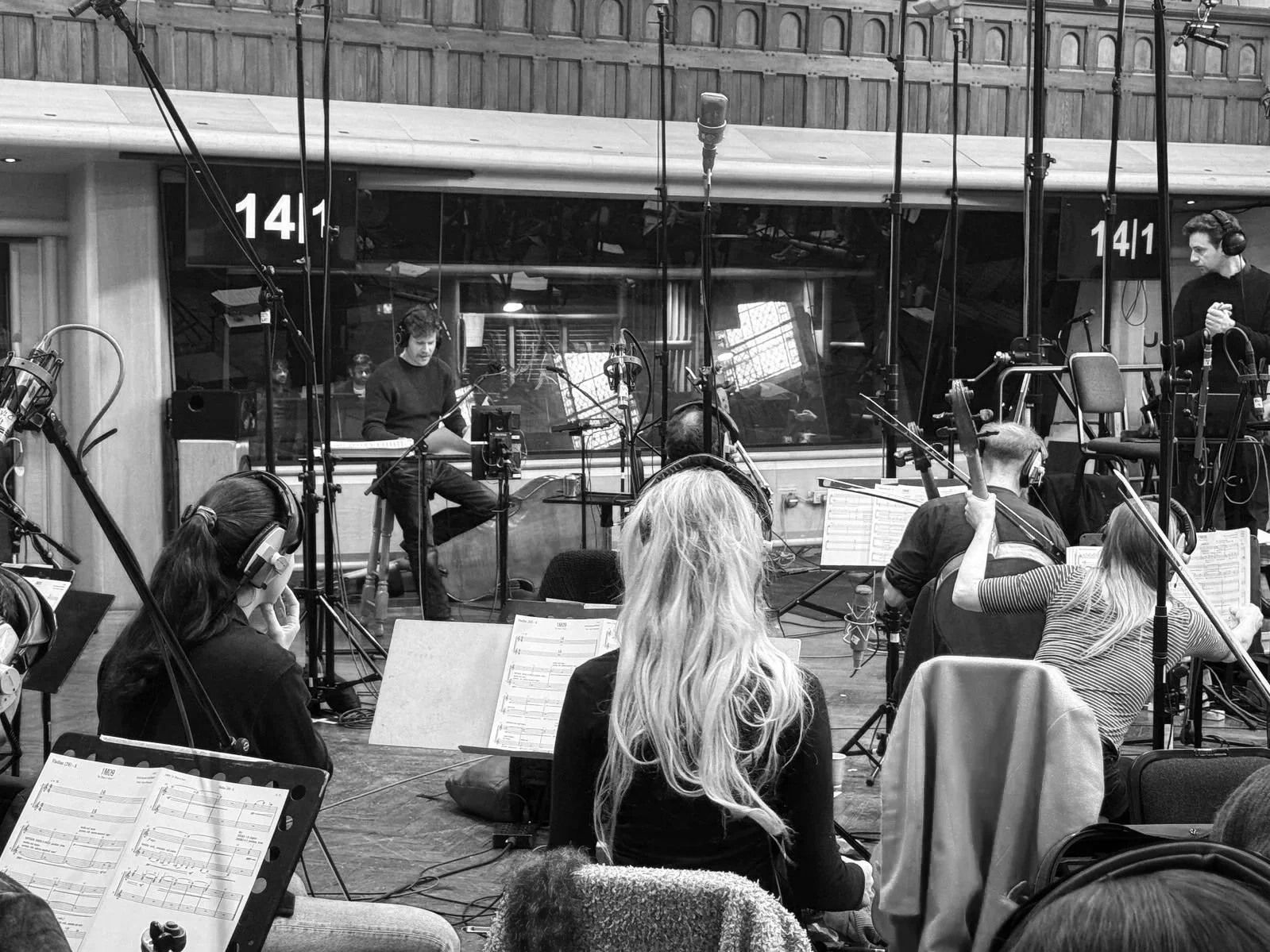
“For several cues, we recorded the same material twice: first in The Hall [at AIR] with larger forces to harness the resonant acoustic; and then in Studio 1 with reduced forces for a tighter, drier sound,” says Hugh Tieppo-Brunt. “Rendering the same musical ideas across two different environments was a very interesting process - particularly in Studio 1, where the dry acoustic allowed us to really push the intensity of the driving, rhythmic material at the core of much of the score.
"In The Hall, we also captured additional textural layers using non-standard orchestral seating - including a semicircle of violins spread across the back of the room. The focus here was entirely on atmosphere and sonic colour, creating immersive textures designed to wrap around the material recorded in a conventional layout.”
Fans of the movie should also note that there is an Easter Egg contained within the score that references the film’s original title.
“The address of the house, which becomes their whole universe,” Glotman says, “is 1-1-8-1-7. At one point that was the working title of the film. When I started on the film, and this was very early, just working from the script, I said to Louis Leterrier that those numbers could inform us, somehow, on a musical level. I came back to Berlin and transformed those numbers into scale degrees, and I played it back to Louis with the idea that it could become a melody with 5/4’s, a sequence of notes. That then became the main theme, the house theme. That little seed really shaped the score tremendously.”
While the composer is responsible for importing such nuances into the score itself, Jake Jackson is keen to stress the collaborative dynamic that underlines its creation. “You got to get that in that thing of being like, ‘No, we are totally doing this together as a team.' And, yes, it's hard, because only one person knows exactly what they want to hear; you know, [Yair] can describe it, but no matter how good one is at describing, sometimes it isn’t until you actually hear it and then it's like, ‘Oh, that's what you mean, and that's what that is. Okay, right, fine. I know that now. And I know when you say that, that's what we need to do.’”
“First and foremost, a score needs to serve the storytelling and the movie,” Glotman summarises. “It needs to be doing so many different things in a way that feels effortless. It needs to work but also disappear. It encompasses you and embraces you fully to the extent it feels like the score has disappeared. Music has really strong, unfiltered access to one’s emotions, a multitude of emotions, in a non-verbal way. I’m very conscious of how music can affect people.”
The Last House soundtrack & film are out now.