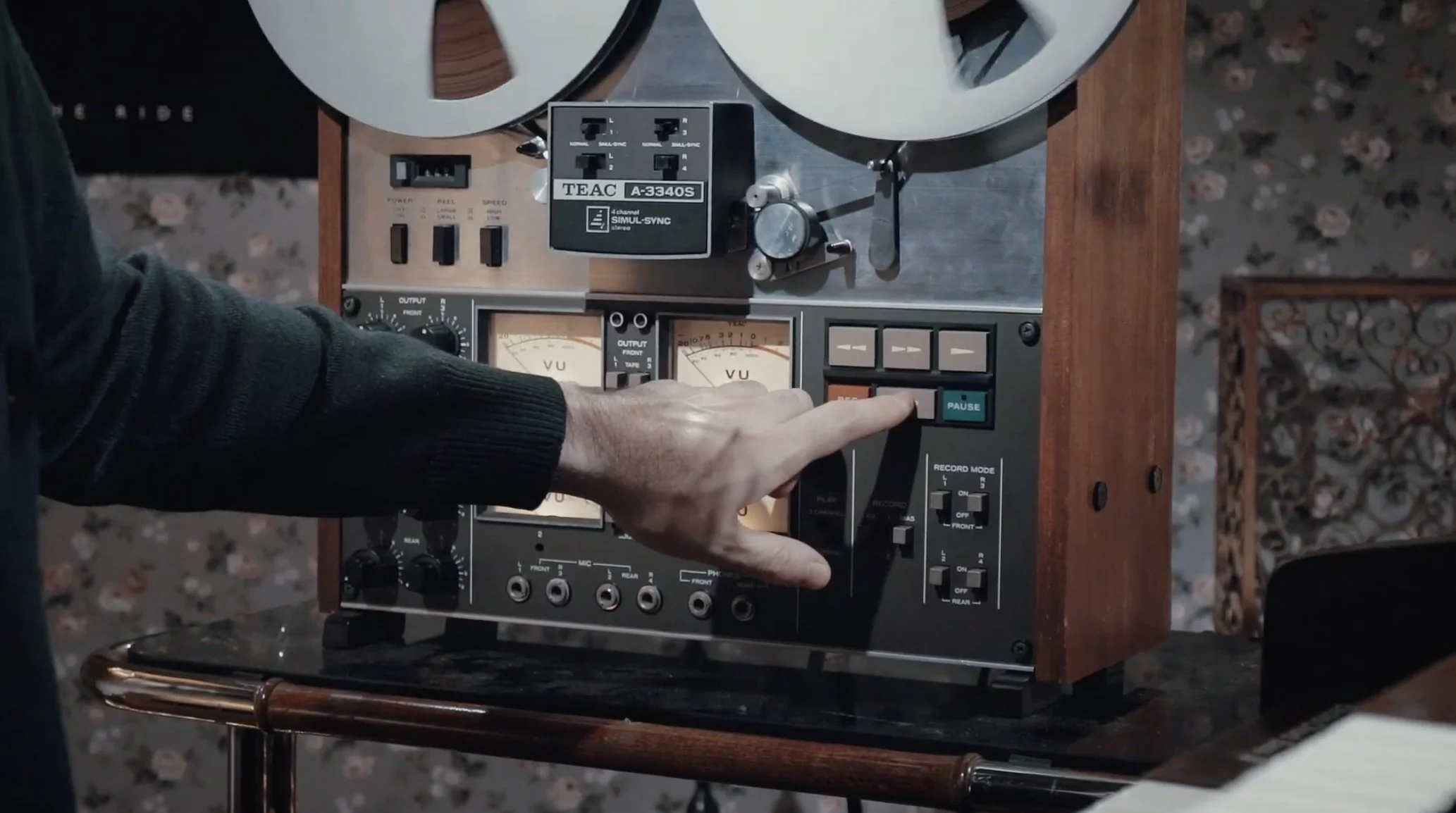
Everyone Starts from Somewhere: Daniel Pemberton
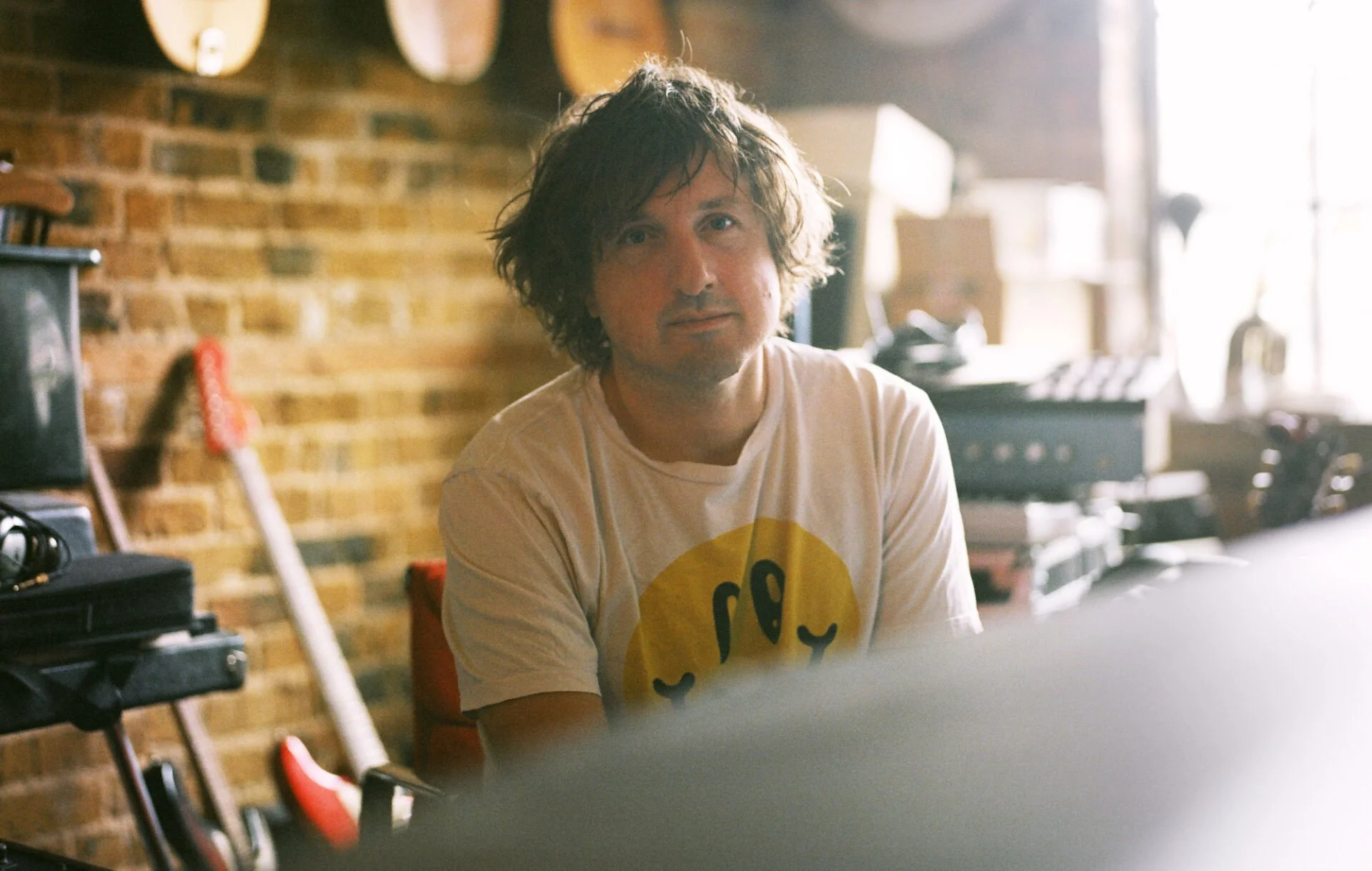
From a cassette recorder in a Surrey bedroom to the biggest original film of 2026, Daniel Pemberton has always known how to build a world from unexpected materials.
In 1994, a sixteen-year-old from East Molesey in Surrey recorded an album on a cheap four-track, a Korg keyboard, and a drum machine he later admitted he couldn't programme very well. He had bought the equipment with money earned writing a cheats and tips column for a video game magazine taught himself how to use it after school in his bedroom, with no particular destination in mind other than the music itself. The resulting record, Bedroom, found its way into the world through the specific social geography of early nineties British electronic music. Pemberton passed a tape to Mixmaster Morris at a gig, the kind of move that requires a particular combination of nerve and naivety that only a teenager can fully access, and it spread from there, passing through the underground until it landed with Pete Namlook in Frankfurt, who pressed it on his Fax label in a limited run of a few thousand copies.
To understand what that meant, you have to understand what Fax was. Namlook had built the label on a philosophy that drew a hard line against ambient music as wallpaper, as mere atmospheric dressing. Its catalogue companions were records by Richie Hawtin, Klaus Schulze, Biosphere, and Bill Laswell, serious experimental figures operating at the outer edge of what electronic music was doing at the time. Releases were strictly limited, collector's objects that circulated among a small and serious international audience. The Morris connection also pulled Pemberton briefly into the orbit of Coldcut's Ninja Tune label, where a DJ Vadim remix carried his name onto the U.S.S.R. Reconstruction LP, one of the more culturally significant underground electronic records of the period. He was sixteen years old, from Surrey, and he had gatecrashed one of the most rigorous corners of contemporary music using a drum machine he couldn't fully operate.
Bedroom is a strange and genuinely accomplished record, dark at its edges in a way that made it stand out even within Fax's uncommonly rigorous catalogue. It sounds like it was made by someone who understood, at an unusually early age, that sound could construct an interior world and that the right combination of texture, tone, and space could make a listener feel something specific without telling them what to feel. Pemberton has described the early nineties British electronic scene as being about creating sound worlds, and said it was something he really responded to. Bedroom is the evidence of that response: a sixteen-year-old who heard what the Future Sound of London and Aphex Twin were doing and didn't just absorb it but immediately started doing his own version of it, alone, in his bedroom, on equipment he was still figuring out. The drum machine he couldn't programme very well turns out to have produced something more interesting than a drum machine he could have programmed perfectly, and the limitation becomes the voice.
He built the score for the biggest film of 2026 out of children's footsteps, a glass instrument played with wet fingertips, and a single guitar he saved for the last ten minutes.
That instinct, to let imperfection carry the meaning rather than correct it, to find the unexpected material and work with its resistance, is the through-line of everything Pemberton has made in the three decades since. It is there in the glass instrument played with wet fingertips on Project Hail Mary, in the schoolchildren's footsteps that form the rhythmic backbone of the biggest film of 2026, in the single electric guitar withheld for two and a half hours until the one moment it will mean everything. The teenager who handed a tape to a DJ at a gig because he didn't know enough yet to understand he probably shouldn't have bothered, that person is still making every decision.
What happened next was not the obvious move. Someone with a record on Fax and a remix on Ninja Tune at sixteen might reasonably have stayed in that world, built a career in electronic music, and become one of the serious underground figures whose records his own had sat alongside. Instead, Pemberton spent the better part of a decade in British television, scoring dramas, documentaries, comedies, the kind of work that rarely attracts critical attention but demands an enormous amount of craft to do properly. By the time Ridley Scott brought him in to score The Counselor in 2013, Pemberton had spent years learning exactly how music functions in relation to image.
What followed was a run of collaborations that demonstrated, score by score, what that formation had produced. The Counselor scored a moral landscape rather than an event sequence, refusing to fill the silences McCarthy's screenplay had deliberately created. The Man from U.N.C.L.E. found him inside the mechanism of what John Barry had actually been doing under the surface glamour of the sixties spy thriller, building his own version of it from entirely contemporary parts. Steve Jobs was approached like a rock record, forward momentum, rhythmic intelligence, a band playing live, because Pemberton understood that a film made almost entirely of dialogue needed a score that pushed rather than sat. Three consecutive major collaborations, three scores that sounded nothing like each other, and nothing like what those films typically would have received.
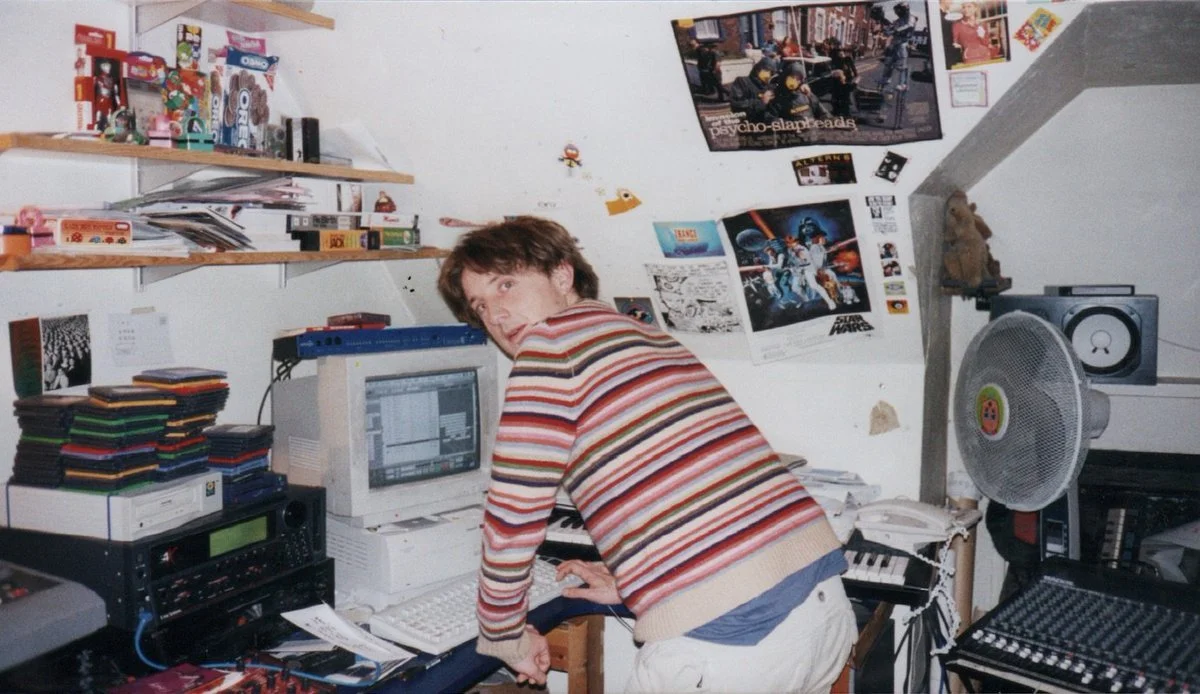
“My sister just sent me a real blast from the past - working on an Apple in my old bedroom studio, late 90's.. :)” - Daniel Pemberton on X
Then, Spider-Man: Into the Spider-Verse in 2018, which made all of that legible to the widest possible audience. Lord and Miller, who had been fans of Steve Jobs and had met Pemberton in London before the film was in production, brought him into something visually unprecedented, which needed a score that could match its formal invention without becoming a gimmick. What Pemberton built, DJ scratching woven into an orchestral arrangement, hip-hop production logic applied to a leitmotif structure, is one of the genuinely significant pieces of film music of the last decade. When the sequel arrived, he spent two years in development before committing to finished music, building distinct sonic identities for eight different visual universes while maintaining thematic continuity across both films. The scale of that undertaking, and the fact that it sounds effortless in the end, is the clearest measure of how far the practice had come from the four-track in the bedroom.
Which brings us to 2026, and a year that is already his in a way few composers get to claim. Project Hail Mary is the second-highest-grossing film of the year with $421 million at the global box office, an original blockbuster, no franchise, no safety net, built on the bet that a good story told well is still worth a cinema ticket. The score Pemberton built for it is the most formally inventive of his career: a vocal and choral architecture subjected to radical transformation, a 1940s glass instrument recorded in Paris with wet fingertips, sixteen singers arranged in a circle and conducted as a human drum machine, schoolchildren's footsteps forming the rhythmic backbone of entire sequences, and a single electric guitar withheld for the entire film until the one scene where it will mean everything. It is, by his own account, the most complicated score he has ever made, and it sounds like the most inevitable one.
He is not done with 2026. The A24 drama The Drama, starring Robert Pattinson and Zendaya, is already in cinemas. Masters of the Universe is coming, a score he describes as insanely maximalist, a deliberate tonal whiplash from Project Hail Mary that he seems to relish as a formal problem. And beyond 2026, Spider-Man: Beyond the Spider-Verse is in production, the third instalment of the most significant creative relationship of his career, still unfinished.
Thirty years after a teenager in East Molesey pressed strange, dark electronic music onto a four-track cassette and handed a copy to a DJ at a gig, Daniel Pemberton is the composer at the centre of the biggest films of the moment, not because he found a sound the industry wanted and repeated it, but because he never did. The drum machine he couldn't programme very well turns out to have been the beginning of everything.