Bishi on scoring MAYA, sitar training and the art of building your own world
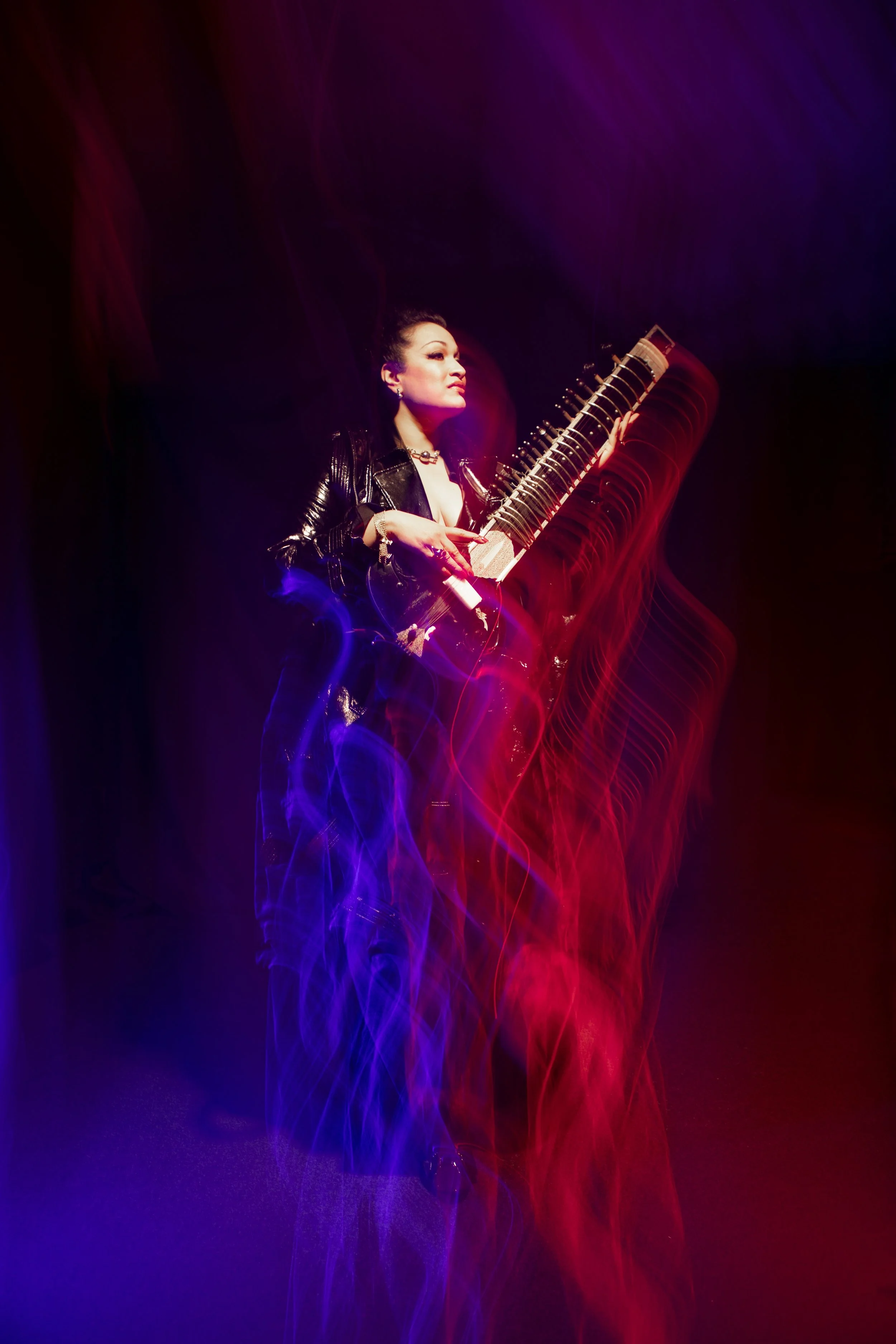
Photographs / Fiona Garden
Bishi's fourth album scores a virtual reality film, but its roots reach back through club culture, sitar training and a family who taught her that art should belong to everyone.
Words by Susan Hansen
Renowned composer Bishi does not shy away from exploring new territory, always looking to invent the unimaginable.
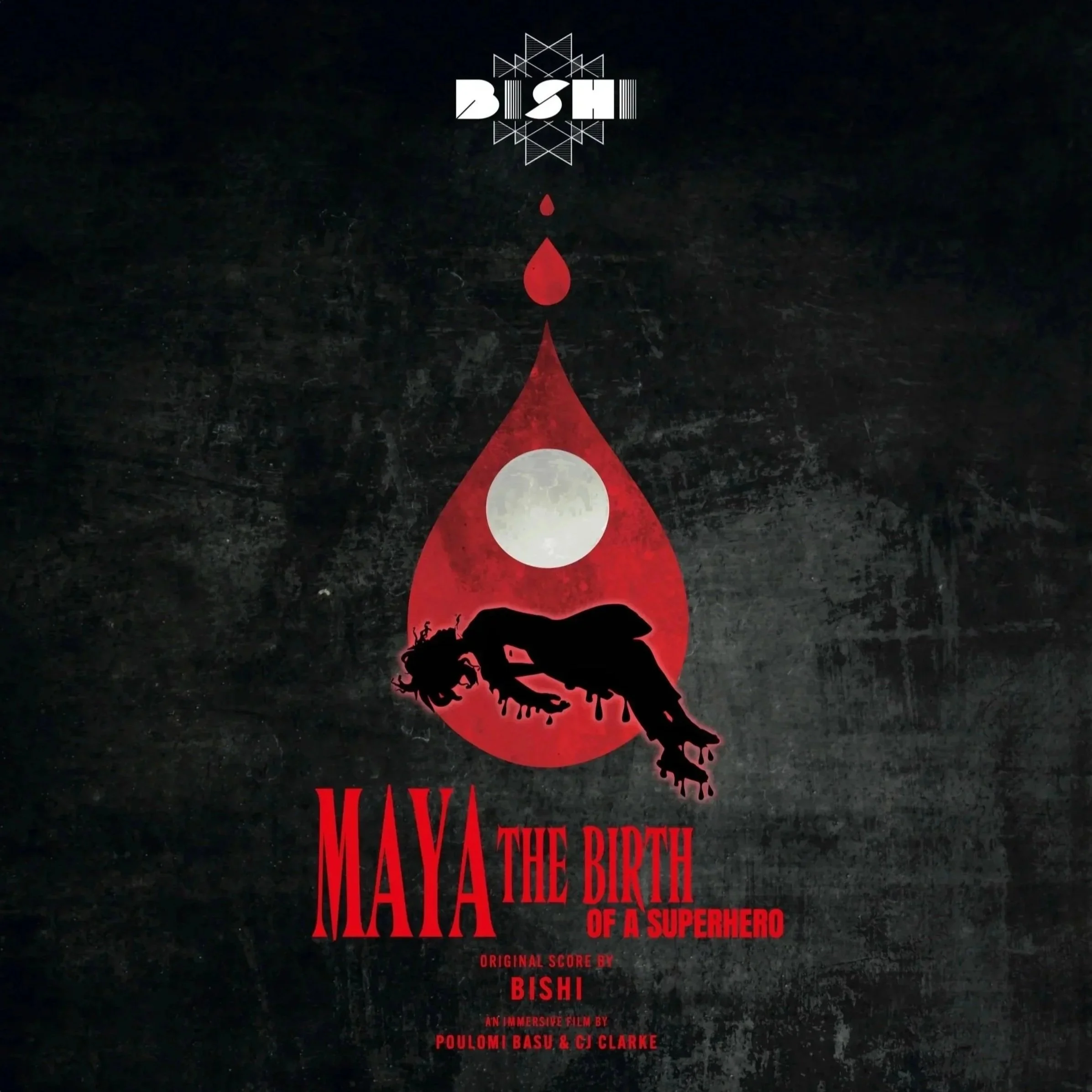
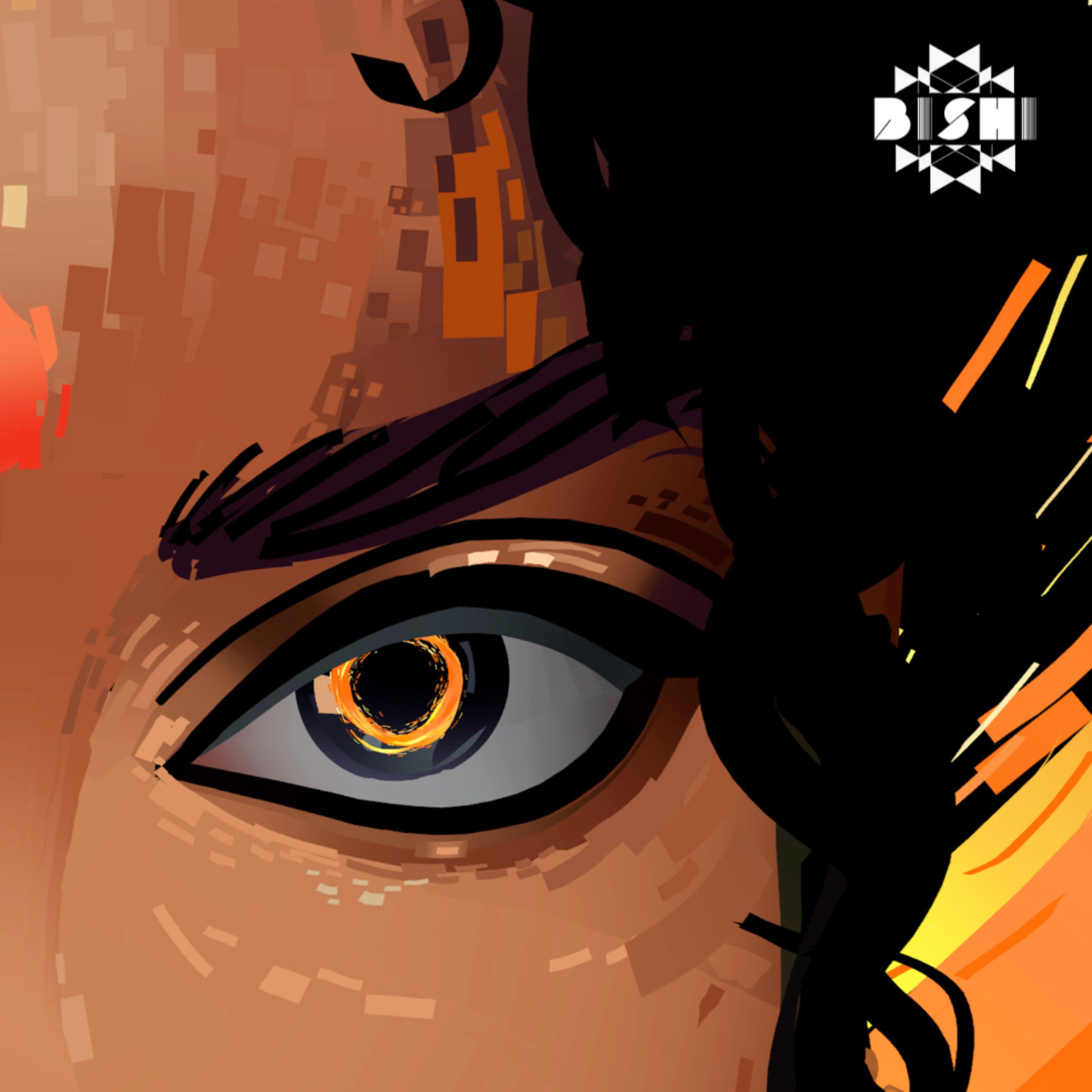
The British Bengali artist’s DIY approach runs deep. Continuously drawn towards cutting-edge technology, led by an unflinching curiosity, her fourth studio album, MAYA: The Birth of a Superhero – Original Score, accompanies the immersive, virtual reality film of the same title.
Uncovering her inventiveness, behind the score is an artist whose work forms part of a wonderful career, an illustrious journey with even more magic to come. We got close up and spoke to the trailblazer about her background, origins and values.
Your career is connected and meaningful, but DIY underpins it. How did it come into your life?
My journey has been of major projects, much like a lone wolf in my area. I started my career as a DJ, and that gave me the grounding and understanding, finding out how to build your own reality as an artist. My mother is an expert in the music of Rabindranath Tagore. When the Indians emigrated in the ‘70s and started their own DIY, their own scene and creative schools. This has been in my blood; something about that had this huge impression on me as a teenager.
Where do you see the relationship between an acoustic instrument and electronic sound?
I love the juxtaposition between acoustic instruments and electronic synth; it represents the distinct parts of my personality. The acoustic instruments reflect my classical music training, and the electronic represents club culture. As a kid, my career started in nightlife when I was 16. I was a guest host of the VIP rooms at The Scala. I began DJing professionally at 17.
All the electronic side of music is more for the untrained. It's the freer part of my personality, whereas the instruments represent the more formal music training. When I studied the sitar, it was under a senior disciple of Ravi Shankar, who wanted me to become a full-time sitar player.
"Art, social change and accessibility have always gone hand in hand."
– Bishi
You’re passionate about film as well as music. What’s your fascination with film about?
Film is such a strong amalgamation of the visual, the sound and the drama. Films are incredible because you get the plot, the themes, and there's this third space where an audience member gets to meditate; they get to have their own interpretation.
There is a social conscience in your work, and you rate education. Where do the two come from?
My grandmother is from Calcutta; a big part of her work was teaching street people how to read and write. Once you begin to read and write, that completely changes your earnings capability. They were very involved in the Communist Party, and they used to go to rallies. Art, social change and accessibility have always gone hand in hand.
I was brought up around intellectual immigrants; the idea that that was somehow exclusive has never entered my vocabulary. The work of Rabindranath Tagore was about making things accessible. He wrote a canon of over 2,000 songs, and they were written in a way that someone who couldn't read or write would be able to retain them. The idea of accessibility and using art as a tool to help and liberate has been there since birth. Art and social justice go hand in hand; it skips a generation, and it's come into my life.
"Films are incredible because there's this third space where an audience member gets to meditate; they get to have their own interpretation."
– Bishi
The three often seem separate; art, culture, and learning are inaccessible to some. What’s your thinking on that?
I was in the last generation of British kids where music was high on the agenda. In state education, there would be free instruments. There was a lot more class diversity within orchestras because it was offered. I've got friends who went to school, and the lessons were free, or they just had instruments lying around in a cupboard. That's what sparked something off that's been taken away from people.
I’m probably in the last generation that could get housing benefit, or could qualify for certain benefits that gave us the time to try and grow a career. I dropped out of college, but my friends graduated; it was just before the tuition fees came in. Things were more accessible; the cost of living, rent, everything was a lot more affordable.
As an independent artist, you don’t necessarily have a huge network or access to the same benefits as an artist signed to a major label.
It's bloody hard work. I’ve got an amazing management team and a great publishing team. What's nice is that it's co-joined as something collaborative. In my earlier years, it was very much bound up with control and pushing me into being a certain artist, a certain woman. Whereas I found that people were aligned and focused.
Big labels underwrite a whole bunch of marketing and support costs, which they take straight out of whatever money you make. You do at least get catapulted into the marketplace, and you get better known because there are more people pushing your product in the market.
Have you come across resistance or bias as a female composer?
I've learned to deal with it as a woman. You have to gracefully assert how fierce you are. I have to be charming, let them know that I'm doing some impressive, powerful things. Within the community, everyone's supportive, but when it comes to commissioning and giving jobs, as a South Asian female artist, I'm in this tiny minority. I get brilliant work, but getting pigeonholed just for being brown can be a problem.
The path I've made for myself has been wide and diverse. When you've been in a game for 20 years, you start to look at the patterns of what’s worked and what hasn't. For me, it’s been staying prolific in the high turnover of work, growing my skills, my love for culture and other artists. I thank my mum for instilling that in me and understanding that I am an unusual collection of things.
MAYA: The Birth of a Superhero soundtrack is out now.