Shruti Kumar on scoring the chaos of BAIT
Shruti Kumar spent a decade waiting for a script like this. The composer on Riz Ahmed's maximalist Amazon series, scoring across genres, and why putting human experience in a box was never going to work.
Words by Susan Hansen
Splitting her time between New York and London keeps Shruti Kumar’s diary incredibly varied and stimulating. The in-demand composer is one of the most compelling writers working across television, film and music today.
Writing scores for some of the biggest productions, she has worked alongside Fiona Apple, Nas, Shirley Manson, Alicia Keys, No Doubt, Vampire Weekend, and many more. In true collaborative spirit, her refusal to limit herself to a single genre has helped blur musical boundaries and open unique possibilities for creative collaboration with an array of talent.
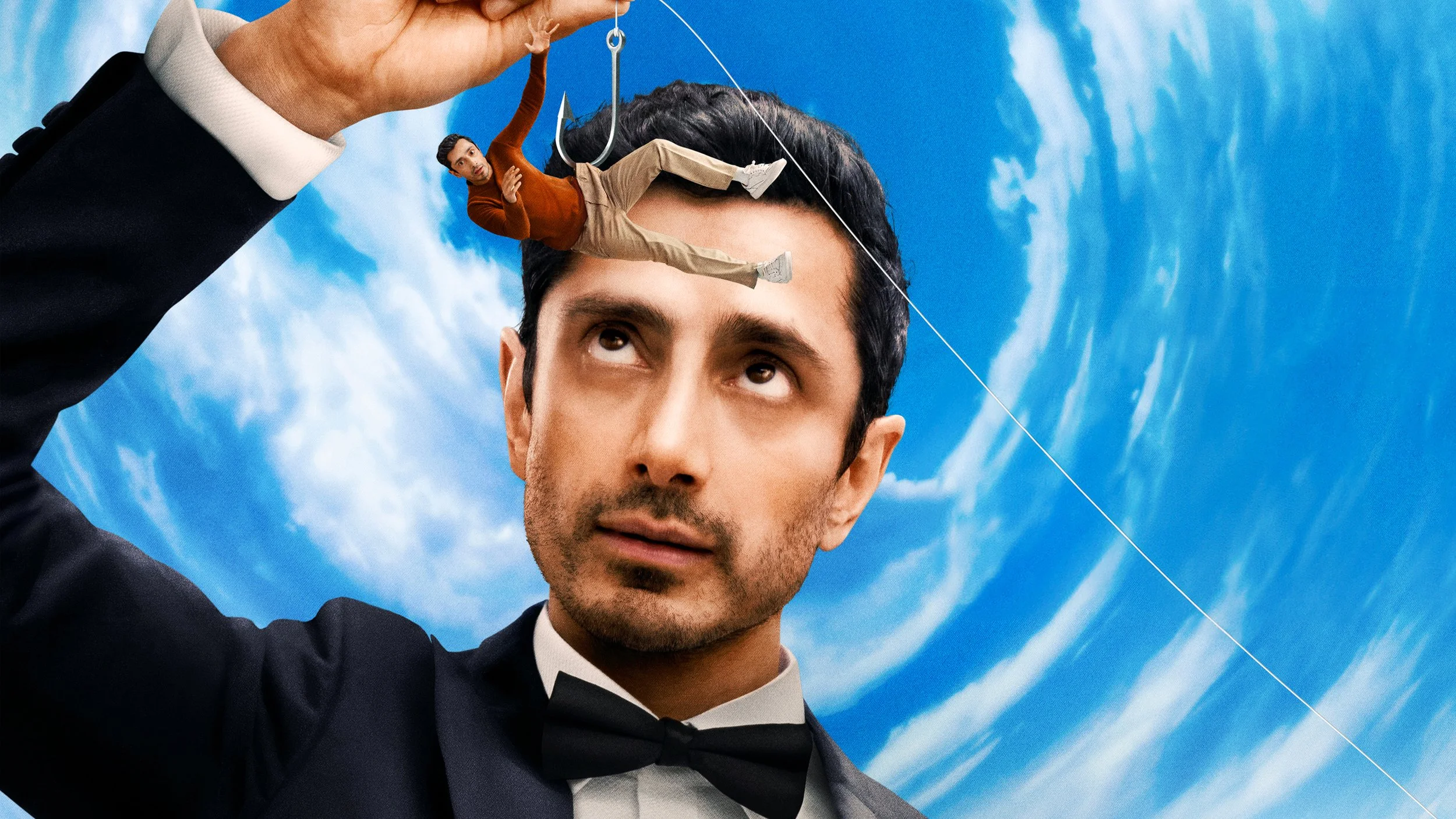
Her latest score for the TV show BAIT is a groundbreaking comedy effort on Amazon Prime. It’s an entertaining, deeply relevant storyline in which the show’s main character, actor Shah Latif (Riz Ahmed), fights to overcome a hurdle after auditioning for the role of James Bond.
The blank mag spoke to Shruti Kumar about her career, why thinking in genre is too limiting and the joy of working on BAIT.
When did the development of BAIT roughly begin?
The show has been living in Riz's mind for a decade plus. This has been since 2014, when it was a personal project and a collection of his own experiences that morphed into this hyper genre, an original way to blend genres.
The name of the game here was that Riz often says life doesn't exist in one genre, and the show is about his private versus public self. Across all professions, there’s a disconnect between how we are presenting ourselves to the world, functioning in our careers or with our families, and what we're feeling internally.
What would you say the show is about?
Trying to explain any of this in one genre, trying to encapsulate the messiness and realness, and the maximalist nature of being a human. We often try in art to make things elegant and simple; our being can be very beautifully depicted in a very maximalist way. Lots going on up here in our heads, an ambitious endeavour. What made it possible is that the story at its core is very human, so even though lots is going on inside all of us, there was nothing not truthful about the chaos.
While there are many big swings dealing with big world issues, it works brilliantly; it's all within the context of Shah, the character, versus himself, Shah, who he thinks he wants to be, versus Shah, who he really is. What's amazing about this show is that every episode is in a completely different cinematic universe.
"If there isn't a space, you have to make it yourself. If there wasn't a sound for me, I had to make it myself."
What was your reaction upon reading the script?
It had been a long time since I'd read a script like this. It felt like I was already watching something that was to the point. I felt the story would resonate with everyone. It tapped into something. When I watch a television show, I'll sometimes run out of the room and listen to the music, wait for the scene to be over and come back. I was already invested; I had a visceral response to the script.
The Bond theme is somewhat unexpected. What’s your take on it?
When you listen to that Bond theme again, you start hearing that it's very aligned with Indian rock and scale. There was this sense of feeling a full circle; the word reclamation was used, but was kept in a vague way to be in the context of this character's adventure. It's not necessarily a political statement; it's a reclamation of self.
How does the music match the different styles of filmmaking?
The way that the show is shot is close to the characters. It’s like you're walking in the middle of everybody and everything. The music sets up a lot of the time, place and feeling that this wildly ambitious swing of everything at once. It works because that experience is human. We are many things.
How did you make all these different places mean something musically?
The beauty of music, with the score, is that words and pre-existing songs can be very codified in human experience. No matter who you are, it won't be the same reaction; it depends on culture, context and background, but everybody has a reaction. We see this all the time in the world we live in today. People can shut down at a word or get completely riled up by a word. Same thing with a song, somebody's pre-existing associations with the song can take them to a specific place.
"The show is about someone spiralling. You certainly are going to spiral with the show, that's the philosophy around the score."
How can this awareness be used to create further nuance?
Creating a score that's original for a piece of television or film is a fun challenge. We can find a palette that can show our common threads, show them in music in a way that words can't. I'm a fan of showing that disparate sounds can coexist well. Things that we don't imagine we can hear in the same piece of music. There's tension, comedy, cultural identity, and there's a bond. Those were the big markers, but you'd be surprised in the end how much can overlap.
Am I right in saying you are originally a pianist?
It was my first foray into music when I was a kid, but with this, there were many different tonal areas. We talk about tone and character a lot in this show. I tend to quite literally sit at a keyboard when I write, but with this, we do a lot of work with percussion, pitched percussion, bendy percussion and breath work. We had to create musical environments that could be superimposed on a club scene or superimposed on a prayer scene, which was one element of the scoring; the other element is the orchestral work.
Was it challenging to ‘respect’ the Bond theme in the process?
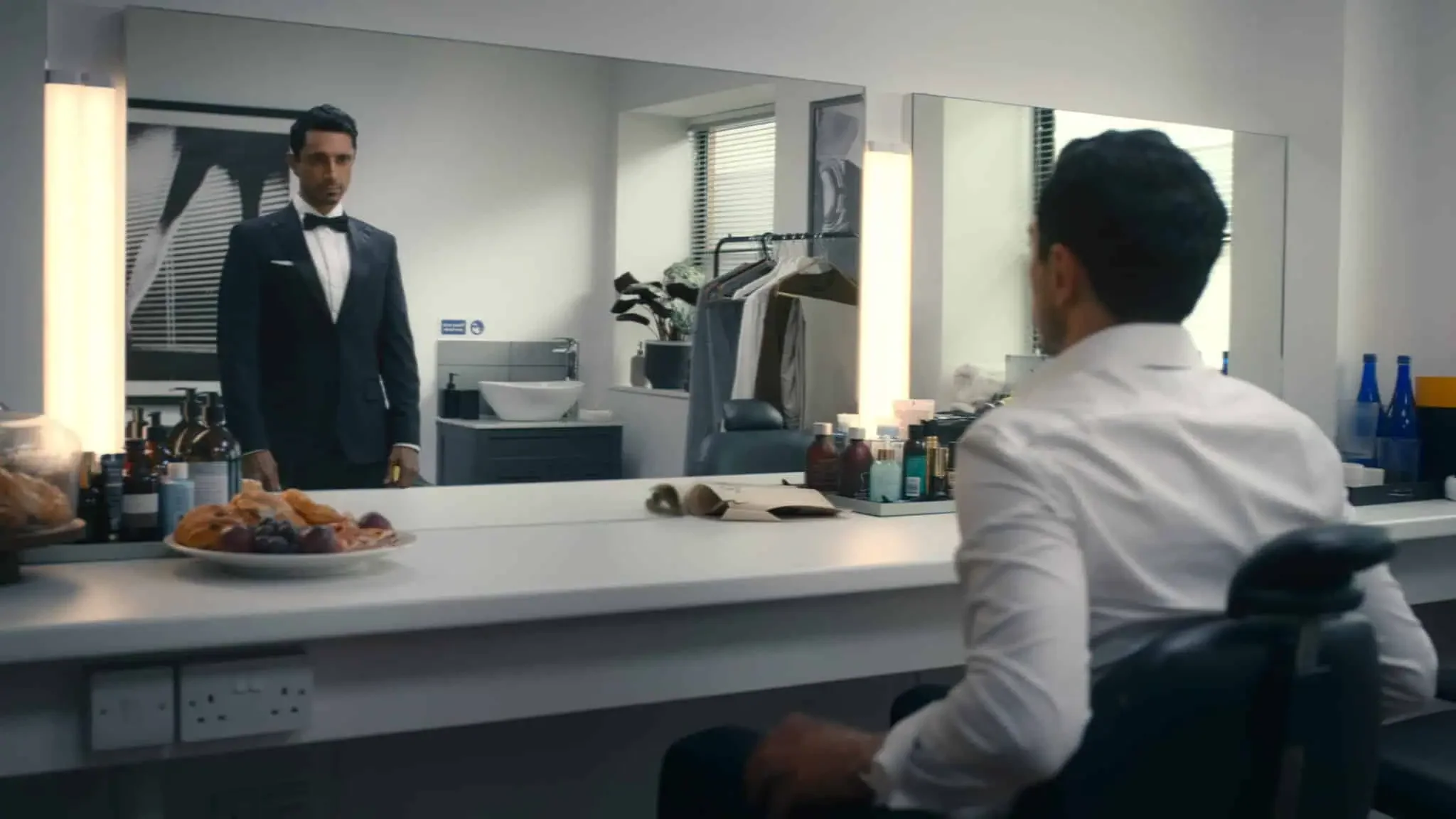
We didn't want to copy Bond. What helped with that was that the element of Bond in the show was always the character Shah, the main character, looking in the mirror. I musically thought of those Bond-aligned cues as a mirror of what we think our version of Bond would be.
What was Riz Ahmed’s approach to the score? How did he engage with it?
He is thoughtful when it comes to music. It's rare to work on projects that we care about this much, but also rare to work with directors or producers who are involved down to the specific sound or note. He would ask questions such as ‘Did we earn this? And has it been earned in the story?’
The show is about someone spiralling. You certainly are going to spiral with the show; that’s the philosophy around the score. Riz wanted to let the score hold your hand.
Were you a fan of Ahmed prior to being linked to the show?
Yes. I like who he is as a human and his voice in society. He uses his voice very well to speak about what he believes in. To me in this industry, I find people like that to be such exceptional role models. I wanted this story, I wanted to be a part of this musical world, I wanted to be in process with someone who functions like that and thinks on that level.
It’s my impression that the process applied here differs from some of the previous ones you've been involved in.
The workflow and process are unlike anything I've ever worked on, and all the different processes are challenging. But to me, looking at it from the other side, looking in my rear view, I've learned beautiful lessons.
As composers, we can often feel siphoned off in a room by ourselves with little communication with other people, hoping that whatever we're writing is landing, but not really hearing the feedback, all the time.
How collaborative was the process?
I was hearing from people all the time, everybody was in it to try to help each other, and everybody was working equally hard. Riz himself was extremely involved, down to long voice notes, treating us like actors; this is what we're supposed to feel. Intention was the big name in the game here.
It sounds like he was super-engaged.
He would sit with every score review, watch over and over again. I have not experienced such a hands-on approach; it made me feel like he cares about the score. You can tell that score was valuable in this project, in a way that sometimes, on other projects, you can feel like scores are an afterthought. There was such an intention.
And you became a ‘method’ composer?
All of us are method, a method composer. I would record something, and my brain is living like the actor; there's got to be some effectiveness here. If I am becoming the character, the score must be working.
With this project, I utilise more than being versatile. Finding the common threads between all the genres, once we locked in, the same pitch percussion, there is a nod to South Asian culture. We thought a lot about South Asian music from all countries.
Some of those wandering, bending tones that existed throughout all the genres of the score became analogous to the character himself, which was cool. With the score, we became the lens to spy thriller. It’s like a spy comedy spy thriller that has heavy societal themes. It deals with racism and identity, how we internalise it.
"I'm a fan of showing that disparate sounds can coexist well. Things that we don't imagine we can hear in the same piece of music."
Why is it you don’t like the idea of genre?
It’s extremely limiting. That's why I was aligned with the show; we're trying to tell human stories. As Riz says, I have always believed we don't exist in one genre. How are we going to honestly portray a human experience while trying to put it all in one palatable box? It's not going to work; it's not going to really resonate.
What are you hoping this score achieves?
I hope that this score and show, instead of fixating on our differences, encourages us to acknowledge our differences and find our common threads. We hope that everybody can tap into the songs. It’s an homage to London. Equally, I always get emotional under the underpass, on the subway in Brooklyn. You hear music and beats from every culture in the air when you're walking around.
How did you get into composition?
My parents moved to the States in the ‘80s. I don't really have big memories of my life before music was in it. I started playing piano when I was four, but in a great way, my parents didn't know anything about Western music. It wasn't like I had anyone making me play piano, but my parents took me to concerts when I was little. I had a natural proclivity towards the piano that became quite serious. I was singing in choirs, and I loved musical theatre.
What inspired you to do things your way and find your voice?
If there isn't a space, you have to make it yourself. If there wasn't a sound for me, I had to make it myself; that's how I got into composing. I'm sure it made a lot of my piano teachers really frustrated, but the good ones liked it. I had fantastic teachers.
Aged eight or nine, I had a teacher who wanted to expand my understanding of instruments. When I was interested in composing, he very quickly started making me look at the piano. I was lucky to have exposure to people who wanted me to get outside the box.
What would you like to see happen in music?
The more stories we tell like this, the more we're pushing towards merging that gap between consumption and creation. If we get to listen to art that has these beautiful influences, creators should be able to create without limitations. It’s beautifully shown in a show like this, where the sound of a city is this genre-less depiction of all the cultures that exist on the street.
BAIT is out now on Amazon Prime.