Jessica Rose Weiss on scoring the film Hayley Kiyoko had to make
Composer Jessica Rose Weiss on scoring Hayley Kiyoko's debut feature, the intimacy of working with a musician-director, and what it means to build a world out of someone else's DNA.
Words by The Blank Mag
We catch Jessica Rose Weiss on the morning of her soundtrack release for Girls Like Girls. She joins the call smiling, and the first thing we talk about is not the film, not the music: it's the walls behind her in her studio. "Sweet basil green," she tells us, replacing what she describes as hospital white. A British friend talked her into it, and we told her it was the right call. She says it is kismet. It's a good way to begin…
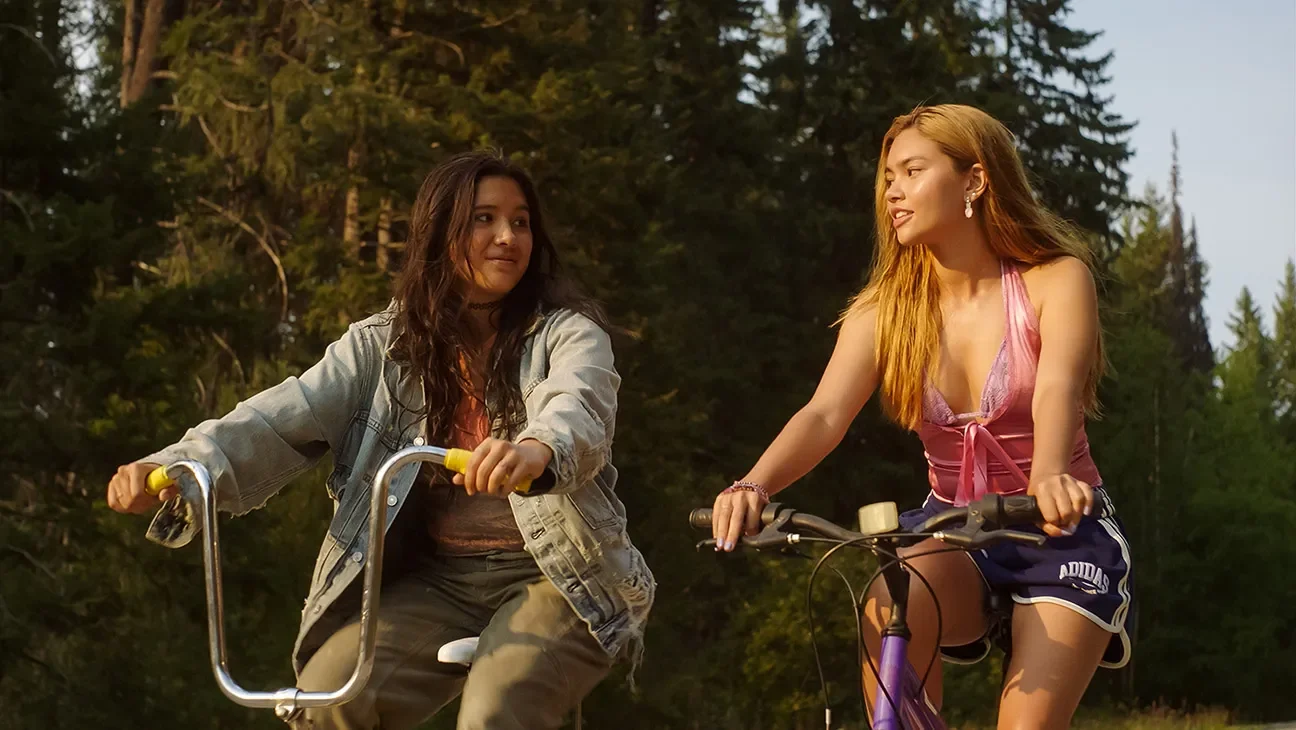
Based in Los Angeles, Weiss has spent her career composing across a breadth of projects that reflects both her range and her refusal to be pinned down: Sony's Cinderella, scored alongside mentor Mychael Danna and the number one streaming film worldwide on its release, Jennifer Lawrence comedy No Hard Feelings, Ryan Murphy's American Horror Stories, and Pierre Morel's action thriller Canary Black, before landing at Girls Like Girls, the debut feature from musician and director Hayley Kiyoko
She is an advocate for independent film, for female directors, for composers who are given the space to be storytellers rather than technicians, and for the kind of mentorship infrastructure that actually changes who gets to be in the room. She is also, as she has said herself, categorically opposed to anything safe.
In our conversation, Weiss talks about the challenge of scoring nostalgia without tipping into pastiche, the particular intimacy of working with a musician-turned-director, and what it means to carve out your own compositional space when the director's DNA is already inside the film.
Congratulations on the release of your score for Girls Like Girls! How are you feeling?
I feel very emotional. This was such a beautiful collaboration with Hayley, and it was an uphill battle figuring out how we could execute this the way we dreamt of, given the limitations involved. As a composer, that's a constant. I felt even more personally passionate and driven to find an outlet for this, to be a visible collaborator with her, and to find ways to support this journey, because this is her first film. There were ins and outs she hadn't had experience in before. So I was very honoured, and also lucky, to build such a strong and deep friendship with her where she would call me and say, "Jess, is this really how it goes?" And I'd say, unfortunately, yes, but let me give you a couple of tips here and there. A release day for an OST is always exciting, but for this one, I almost feel like an older sister watching their little sister shine and have their moment. It's all wrapped up into this big ball of love and gratitude for her.
Do you mark the day in any particular way?
I should implement that more. I definitely should find a bottle of champagne somewhere… I remember when I scored Cinderella, which was huge for me. My husband put together a crew of friends, we got a projector, played the movie, all got drunk and had a great time. I think it's really important to celebrate all of it, because we're in post-production, we've got to build the support system ourselves a lot of the time. So I think it's important. Now I'd better organise something tonight.
"I almost feel like an older sister that's watching their little sister kind of shine and have their moment."
Hayley came to this as a musician long before she was a director. Did that make the collaboration easier, or did it actually complicate things?
I think it could have gone two ways. Nine times out of ten, I'm working with directors who don't have a musical vocabulary. I've spent my career learning how to interpret what they're saying, and I always encourage them: just tell me it feels too happy, or too whatever. But with Hayley, it was such a dream, because she could listen to something and immediately say, "Can you change the bassline? Can you mute the percussion?" It made doing revisions ten times easier. She wanted to be part of building the palette, which was so exciting. And she was so respectful of my workflow and my process. We'd have her come in and sit on the couch with her laptop while I was mucking about, and she'd hear something and go, "Oo, I like that." We did so much of that, which was so fun. The seed of the film started because of her song Girls Like Girls and that music video, so I ended up interpolating the song into parts of the score. I already had material to work off, it just felt organic from the beginning.
The film is set in 2006. How do you score nostalgia without it tipping into pastiche?
I absorbed the time period, and then I tried to throw it away and really focus on what the story needed. I thought that if I got into a psychological loop of being too obsessed with the period, it might do a disservice to the film. So it's a hybrid score: a lot of organic instrumentation, strings and piano, but also synth and electronic elements. Instead of asking what was hot in 2006, I used Hayley's vocal. She would come in and vocalise, do quite a bit of singing, and I would take that and build it out into pads and instruments. I used her DNA to create a lot of the background textures. There's a wink and a nod in there to that time period, but I wanted it as subtext. The root of the score is really the POV of Kohi. It's a love story, but we're in her head the whole time. I wanted to figure out what it sounds like in her head. I also used the environment: the Pacific Northwest, the trees, even the undertones of water. She's wading in the water during a breakup, and I pulled on all of those things to unravel the palette.
Did reading the script early give you a clear direction, or were you noodling for a while before it clicked?
I think I'm always a bit of both. I did read the script first, and the wheel started turning. The first thing I took away was that it's a love story, and I'm a thematic writer, a melodist, so I was thinking thematically more than in terms of palette. But I'm also a believer that you don't really know what a film needs until you have something to look at. And there's a lot of silence in this film, which I think is really effective. At first, I was like, maybe we need something here, let me try something. And then I thought, no, you're right, we don't need anything, because that way when the score comes in, it's so much more impactful.
How do you decide when melody earns its place, and when choosing to have no music does more work?
I always start with theme and melody first, even if I'm working on a film that may not necessarily lean into that. I want the score to be a character in the film, and then the filmmaker can decide whether there's room for it. In this case, it was exciting. I remember sitting at the piano and playing Girls Like Girls. I needed to get it into my consciousness, really know it inside and out. I scored the first scene, and at the end of the opening montage, I just played a hook of the song. And then, instead of ending it how Hayley ended it, I thought, what would I do if I were writing this? So I did another moment. When Hayley heard it, she said, "What is that?" I said, it's the Jessica Rose Weiss extension. She said, I love that. So that motif ended up being sprinkled throughout the score and became a real thematic thread. I play with that a lot: making melody something you don't necessarily hear, but feel. And at this stage in my career, I kind of know those moments in a film where I can say, okay, we've earned it. Let's hear it in full.
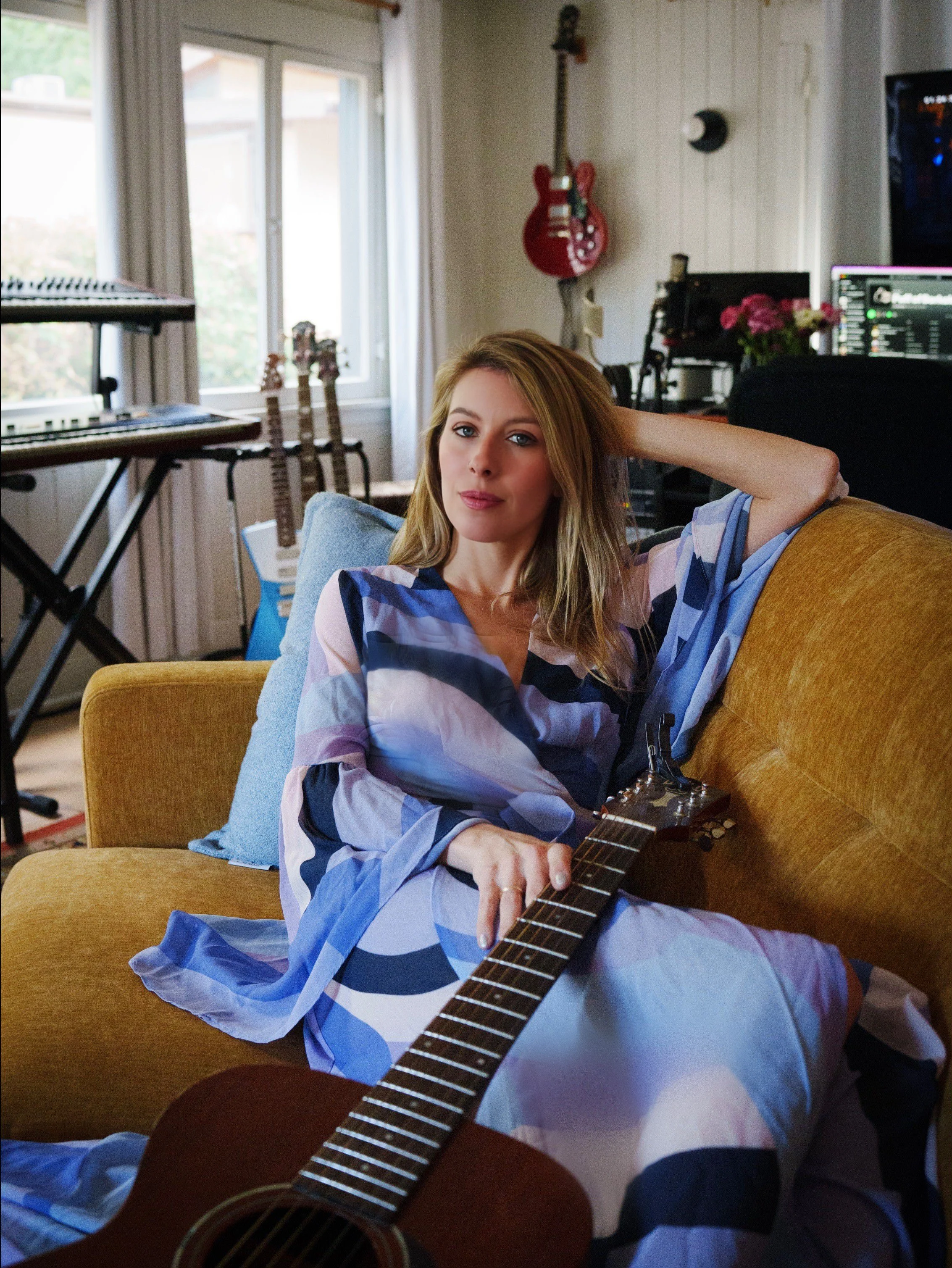
Photograph / Jessica Rose Weiss
Your credits move between comedy, horror, action, and now this. Is that range something you've protected deliberately?
Early in my career, it was very much say yes, take everything, which is a rite of passage. After Cinderella, there was a moment of pigeonholing, a sense that I was the fairy tale, girly girl kind of composer. So I made a concerted effort. I did an action movie, I did a political thriller. It was important for me as an artist to exercise that. The more a composer gets obsessed with what their brand looks like, the less they're focusing on the work itself. So I just ask: what can I say yes to that's really going to inspire me and also challenge me? I feel like the next thing I do, I'm hopeful it involves a large orchestra, something big. I've been in this intimate space for so long that I'd like to exercise a different muscle.
"There's a lot of potential out there that hasn't had the education or mentorship it needs to move forward."
What would you like to see change in the industry?
One of the things I'd love to see is more space for independent films to have legs, to get theatrical releases, not just horror made for $5,000 that ends up making millions. I miss the Little Miss Sunshines. I miss that scale of filmmaking. Zach Braff plays the dad in Girls Like Girls, and I miss the Garden State-sized movies, so poignant and so beautifully written. I wish there were more space for them. And I'm certainly an advocate for more women across the board in film and TV, not just in composition.
I'm so fortunate, but I predominantly work with female directors. If I could only work with women for the rest of my career, I'd be totally fine. And I think what's most important is the education aspect. I'm not saying push people to the front of the line because they're X. I'm saying, let's create an infrastructure so that women, POC, everybody, can learn from great mentors, to understand the business as well as the writing. There's a lot of potential out there that hasn't had the education or mentorship it needs to move forward. That's the thing I find most frustrating, and most urgent.
The Girls Like Girls soundtrack is out now.