Helen Svoboda on Distance, Obsession and Letting the Earworms Lead
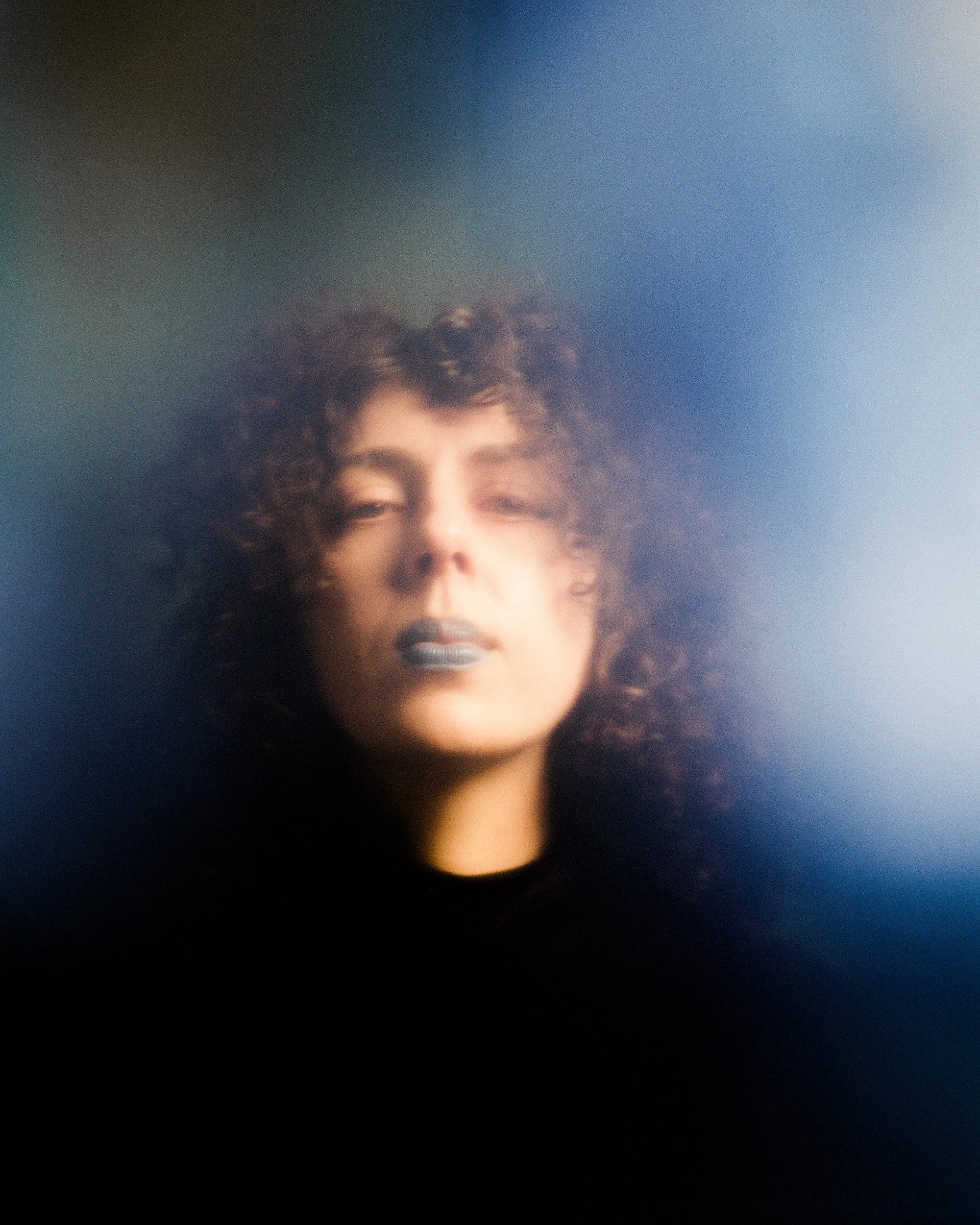
Sixteen 'earworms' spun from two double basses, two voices and electronics, out now on Room40. Finnish/Australian bassist Helen Svoboda talks about distance, restlessness and what listeners are really searching for when they slow down.
Words by The Blank Mag
It took Helen Svoboda fourteen years to find her instrument. Born into a family where three of four grandparents, both parents and her brother are classical musicians, she spent her childhood at the piano and the flute, aiming for a concert career, but when she realised she didn't want to, was the moment she got into university to pursue it. At fourteen, her dad, a classical guitarist running the ensemble at her school, needed a bassist and recruited the nearest available family member. He later suggested she audition for jazz bass as a backup. She got in, dropped the piano, picked up the double bass at eighteen and has been obsessed ever since.
That obsession now runs deep enough that on the day we speak, dialling in from Melbourne at 7 pm with a friend's gig still to catch, she has just submitted her PhD thesis on double bass harmonics. It also runs through every minute of ‘Headwater’, her new album for Lawrence English's Room40 label.
Composed for a 2024 performance at Melbourne's Abbotsford Convent and recorded in one concentrated October while Finnish vocalist Selma Savolainen was in the country, the record gathers sixteen miniature songs, or 'earworms' as Svoboda calls them, across two double basses, two voices and Tilman Robinson's electronics.
You're speaking to me from Melbourne. What is it about the Australian music scene that the rest of us don't see?
Australia is so huge, and we're all living essentially on the coastline. The music scene is focused on each capital city: Brisbane, Sydney, Melbourne, Perth, Adelaide, Darwin, and Hobart. It could take you half a year to drive around the whole country to get to them. Every major city has a really passionate grassroots scene of creative music happening within itself, and the longer you do the thing, the more you connect the dots between them. Growing up in Brisbane, Melbourne felt such a long way away. I didn't know if I would ever break into the scene. Then the world starts to feel very small once you perform enough in each city, and you realise each scene is equally small but vibrant in its own way. Australian music is thriving, but we are separated by distance. Touring is difficult, and independent artists need to find the means to perform in other cities, even if it's to 20 people. It gets noticed, and that's how communities build beyond your immediate city.
Your whole family are classical musicians, yet it took you fourteen years to find the double bass. What happened?
I grew up playing classical piano and classical flute, and in my mind, I wanted to be a concert classical pianist. I went all the way to getting into university to do that, and when I got in, I was like, oh, I don't want to do this at all. I was 17. A couple of years before, my dad, who's a wonderful classical guitarist, needed a bass guitarist for his school ensemble and recruited me because it was an easy recruitment. He suggested I audition as a backup for jazz bass. I didn't know how to improvise; he accompanied me in my audition on guitar. And I got in, and suddenly I realised I had a choice here. I took up double bass at eighteen, and since then I've been totally obsessed with it, and not even within the realm of jazz so much. I've been obsessed with the instrument itself. It led me to sing because I started to match the overtones on the instrument with my voice. It took me fourteen years to find my instrument. But eventually we got there.
"Every major city has a really passionate grassroots scene of creative music happening within itself, and the longer you do the thing, the more you connect the dots between them."
You describe the tracks on ‘Headwater’ as earworms. How much of this record did you choose, and how much chose you?
The earworms ended up choosing me. I'd composed all these miniatures for the first development, but strangely, I wasn't sure what it was yet. Then I realised a lot of them were in a similar tonality because of the bass tunings; I like to do different scordatura, and there are very specific combinations of overtones that come out through those. So it was no coincidence that one little miniature fit with another. There were moments in the development where it really crystallised: Jacques could play a bass part from Morning Hepuli while I played a part from If, the opening track, and we realised it worked tonally but also aesthetically, with Selma floating in between us, improvising. I started writing the earworms on a whiteboard and giving them their own names. It became this real headwater, all these streams and threads of mini songs that weren't quite complete, but they were moments of something. It was enough to let it be something and move on to the next earworm. I was okay with things not being totally finished.
Streaming has replaced the record shop with the mood playlist. Does that wider, soupier way of listening help artists or flatten them?
The playlists don't always work for me. I'm an album girl. I need to get into albums, and I think that's where genre is still super important for me as a listener. But it's strange, because I know my favourite artists and I know their sound, but I don't always know what genre they are on Apple Music. Sometimes the algorithm is good and helps me, and sometimes it's so off. A lot of the time, the choices given to me by algorithms don't suit my taste, so I'm slowly going back into Bandcamp, really listening through that app and asking, okay, what albums have I purchased? Strangely, that's where I go, oh, I like this genre, because I'm inside the whole album, and I can get a taste of what it actually is. I listen to many different genres because I'm interested in the artists themselves, not whether they fit into a particular box. In a way, I just want to go back to buying CDs.
"If people are coming to my music to slow down, I would love them to feel safe to be immersed in something, even if it's at times a little bit uncomfortable. "
There's a growing appetite for music that asks you to slow down. What do you think people are actually coming to it for?
People I know who check out albums really check them out, back to front, like a book. They're committing to the journey, and what they get out of it is immersion. When I do that myself, I get lost in it and lose track of time, which, in a sense, is slowing down, because you're not distracted by other things. For people who seek that, it's an escape from the noise, ironically, of everything else. The opposite happens when there's too much to choose from; it's like trying to choose a movie on Netflix, spending two hours choosing, and then it's time for bed. If people are coming to my music to slow down, I would love them to feel safe to be immersed in something, even if it's at times a little bit uncomfortable. Selma's vocals on Headwater are sometimes raw and visceral, and I want people to trust that it's landing somewhere. Slowing down, ironically, is the amount of time you spend with something. I need to spend proper time with something, without other things going on, to really connect to it.